
Review · DOWNTOWN LA TOURS
Old and New Downtown Los Angeles Walking Tour
Old LA still looks good on foot, especially downtown. This 2-hour small-group walk stitches together some of the city’s most recognizable architectural stops—from the Bradbury Building to the theater blocks—so you get a real sense of how Downtown Los Angeles evolved without hopping in and out of rides. It’s also a friendly way to get your bearings fast in a part of the city that can feel like it’s moving even when you’re just standing still.
Two things I really like about this tour are the tight small-group size and the way the guide, Phil, connects buildings to stories you can actually picture. When a tour caps at around 20 people, you’re more likely to ask questions and get answers that help you plan what to do next. And Phil’s focus on architecture and city history makes the streets feel less random and more intentional.
One consideration: a couple of key stops are listed as not included for admission, so you may want a little extra cash or time set aside if you want to go inside everywhere. The rest of the route is geared to keep moving, with several stops marked as free.
In This Review
- Key Highlights You’ll Feel Right Away
- Why This DTLA Walk Works: Old Places, New Perspective
- Getting Set Up: Meeting Point, Time, and How You’ll Move
- First Stop Energy: Grand Central Market (Historic and Still Alive)
- Theater District Reality Check: Pre-WWII Splendor
- The Bradbury Building: Where Movies Meet Everyday LA
- The Old Bank District: Spring Street of the West
- A Quick Detour: Artistic Bookstore Stop
- Jewelry District: America’s Largest Concentration
- Spring Arcade Building: Boutiques and Built-For-Walking Design
- Clifton’s Republic: Classic Cafeteria, Quick Icon Visit
- The Biltmore Los Angeles: Grand Hotel Energy
- Pershing Square: The Ending Point That Lets You Continue
- What You’ll Learn in Real Terms (Not Just Facts)
- Pace, Group Size, and Comfort: What to Expect
- Is It Good Value at $38? Here’s My Honest Take
- Should You Book This Old-and-New Downtown Los Angeles Walking Tour?
- FAQ
- How long is the Old and New Downtown Los Angeles walking tour?
- What does the tour cost?
- Where does the tour start and end?
- What time does the tour start?
- How big is the group?
- Is there admission included at the stops?
- Is this a mobile ticket tour?
- What happens if the weather is bad?
- Is free cancellation available?
Key Highlights You’ll Feel Right Away
- A small-group Downtown LA walk (max 20) that keeps the pace comfortable
- Phil as the guide with strong architecture and history storytelling
- Grand Central Market and other free-entry stops along the route
- Bradbury Building interior access—a movie-famous site in real life
- Multiple “Downtown districts” in one loop so you understand where things cluster
- Ends at Pershing Square with an easy walk back
Deeper into Downtown LA
- Old and New Downtown Los Angeles Walking Tour★ 5.0 · 222 reviews
- Culture and Arts Tour of Downtown LA with Angels Flight Ticket★ 5.0 · 142 reviews
- The History and Architecture of Downtown Los Angeles★ 5.0 · 94 reviews
Why This DTLA Walk Works: Old Places, New Perspective
Downtown Los Angeles can be a lot at once. You’ll see grand facades, busy sidewalks, and pockets of quiet that feel like they’re holding their breath. This tour works because it doesn’t try to cover everything—it picks a route that shows how Los Angeles grew, then you get to connect the dots yourself after.
I like that the experience is built for orientation. In roughly two hours, you’re guided through a sequence of places that tell a simple story: the city’s commercial ambition, its entertainment boom, and the districts that grew around them. You finish at Pershing Square, which is a practical “read the map” location—handy for figuring out where to go next.
The price is $38 per person, and for a 2-hour, guided, small-group walk, that’s reasonable—especially because several stops are marked as free admission. In other words, you’re paying mainly for the guided route, the pacing, and the context that helps you notice details you might miss on your own.
Getting Set Up: Meeting Point, Time, and How You’ll Move
You start at 349 S Hill St, Los Angeles, CA 90013, and you end at 532 S Olive St (Pershing Square). The tour begins at 1:30 pm, and it typically runs about 2 hours.
You’ll want to plan for walking the full loop on sidewalks, and you’ll be on your feet for extended stretches, even though it’s a “short stops” style route. It’s also capped at 20 travelers, which matters more than it sounds: you’ll have an easier time hearing explanations and seeing the buildings up close.
This is a mobile ticket experience, and it runs best with good weather. If weather doesn’t cooperate, you’ll be offered another date or a full refund. Also, it’s near public transportation, so you can skip the car problem if you prefer.
First Stop Energy: Grand Central Market (Historic and Still Alive)
Your morning-in-the-middle-of-the-day anchor is Grand Central Market, a market that’s been around since 1917. Even if you’ve only seen photos, it’s one of those places where you can feel the history in the building while still seeing people move through it like it’s today’s destination.
Why this stop is valuable: it gives you a living example of how Downtown keeps functioning, not just how it looks. It’s also a strong “first read” of LA character—colors, signage, and the constant flow that makes the city feel real.
The practical part: this stop is listed with free admission, and the time on it is short (about 10 minutes). If you want food, treat it like a quick browse-and-smell stop rather than a full meal unless you’re willing to move faster than the group.
Theater District Reality Check: Pre-WWII Splendor
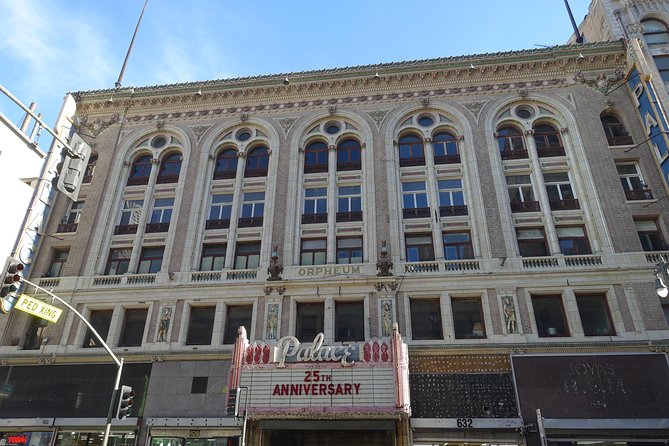
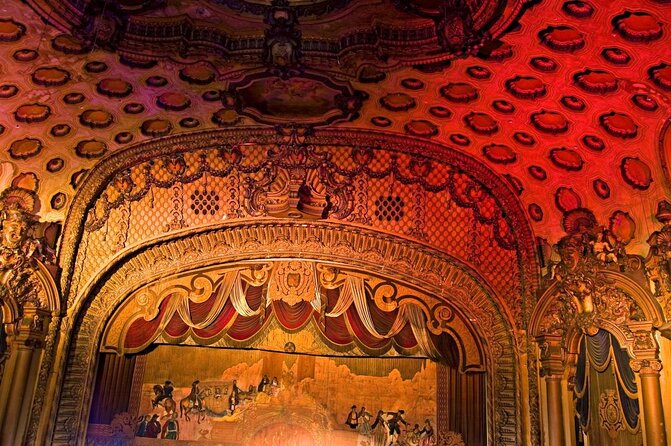
Next comes the Historic Theater District, where you’ll get a sense of LA’s entertainment era. This area is described as the largest collection of pre–WWII theaters in America, which is a big claim—but it fits the visual language you’ll see here: ornate details, strong street presence, and buildings designed to pull crowds in.
What you’ll do on this leg is partly viewing and partly learning—standing at good angles to notice what makes these theaters different from modern venues. You’re not just looking at facades; you’re learning why they were built the way they were and how that shaped Downtown foot traffic.
One drawback to plan for: this stop lists admission not included. If you’re hoping for inside access, you may need to decide on the spot whether it’s worth it for you (and you should budget time accordingly). You’ll still come away with a solid exterior orientation even if you skip ticketed entry.
Prefer to walk it? More LA walking tours


The Bradbury Building: Where Movies Meet Everyday LA
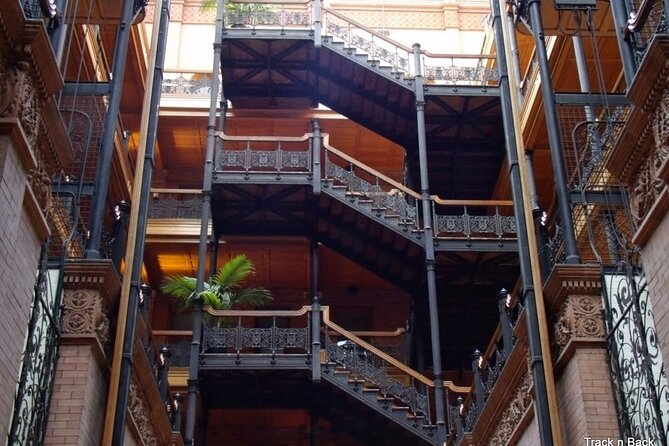
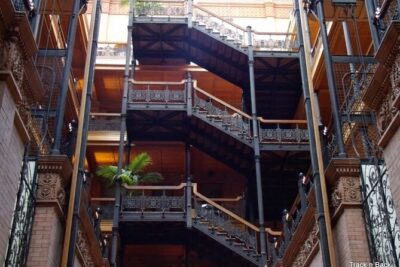
Then you get one of the most famous architecture stops in the city: the Bradbury Building. You’ll spend about 10 minutes here, and this one is listed as free admission. The big deal is that you’ll be able to step into the oldest standing office building of Los Angeles.
This is the stop that tends to make people grin. It’s the kind of place where you can see why it showed up in movies—because it’s visually specific. But it’s also useful for learning: once you’re inside, you’ll understand how the design turns light, movement, and structure into something you can actually feel.
If you’re visiting LA for the first time, this stop is a quick lesson in architecture language: how corridors, open spaces, and natural light can make a building feel bigger than it is. And if you’re not an architecture person, it still works, because the building is simply photogenic in a way that doesn’t feel staged.
The Old Bank District: Spring Street of the West
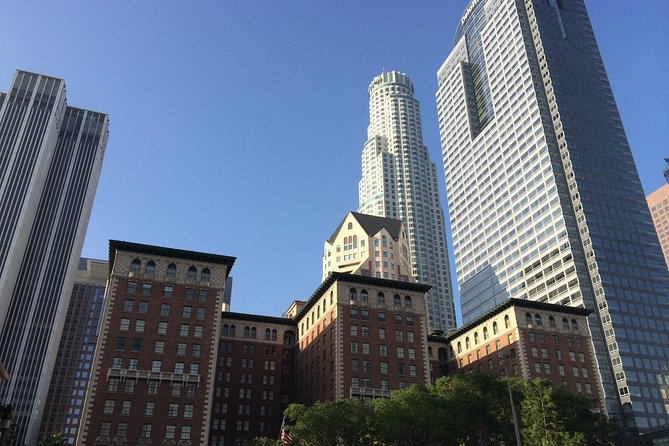
After the Bradbury Building, you shift to the Old Bank District, often tied to the nickname Spring Street of the West. This is one of those areas where the architecture is the story—grand, serious, and built for money and prestige.
You’ll spend around 25 minutes here, which is longer than many other stops. That extra time matters because it gives you a chance to slow down. Instead of rushing through “pretty buildings,” you can compare facades, notice patterns, and understand how the street used to function as a power corridor.
This part is marked as free admission, so it’s mostly about the exterior look and the interpretive explanation. If you’re the kind of person who likes to take notes or sketch, this is the section where you’ll actually use that impulse.
A Quick Detour: Artistic Bookstore Stop
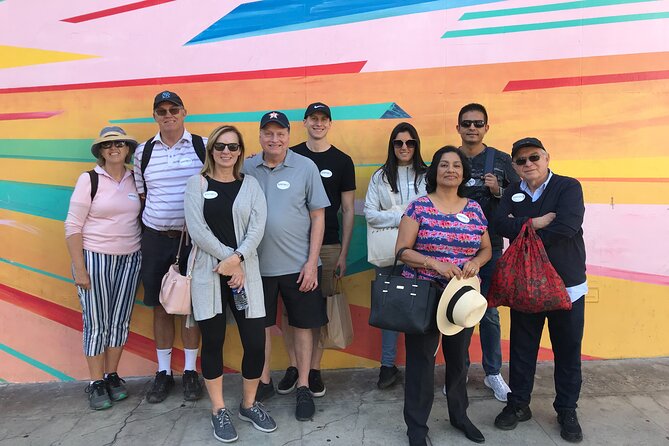
Midway through the walk you’ll also hit an artistic bookstore stop. The route doesn’t give a brand name here, but the purpose is clear: LA isn’t only big landmarks and big money. It’s also the creative spaces that sell ideas, not just things.
Treat this as a breather stop. You’ll have a chance to reset, look around, and think about what kind of Downtown LA you want to go explore on your own after the tour ends.
Because the time is short, don’t expect a full browsing session unless you’re comfortable moving quickly with the group. But it’s a nice reminder that “Downtown history” isn’t only about buildings—it’s about people using the city right now.
Jewelry District: America’s Largest Concentration
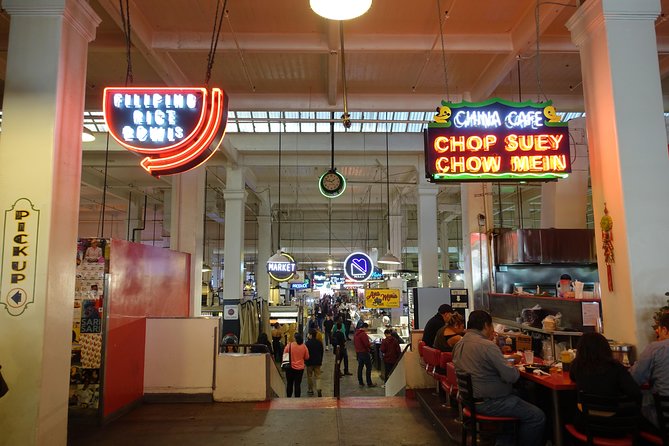
Next comes the Jewelry District, described as America’s largest jewelry district. This is where Downtown reveals a more practical side—industry and commerce, not just entertainment and landmark architecture.
You’ll get about 10 minutes here, and admission is listed as free. What you’ll likely notice most is the clustering of storefront styles and the way the district feels purpose-built for business.
Why it’s worth including: this stop helps you avoid the common Downtown LA mistake of only chasing the “iconic photos.” It shows how the city’s historic core is still used for real work.
Spring Arcade Building: Boutiques and Built-For-Walking Design
The tour then heads into the Spring Arcade Building, known for a collection of boutique restaurants. You’ll spend about 10 minutes here with free admission.
This stop is a good lesson in how Downtown can feel surprisingly human at street level. Arcade-style spaces create a different rhythm than an open sidewalk. You’ll feel the change as you move from the larger streets into a more enclosed, pedestrian-friendly environment.
If you’re planning your own food crawl later, this is a useful mapping stop. Even without deep dining details, it points you to a location style that LA does well: compact, walkable clusters that are easy to revisit.
Clifton’s Republic: Classic Cafeteria, Quick Icon Visit
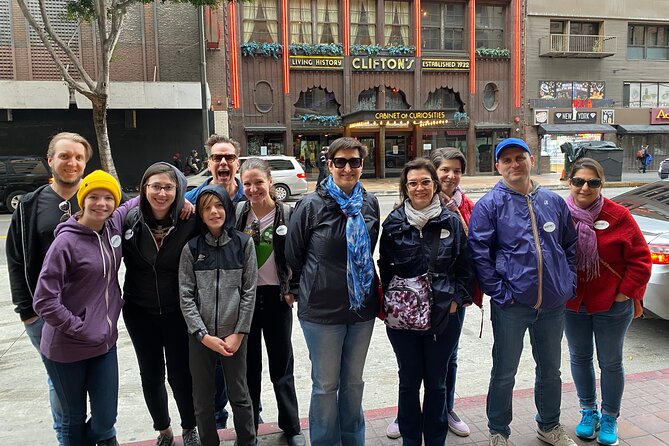
Then comes Clifton’s Republic, an iconic cafeteria that’s been around since 1932. This one is listed as admission not included and is only about 5 minutes.
That short time makes sense. You’re not there to linger—you’re there to recognize the place and connect it to the idea of Downtown as a daily destination, not only a nighttime one.
If you want to go inside and spend more time, you’ll need to decide based on your energy level and whether you want your tour to stay on schedule. Either way, it’s a quick hit of LA nostalgia.
The Biltmore Los Angeles: Grand Hotel Energy
Next up is The Biltmore Los Angeles, described as the grandest hotel of Los Angeles. You’ll have about 10 minutes here, and admission is free for the tour stop.
This is another architecture lesson stop. Hotels like this were built to signal arrival and status, and you’ll likely see that in the scale, detailing, and sense of ceremony in the surroundings.
Why I think it’s good on a walking tour: it breaks up the commercial blocks and theater blocks with something that feels like a different LA tempo. You’ll also get a stronger sense of how Downtown once served as a hospitality hub.
Pershing Square: The Ending Point That Lets You Continue
You finish at Pershing Square and it’s marked as free, with a stop time of about 10 minutes. Since you end at 532 S Olive St, it’s also described as an easy return walk back toward the starting area—about 5 minutes.
Pershing Square is a smart end point. It’s a central, recognizable spot where you can pause, get oriented, and decide if you want to head back to your next destination by foot or transit. It’s also a good place to ask one last question before you scatter.
What You’ll Learn in Real Terms (Not Just Facts)
A tour like this works best when it changes how you see the street afterward. By the time you reach Pershing Square, you should be able to name a few Downtown “clusters” more confidently—markets, theaters, office-era architecture, and active districts like jewelry and boutique arcades.
And because you’re walking, you’ll notice details that are hard to catch from a car window. Street width, building setbacks, sightlines, and how people actually move through the blocks—those things are part of the value.
One more practical bonus: the pace is easy enough for people who might not want an all-day hike. The tour runs about two hours, with shorter stops and longer explanation sections. That balance tends to matter if you want the experience without feeling wiped out.
Pace, Group Size, and Comfort: What to Expect
The tour is small-group with a maximum of 20 travelers. Reviews point to an easy, friendly style from guide Phil, and that usually translates to a less rigid feel on the sidewalk: you’re not just being marched past buildings. You get more chance to ask questions, especially if your group stays calm and attentive.
Also, this is listed as something most travelers can participate in, and it allows service animals. It’s near public transportation, which helps if you’re planning around traffic.
The biggest comfort variable you can control is footwear. This is Downtown, so wear shoes you can walk in confidently. You’ll also want sunglasses or a hat if the sun’s out, since you’ll be outside most of the time.
Is It Good Value at $38? Here’s My Honest Take
At $38 for about two hours, the value comes from three places.
First, it’s a guided route that ties multiple iconic stops into one coherent orientation. That context is hard to recreate on your own fast—especially in a place as layered as DTLA.
Second, several stops are marked as free admission, so you’re not paying at every corner. You still may choose to pay at the stops listed as not included if you want to go inside fully.
Third, the small-group size improves the experience. When you can actually hear and ask questions, that’s where the $38 turns from a ticket price into a useful service.
If you’re short on time and want a structured walk that helps you plan the rest of your trip, this is the kind of ticket that makes sense.
Should You Book This Old-and-New Downtown Los Angeles Walking Tour?
Book it if you want a smart intro to Downtown LA that focuses on architecture and how the city formed into today’s districts. It’s also a great choice if you like guided storytelling—especially when you want to leave with names of places and a clearer sense of where everything sits.
Skip it or rethink if you mainly want a deep dive into only one site. This route is spread across multiple stops—market, theater district, office-era architecture, jewelry and arcade areas—so you’ll learn a lot, but you won’t spend hours on any single building.
If you’re visiting with family, the format is designed to be stress-free: short stops, an organized flow, and a pace that’s built around staying comfortable.
FAQ
How long is the Old and New Downtown Los Angeles walking tour?
It runs for about 2 hours.
What does the tour cost?
The price is $38.00 per person.
Where does the tour start and end?
It starts at 349 S Hill St, Los Angeles, CA 90013 and ends at 532 S Olive St (Pershing Square), where the guide can point you in the direction for your return.
What time does the tour start?
The start time is 1:30 pm.
How big is the group?
The tour has a maximum of 20 travelers.
Is there admission included at the stops?
Some stops are listed as free admission (like Grand Central Market, the Bradbury Building, Old Bank District, Jewelry District, Spring Arcade Building, The Biltmore Los Angeles, and Pershing Square). Other stops are listed as admission not included (like the Historic Theater District and Clifton’s Republic).
Is this a mobile ticket tour?
Yes, it’s a mobile ticket experience.
What happens if the weather is bad?
This experience requires good weather. If it’s canceled due to poor weather, you’ll be offered a different date or a full refund.
Is free cancellation available?
Yes. You can cancel up to 24 hours in advance for a full refund. If you cancel less than 24 hours before the start time, the amount paid isn’t refunded.
More Tour Reviews in Los Angeles
- Full-Day Iconic Sights of LA, Hollywood, Beverly Hills, Beaches and More
★ 5.0 · 6,147 reviews - Warner Bros. Studio Tour Hollywood
★ 4.5 · 5,246 reviews - Hollywood, Beverly Hills & Celebrity Homes Tour by Open Air Bus
★ 5.0 · 2,557 reviews - Hollywood Sign 2.5-Hour Tour with Comedians and Their Dogs
★ 5.0 · 2,496 reviews - Full-Day LA Tour: Santa Monica, Hollywood and Beverly Hills
★ 5.0 · 2,431 reviews
Los Angeles, Block by Block
- Los Angeles Original 90-Minute Walking Tour to The Hollywood Sign
★ 5.0 · 693 reviews - Hollywood Stars Tour: Walk of Fame, Celebrity Homes, Sunset Strip
★ 4.0 · 341 reviews - Haunted Hollywood Walking Tour: True Crime and Creepy Tales
★ 5.0 · 299 reviews - LA: Walk of Fame, Hollywood Sign & Beverly Hills Tour
★ 4.9 · 179 reviews - Downtown Los Angeles History and Architecture Walking Tour
★ 5.0 · 93 reviews
Keep Going in Downtown LA
- Downtown Los Angeles Food Tour
★ 5.0 · 501 reviews - Culture and Arts Tour of Downtown LA with Angels Flight Ticket
★ 5.0 · 142 reviews - The History and Architecture of Downtown Los Angeles
★ 5.0 · 94 reviews - Downtown Los Angeles History and Architecture Walking Tour
★ 5.0 · 93 reviews - Downtown Los Angeles Bike Tour
★ 5.0 · 76 reviews
Keep exploring Los Angeles: fresh reviews from around town




Downtown LA Tours, compared.
 ★ 5.0Downtown Los Angeles Food TourFrom $89501 reviews
 ★ 5.0Culture and Arts Tour of Downtown LA with Angels Flight TicketFrom $39142 reviews
 ★ 5.0The History and Architecture of Downtown Los AngelesFrom $3994 reviews
 ★ 5.0Downtown Los Angeles History and Architecture Walking TourFrom $3593 reviews
 ★ 5.0Downtown Los Angeles Bike TourFrom $8276 reviews
 ★ 5.0Downtown Los Angeles Architecture Walking TourFrom $3873 reviews
★ 5.0The History and Architecture of Downtown Los AngelesFrom $3966 reviews
★ 5.0Downtown Los Angeles Architecture Walking TourFrom $3873 reviews
★ 5.0The History and Architecture of Downtown Los AngelesFrom $3966 reviews
 ★ 4.5DTLA Murder Mystery Ghost TourFrom $6064 reviews
Browse the lists this tour appears in