
Review · DOWNTOWN LA TOURS
Downtown Los Angeles History and Architecture Walking Tour
Downtown LA tells stories fast. This walk connects architecture with film history, using real street scenes and landmark interiors so the city makes sense instead of just looking cool. You’ll move through DTLA like a map of Hollywood’s building blocks and the business of design.
I really like two things here. First, the guide’s approach is story-driven: you’re not just spotting styles, you’re learning how they shaped how LA grew and how movies learned to sell dreams. Second, the pace stays discussion-friendly in a small group of up to 15, which makes it easier to ask questions as you go.
One drawback to plan for: it’s a mostly walking experience with limited chances to sit, and downtown streets can get loud. If you struggle to hear, keep close to the guide so you catch the key points.
In This Review
- Key things I’d plan around before you go
- Why Downtown LA’s architecture and movie history belong in the same walk
- Price and what $35 really buys you for 2.5 hours
- From Grand Central Market to Angels Flight: small-town nostalgia in big-city LA
- Pershing Square and Bunker Hill steps: how public space gets reshaped
- Broadway’s Theater District: movie palaces as global business models
- Bradbury Building and the Old Bank District: ironwork, light, and financial confidence
- Inside-and-between stops: The Last Bookstore, Arcade Building, and Clifton’s Cafeteria
- From talkies to tech: Tower Theatre to Apple’s flagship and the jewelry/fashion blocks
- Ending at Hotel Per La: when a bank becomes a hotel
- Who should book this walk, and who might prefer something else
- Should you book Downtown Los Angeles History and Architecture?
- FAQ
- How long is the Downtown Los Angeles History and Architecture Walking Tour?
- How much does the tour cost?
- Is the tour only for English speakers?
- How big is the group?
- What’s included in the price?
- Where do you meet and where does the tour end?
- What if bad weather happens?
Key things I’d plan around before you go
- A tight, small-group format (max 15): easier Q&A and more back-and-forth than big-bus tours
- Film palaces plus city planning vibes: you’ll connect design choices to what people did in the real city
- Free-entry style stops: most sights on the route are listed as admission ticket free
- Old-world architecture with modern reuses: bank buildings become hotels, theaters become flagships
- Multiple architectural styles on one walk: Beaux-Arts, Art Deco, Nouveau, Spanish Renaissance Revival
- A guide who uses comparisons and context: Europe and beyond show up in how DTLA is explained
Deeper into Downtown LA
- Old and New Downtown Los Angeles Walking Tour★ 5.0 · 222 reviews
- Culture and Arts Tour of Downtown LA with Angels Flight Ticket★ 5.0 · 142 reviews
- The History and Architecture of Downtown Los Angeles★ 5.0 · 94 reviews
Why Downtown LA’s architecture and movie history belong in the same walk
DTLA is one of the few places where you can see big ambition turn into bricks, then watch those same bricks turn into movie magic. That’s the core idea of this tour: architecture isn’t background noise. It’s the reason certain streets feel important, why certain buildings got attention, and how the film industry learned what to borrow from real life.
What I like is how the tour keeps the focus on what you’re actually looking at. The guide explains how space and style affect human behavior—where people gather, how businesses market themselves, and why some districts rose faster than others. It’s not a lecture of random dates. It’s an urban story with characters: banks, theaters, markets, and changing neighborhoods.
Also, the guide’s worldview matters. The Belgian guide—raised in Europe and later living in China—brings a habit of comparing LA to other global cities. You’ll hear analogies that help your brain file things faster: Lisbon’s funicular vibe for Angels Flight, West End-style movie palaces for Broadway, and European city-square comparisons for Pershing Square.
Price and what $35 really buys you for 2.5 hours
At $35 per person for around 2 hours 30 minutes, this tour is priced like a value walk, not a premium museum day. You’re paying for a local guide and time saved figuring out what’s worth noticing in DTLA.
Here’s the practical part: the stops are mostly listed as admission ticket free, so you’re not stacking extra ticket costs on top. Still, you may want to bring a little extra spending money if you plan to buy snacks or drinks at places like Grand Central Market or along the route.
Not included: parking fees. That matters because DTLA parking can feel like a second entrance fee. If you’re driving, think about transit-first unless you’re committed to parking close.
From Grand Central Market to Angels Flight: small-town nostalgia in big-city LA
The walk opens at Grand Central Market, founded in 1917. This isn’t just a place to eat—it’s a snapshot of immigration and adaptation, with food counters that feel like a “city within a city.” You’ll see a lineup of global favorites in one compact area: tacos, ramen, pupusas, and pastrami-style comfort. Even if you don’t buy anything, the point is clear: LA’s diversity doesn’t live only in neighborhoods. It shows up in the everyday economy.
From there, the route shifts to a totally different scale with Angels Flight, often described as the world’s shortest railway. Built in 1901, it once helped the Bunker Hill community climb between levels—basically a practical stair-system turned local icon. The guide frames it like other famous urban funiculars around the world, and once you ride it (it’s brief), you feel how city infrastructure can become a memory device.
This part of the tour is great for first-time visitors because it teaches you how DTLA’s geography works. LA wasn’t built flat, and these little transitions explain a lot about why the city looks the way it does.
Pershing Square and Bunker Hill steps: how public space gets reshaped
Next up is Pershing Square, where the tour gets thoughtful. The guide treats it like more than a plaza with benches; it’s a case study in how cities use public space—and how privatization and change can pressure that space over time. The comparisons to other famous gathering areas help you understand the big question: when a city’s center changes, who gets to use the center?
Then you’ll get to the iconic steps near Bunker Hill, which the guide uses as a metaphor for transformation. Bunker Hill shifted from a wealthy residential identity into a cultural and financial district. And once you start looking at it this way, you’ll notice the emotional contrast: stairs that once represented privilege now frame a different kind of city ambition.
If you like urban design and city history, this is one of the most satisfying stretches, because it connects what you see on the street to why the street developed that way. It’s also a reminder that the city’s “character” is often the result of real economic pressure—not just taste.
Prefer to walk it? More LA walking tours

Broadway’s Theater District: movie palaces as global business models
The tour then moves into Broadway’s Historic Theater District, where early Hollywood leaves visible fingerprints. This area is described as having the world’s largest concentration of movie palaces, and the guide uses that fact to tell a bigger story: film didn’t just grow—it learned how to stage itself.
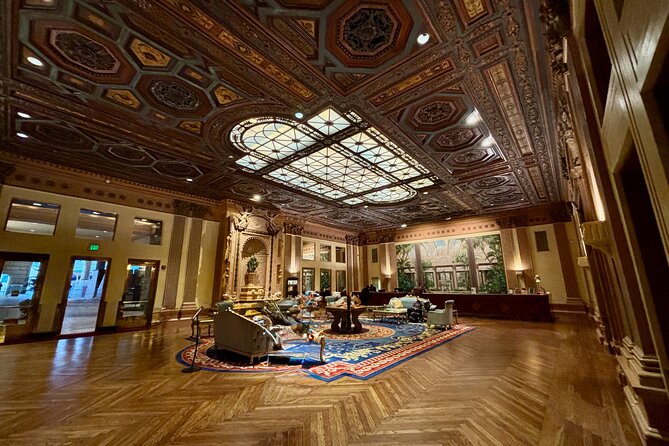
You’ll hear about Sid Grauman’s early influence, including the Million Dollar Theater, known for its lavish concept and design that pushed the idea of the movie-going experience as something special. It’s a lesson in marketing and architecture at the same time.
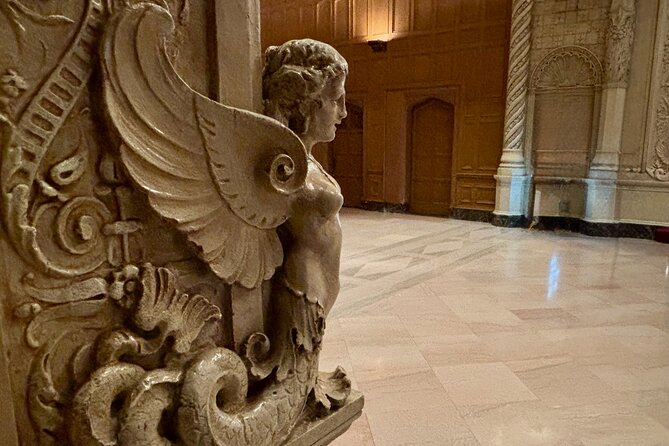
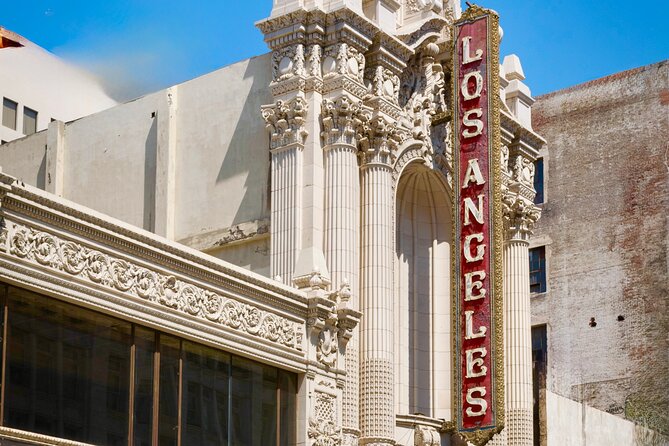
From there, you’ll spend time around major theater landmarks, including the Los Angeles Theatre. Built in 1931 for the premiere of Charlie Chaplin’s City Lights, it’s praised for details that feel like European opera houses: crystal chandelier drama, gold-leaf accents, and grand marble staircases. The comparison to classic European theater grandeur is spot-on because this is a city that borrowed from old-world ceremony and made it part of cinema’s sales pitch.
One practical note: theaters and palaces can draw crowds, and downtown noise is real. If you’re the type who needs clear audio, stand where you can face the guide, especially on tighter sidewalks.
Bradbury Building and the Old Bank District: ironwork, light, and financial confidence
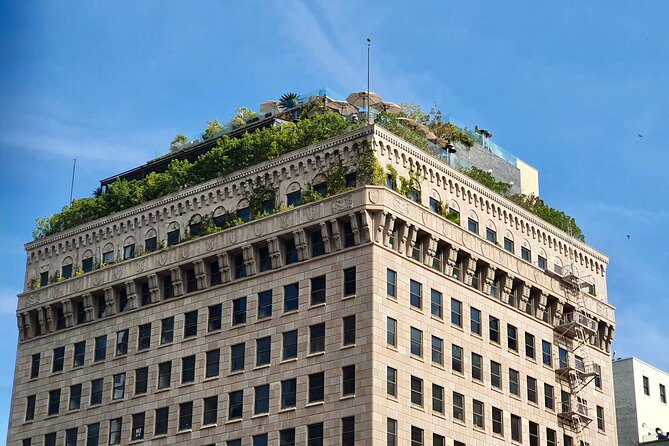
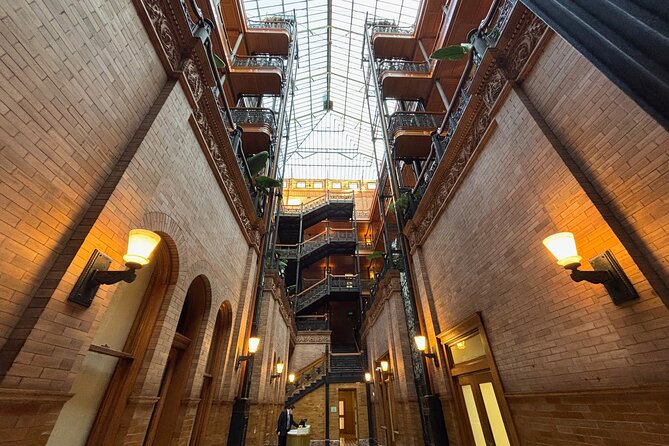
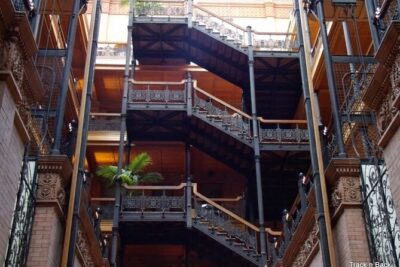
After the big stage energy of Broadway, the route turns into a more architectural mood with the Bradbury Building. This stop feels like a film set even when you’re not watching anything. The open atrium, wrought-iron staircases, and shifting light create an interior you can’t fully understand from a quick glance.
The guide ties the building to popular culture—Blade Runner is mentioned as one of its film connections—and that matters because you’ll start seeing why the architecture works on camera. It’s not only pretty. It’s legible. The atrium structure reads instantly, and the details reward slow looking.
Then you head into Spring Street’s Old Bank District, described as the Wall Street of the West. This is where you see Beaux-Arts confidence: grand facades and the kind of formality banks liked when they needed credibility. The tour helps you connect that style to ambition and transformation—how financial power wanted to look permanent.
You’ll also pass the Continental Building (completed in 1904), one of LA’s early high-rises, noted for its Beaux-Arts architecture and early-skyscraper era role.
And nearby is the El Dorado Lofts, linked to Art Deco and Nouveau design from the early 20th century. Originally built as a luxury hotel in 1913, it shows how DTLA’s boom years weren’t only about finance—they were about taste. The guide even connects it to a wider Art Deco conversation beyond the US, helping you see it as part of a global design wave.
Inside-and-between stops: The Last Bookstore, Arcade Building, and Clifton’s Cafeteria
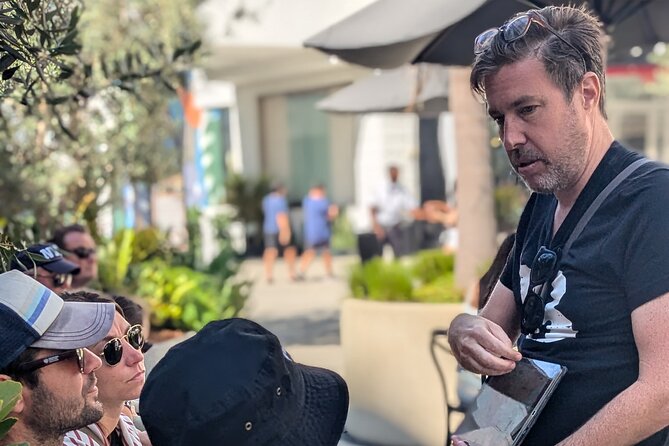
DTLA can be exhausting if you treat it like a photo checklist. This tour breaks that by including stops that pull you into atmosphere and interior space.
One standout is The Last Bookstore, opened in 2005. The guide highlights it as part bookstore, part art installation, with a book tunnel and floor-to-ceiling shelves that look better the longer you stand there. This is a great reset stop because it turns you from street-side observer into someone living in the story. The tour also frames it as a place for rare books, vinyl records, and local art, so it’s more than a social media prop.
Next is the Arcade Building (completed in 1924), described as a hidden-ish structure tied to early LA’s radio industry. The guide points out how you can still read the building’s original purpose even after today’s eateries and boutiques filled the spaces.
Then comes Clifton’s, which started as Clifton’s Cafeteria in 1931 during the Great Depression and is remembered for offering meals to people who needed them. Today it keeps a themed approach with whimsical decor—like a tall tree and enchanted forest-style styling—plus a playful mix of dining spaces (including hidden tiki bar references). It’s one of those stops that reminds you DTLA isn’t just about glamour; it’s also about survival creativity.
From talkies to tech: Tower Theatre to Apple’s flagship and the jewelry/fashion blocks
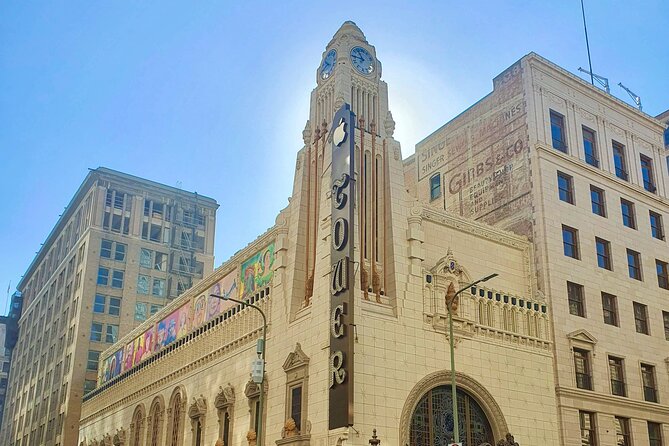
The tour builds to another big feeling with the Tower Theatre, built in 1927. It’s noted as the first Los Angeles theater designed for “talkies,” with its debut connected to The Jazz Singer. The interior is described as Spanish Renaissance Revival, with detailed carvings, stained glass, and vaulted ceilings—old-world craft designed to make cinema feel like an event.
The guide also ties it to Mulholland Drive, including the famous Silencio scene location connection. Even if you don’t know the scene, this kind of pop-culture link helps you understand why certain theaters became icons: they were made to look like dreams while the world talked back through sound.
Today, the guide points out that the Tower Theatre space has been transformed by Apple into a flagship store. That’s a key theme of the tour: adaptive reuse. Instead of turning old buildings into ruins or empty shells, you see them repurposed while some of the original design language stays visible.
After that, the tour pushes into business districts that are less about theaters and more about production and commerce:
- The Jewelry District, spanning 12 blocks and described as the largest in the US, rooted in the 1920s
- The Fashion District, framed as a long-running design engine for textiles and streetwear creativity
- The Eastern Columbia Lofts, built in 1930, an Art Deco standout with turquoise terracotta tiles and a clock tower, with celebrity-tied residents referenced by the guide
The value here isn’t just spotting fancy buildings. It’s understanding that DTLA’s identity is also built by trade: jewelry making, fashion creation, and the businesses that keep these scenes moving.
Ending at Hotel Per La: when a bank becomes a hotel
The walk finishes at Hotel Per La, Autograph Collection, on 649 S Olive St. The building’s backstory matters: it began as the Bank of Italy building, chosen by the bank as its West Coast headquarters. The guide frames the architecture as a symbol of immigrant ambition and achievement, and then you see that idea carried into the present.
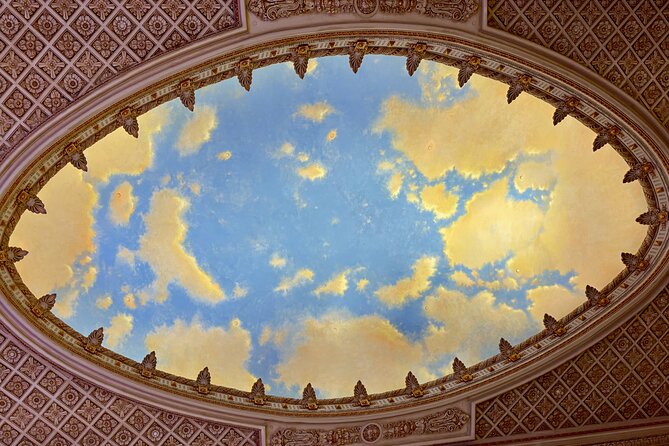
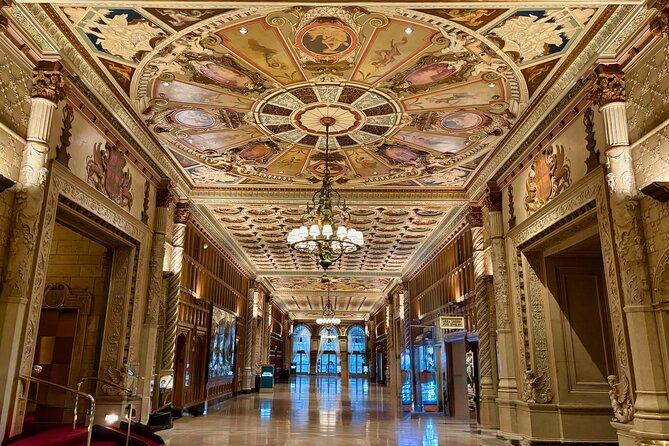
Today it’s a boutique hotel, and the highlights are interior-first: a restored gold ceiling and towering marble columns in the lobby. It’s a fitting end to the tour because you’re literally standing in a structure that embodies the same transformation theme you’ve been seeing all day.
For you, the payoff is how quickly your eye improves by the time you reach the final stop. You stop seeing DTLA as random blocks and start seeing a system: money shapes buildings, buildings shape culture, and culture shapes what gets reused.
Who should book this walk, and who might prefer something else
This tour is ideal if you’re the type who likes architecture but doesn’t want a strict textbook approach. You’ll enjoy it most if you care about how design supports film, how districts shift over time, and how LA borrows global style ideas and then remakes them.
It’s also a strong pick if you want interiors or semi-interior atmosphere that you might miss on a bus-style outing. The route is concentrated enough that walking keeps you close to the action, while the guided context keeps it from feeling random.
I’d think twice if you want heavy technical detail—like a catalog of building names and every date. The focus is explanations through experience, not a deep architect-by-architect lecture. And if you hate walking without breaks, note that this is a route of continual moving.
Should you book Downtown Los Angeles History and Architecture?
If your goal is to understand DTLA beyond the usual headlines, I’d book it. The mix of movie palace storytelling and architecture-focused sightlines makes it more satisfying than a generic walking history. It also has real value for the price because the tour is long enough to connect the dots, and the stops are mostly listed as admission ticket free.
If you’re coming from far away, this is the kind of tour that helps you learn how to look at the city on your own for the rest of the trip. And if you like asking questions, the small-group format makes that part actually work.
FAQ
How long is the Downtown Los Angeles History and Architecture Walking Tour?
It’s about 2 hours 30 minutes (approx.).
How much does the tour cost?
The price is $35.00 per person.
Is the tour only for English speakers?
Yes, it’s offered in English.
How big is the group?
The tour has a maximum of 15 travelers.
What’s included in the price?
The local guide is included.
Where do you meet and where does the tour end?
You start at Grand Central Market Parking Garage, 308 S Hill St, Los Angeles, CA 90013. It ends at Hotel Per La, Autograph Collection, 649 S Olive St, Los Angeles, CA 90014.
What if bad weather happens?
This experience requires good weather. If it’s canceled due to poor weather, you’ll be offered a different date or a full refund.
More Tour Reviews in Los Angeles
- Full-Day Iconic Sights of LA, Hollywood, Beverly Hills, Beaches and More
★ 5.0 · 6,147 reviews - Warner Bros. Studio Tour Hollywood
★ 4.5 · 5,246 reviews - Hollywood, Beverly Hills & Celebrity Homes Tour by Open Air Bus
★ 5.0 · 2,557 reviews - Hollywood Sign 2.5-Hour Tour with Comedians and Their Dogs
★ 5.0 · 2,496 reviews - Full-Day LA Tour: Santa Monica, Hollywood and Beverly Hills
★ 5.0 · 2,431 reviews
Los Angeles, Block by Block
- Los Angeles Original 90-Minute Walking Tour to The Hollywood Sign
★ 5.0 · 693 reviews - Hollywood Stars Tour: Walk of Fame, Celebrity Homes, Sunset Strip
★ 4.0 · 341 reviews - Haunted Hollywood Walking Tour: True Crime and Creepy Tales
★ 5.0 · 299 reviews - Old and New Downtown Los Angeles Walking Tour
★ 5.0 · 222 reviews - LA: Walk of Fame, Hollywood Sign & Beverly Hills Tour
★ 4.9 · 179 reviews
Keep Going in Downtown LA
- Downtown Los Angeles Food Tour
★ 5.0 · 501 reviews - Old and New Downtown Los Angeles Walking Tour
★ 5.0 · 222 reviews - Culture and Arts Tour of Downtown LA with Angels Flight Ticket
★ 5.0 · 142 reviews - The History and Architecture of Downtown Los Angeles
★ 5.0 · 94 reviews - Downtown Los Angeles Bike Tour
★ 5.0 · 76 reviews
Keep exploring Los Angeles: fresh reviews from around town



Downtown LA Tours, compared.
 ★ 5.0Downtown Los Angeles Food TourFrom $89501 reviews
 ★ 5.0Old and New Downtown Los Angeles Walking TourFrom $38222 reviews
 ★ 5.0Culture and Arts Tour of Downtown LA with Angels Flight TicketFrom $39142 reviews
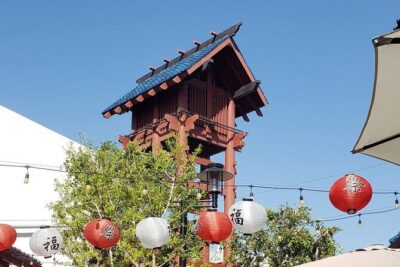 ★ 5.0The History and Architecture of Downtown Los AngelesFrom $3994 reviews
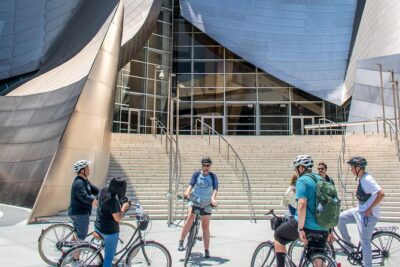 ★ 5.0Downtown Los Angeles Bike TourFrom $8276 reviews
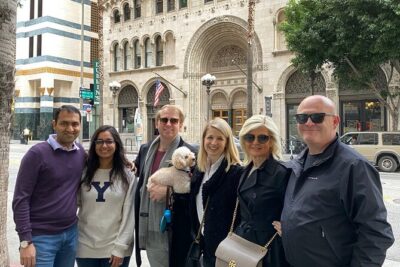 ★ 5.0Downtown Los Angeles Architecture Walking TourFrom $3873 reviews
★ 5.0The History and Architecture of Downtown Los AngelesFrom $3966 reviews
★ 5.0Downtown Los Angeles Architecture Walking TourFrom $3873 reviews
★ 5.0The History and Architecture of Downtown Los AngelesFrom $3966 reviews
 ★ 4.5DTLA Murder Mystery Ghost TourFrom $6064 reviews
Browse the lists this tour appears in