
Review · DOWNTOWN LA TOURS
Los Angeles Arts District Bike Tour
Bike tours in LA are great when they’re paced right.
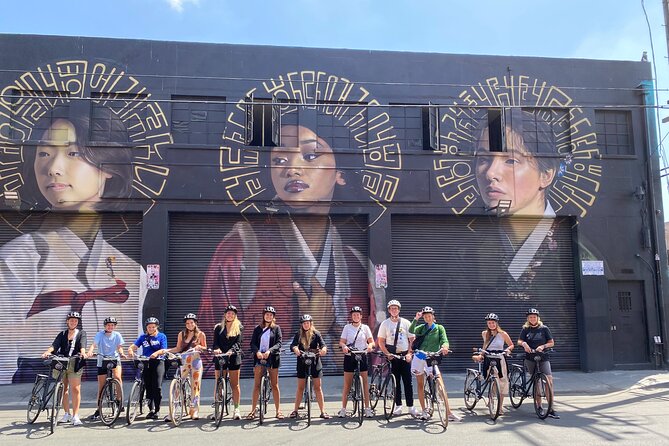
This one puts street art front and center, with live amplified commentary as you pedal through alleyways, lofts, and gallery-adjacent corners most people miss. I also like that the ride is easy and mostly flat, so you’re not fighting hills while trying to look at murals. One thing to consider: you do need to know how to ride a bike on city streets, and it helps to have moderate fitness since it’s still active for about 2.5 hours.
You meet at a DTLA food-hall hub that’s a fun warm-up on its own, then you roll out for a tight circuit with planned stops—from the Art District’s mural walls to a walk-in break at Hauser & Wirth. Along the way, you’ll link the dots between the Arts District and nearby Little Tokyo, including major local landmarks you can actually point to on a map afterward.
In This Review
- Quick hits before you ride
- Where the tour starts: a food hall that actually sets the mood
- Price and what makes it feel worth $82
- How hard is the ride, really?
- Stop-by-stop: what you’ll see and why each part matters
- Stop 1: Handlebar Bike Tours and the food-hall warm-up
- Stop 2: The Arts District alleyways and graffiti writing
- Stop 3: Angel City Brewery as the unofficial gateway
- Stop 4: Arts District Firehouse Hotel and the chef-and-music mix
- Stop 5: Hauser & Wirth—time to explore, not just watch
- Stop 6: The mural-heavy stretch and how street artists work
- Stop 7: The American Hotel and the district’s origin story
- The Little Tokyo connector: sushi, ramen, anime, and shared history
- Non-profit live/work studios and production spaces
- The food-and-views timing: Bestia, the skyline, and the 6th Street Viaduct
- The guide makes the difference: expect real narration, not generic facts
- What to bring (and what to skip)
- When this tour is the right fit (and when it’s not)
- Should you book the Los Angeles Arts District Bike Tour?
- FAQ
- What’s included in the Los Angeles Arts District Bike Tour?
- How long is the tour, and when does it run?
- Where do I meet and where does the tour end?
- Is the ride suitable for beginners?
- What’s the minimum age?
- What happens if the weather is poor?
Quick hits before you ride
- A small group (max 10) keeps the pace friendly and the commentary easy to hear.
- Bike + helmet included, plus a live amplified guide so you get real context, not guesswork.
- Downtown-to-Arts District route with a Little Tokyo connection, not just murals for murals’ sake.
- Hauser & Wirth stop gives you time to explore on your own instead of rushing through.
- You skip food, so plan to eat before or after (the meeting point has plenty of options).
Deeper into Downtown LA
- Old and New Downtown Los Angeles Walking Tour★ 5.0 · 222 reviews
- Culture and Arts Tour of Downtown LA with Angels Flight Ticket★ 5.0 · 142 reviews
- The History and Architecture of Downtown Los Angeles★ 5.0 · 94 reviews
Where the tour starts: a food hall that actually sets the mood
Your tour launches at 312 S Hill St, Los Angeles, CA 90013, at the base called Handlebar Bike Tours. It’s inside LA’s 100-year-old food hall, and that matters more than you might think. Arrive a bit early and you can grab something quick, use nearby restrooms, and generally get your bearings before you hit the street.
This is also a smart “value” detail. At $82 per person, you’re paying primarily for the guide, bike, helmet, and the time on a route built around Arts District culture. Starting in a food hall means you don’t need to factor in the lack of included meals—you can handle snacks and drinks right there.
The tour starts at 2:00 pm and loops back to the same meeting point.
Price and what makes it feel worth $82
Let’s talk straight math: $82 sounds like a chunk of change until you break down what’s included. You get:
- A bike
- A helmet
- A live amplified guide
- Enough time (about 2 hours 30 minutes) to cover multiple parts of the Arts District and connect over to Little Tokyo
Street art tours are easy to find, but they’re often either (1) too short to matter or (2) all walking, which cuts down how much area you can cover. This ride format helps you see more in one go—especially around industrial blocks where murals and studios sit close together.
The main tradeoff is that food isn’t included. If you’re sensitive to hunger while you’re biking, you’ll want a snack plan. The plus: the start location has lots of vendors, so you can eat before or after without losing time.
How hard is the ride, really?
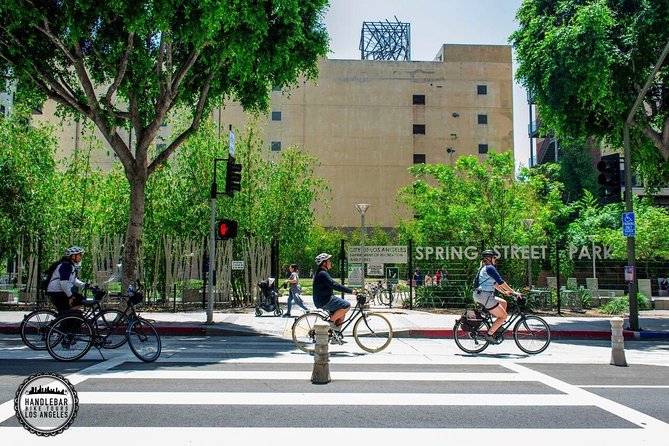
The tour is described as easy and suitable for most people, and you’re told to have moderate physical fitness. The key condition is practical: you must be able to bike, and you should ride comfortably on city streets.
That makes it better than a “ride-slow-but-still-technical” tour. You should still expect normal city-bike challenges: stopping at intersections, staying aware of traffic, and watching for the kind of uneven surfaces you get in older urban neighborhoods.
Also, the group is capped at 10 travelers, which usually helps with safety and pacing. If you’re the type who likes steady group flow—no sprinting, no wandering off—you’re likely to enjoy this format.
Stop-by-stop: what you’ll see and why each part matters
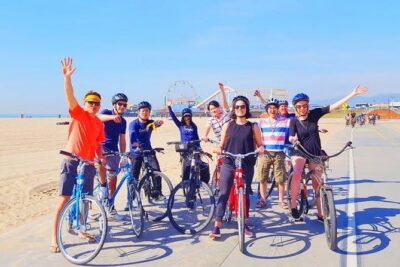
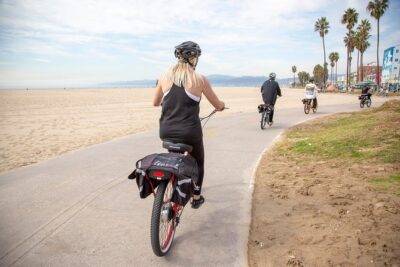
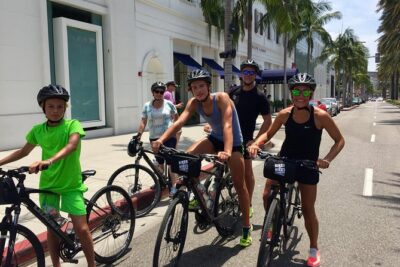
Two wheels, more city: extra bike tours
Stop 1: Handlebar Bike Tours and the food-hall warm-up
You begin at the base in the 100-year-old food hall, which is both a meeting point and a landmark in itself. There are 45+ food vendors here, so you can grab a drink or snack before you roll.
Why this is worth noting: it gives you a low-pressure start. You don’t feel like you’re rushing into the “tour mode” the second you arrive.
Stop 2: The Arts District alleyways and graffiti writing
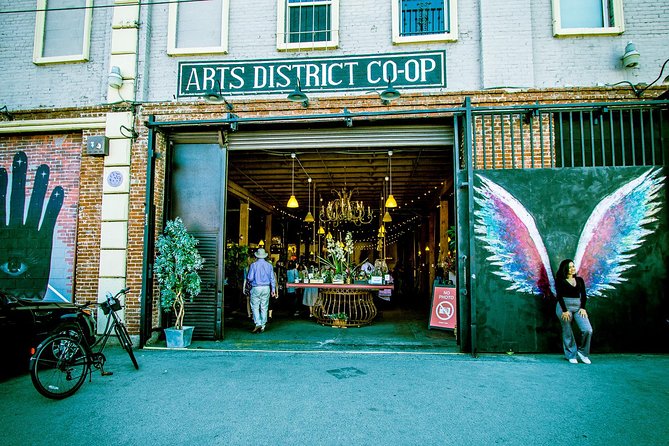
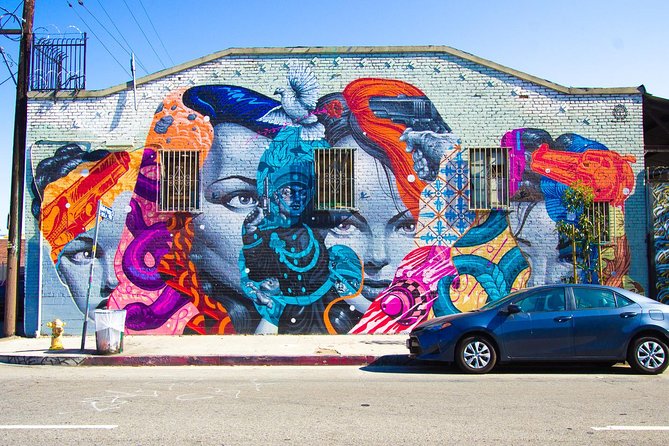
The first big neighborhood moment is the Arts District itself. You’ll wind through alleyways where you can see graffiti writing and street art culture up close, plus you’ll get pointed commentary about the artists and what you’re looking at.
This area is known for the contrast between industrial spaces and art activity—lofts, pop-ups, emerging clubs, and restaurants tucked into the same blocks. The ride format also helps here because you’re moving between micro-scenes rather than staring at one wall for too long.
A consideration: alley blocks can feel different than big boulevards. If you’re expecting wide-open views only, this tour leans more toward the “work-in-the-walls” side of street art.
Stop 3: Angel City Brewery as the unofficial gateway
You’ll pass Angel City Brewery, described as an unofficial gateway to the Arts District, decorated with local artists’ work.
This stop is short and doesn’t include admission, but it’s useful because it shows how art and branding overlap here—murals aren’t separated from local businesses. It’s part of why the Arts District feels like a living creative zone.
Stop 4: Arts District Firehouse Hotel and the chef-and-music mix
Next up is the Arts District Firehouse Hotel area. You’ll look at examples of graffiti writing and hear about Warner Brothers Music, plus you’ll pass by places tied to star chefs.
This stop matters because it hints at the district’s “mix.” Street art culture here isn’t isolated. It rubs shoulders with nightlife, dining, and entertainment industry energy.
Stop 5: Hauser & Wirth—time to explore, not just watch
Then you break at Hauser & Wirth. This is your built-in chance to slow down and explore the expansive gallery complex on your own for about 20 minutes.
What I like about that approach: you get both guided context earlier and then a breather where you can look without needing to keep your eyes on the guide’s script.
No admission is listed as included here, so if you want to go inside beyond what you can see from outside, you’ll want to plan based on what you find there.
Stop 6: The mural-heavy stretch and how street artists work
Back on the bike, you hit the heart of it: the largest concentration of murals and street art in LA on this route. You’ll learn about the artists, the process, and how murals are produced. You’ll also hear about the importance of respecting street artists and the residents who share these spaces.
This part is one reason the tour feels more grounded than a “photo stop loop.” Street art isn’t treated like wallpaper—it’s treated like labor and community practice.
Stop 7: The American Hotel and the district’s origin story
You’ll pass The American Hotel, described as the birthplace of the modern Arts District. It’s a short stop, but it helps make sense of why the neighborhood developed the way it did—creative use of industrial space, then gradual growth into what visitors recognize today.
When you get the origin thread, later murals feel less random and more like part of a larger story.
The Little Tokyo connector: sushi, ramen, anime, and shared history
To access the Arts District, the route rides through Little Tokyo. The ride break here includes nearby food-style associations—sushi, anime, ramen—especially when the gallery is closed.
Then you’ll connect the histories: you stop by the Japanese American National Museum area. You’ll see the Museum of Contemporary Art and the Go For Broke Monument, and you’ll learn how the history of Little Tokyo ties into the history of the Arts District and Los Angeles.
This is a smart pairing. It prevents the tour from being only “street art as sightseeing.” You get a clearer sense of why these neighborhoods matter.
Non-profit live/work studios and production spaces
On the route you’ll also ride by:
- A non-profit providing below market live work studios to keep artists in the Arts District
- Willow Studios, a production studio
- Soho Warehouse, described as a celebrity enclave next to the railroad tracks of East L.A. (ride by)
Even when these stops are brief, they help you see how the creative ecosystem works. Murals are the most visible layer, but studios and housing support are the layer that keeps the place functioning.
The food-and-views timing: Bestia, the skyline, and the 6th Street Viaduct
A short ride-by includes Bestia, one of the chef-driven restaurants in the Arts District, and the itinerary also includes a big photo payoff at the end stretch:
6th Street Viaduct
You’ll ride over it—an iconic spot that shows up in LA film locations more and more often. Admission is listed as included for this part, and it’s a great “end of tour” punctuation mark because the viaduct gives you the kind of urban scale you want after wall-to-wall art.
If you like skyline shots and wide angles, you’ll probably appreciate this final shift from murals-and-alleys to broader city views.
The guide makes the difference: expect real narration, not generic facts
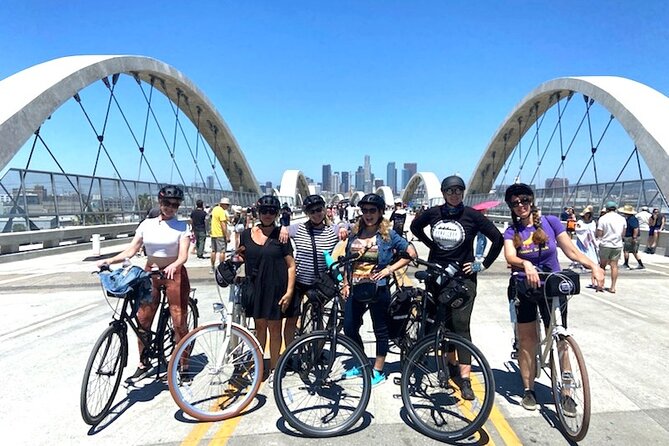
This tour runs with a live amplified guide, so you’re not stuck listening to whispers while your attention splits between traffic and art. One guide name comes through clearly: Jen is praised for being amazing and patient, and for keeping the ride comfortable.
That matters because a bike tour is partly logistics. You want someone who can pace the group, explain what you’re seeing clearly, and handle questions without rushing you past the good stuff.
If you’re a quieter rider who likes to take in details, a patient guide is a big win. If you’re chatty and curious, the commentary also gives you plenty of prompts.
What to bring (and what to skip)

You already get a helmet and bike, which removes two common friction points. That leaves you with the rest of the comfort basics.
I’d plan on:
- Weather-appropriate layers (the tour requires good weather)
- A water bottle, since there’s no food included
- A way to store essentials (phone, small wallet)
- Basic biking awareness: you’ll be on city streets
Skip trying to “eat mid-ride.” The plan includes stops, but you’re not on a dining experience. Think snack + sights, then eat after.
When this tour is the right fit (and when it’s not)
This tour fits best if you want:
- A half-day plan that covers multiple Arts District zones without long detours
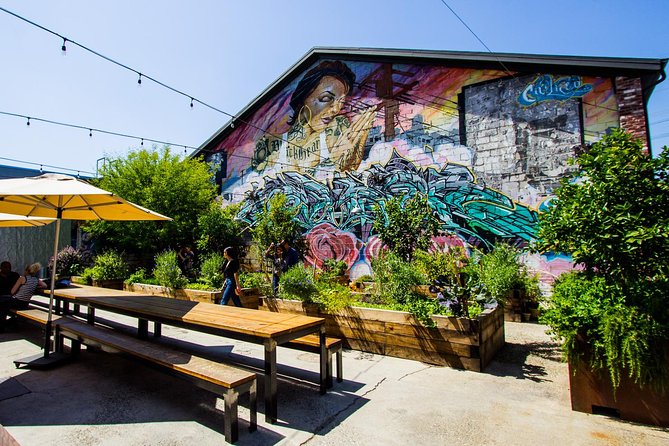
- Street art with context (artists, process, and why murals look the way they do)
- A route that links Arts District with Little Tokyo landmarks
- A manageable ride: mostly flat, easy pace, small group size
It might be less ideal if:
- You’re not comfortable biking in city traffic
- You expect a slow walking pace where you can stop constantly
- You need a meal included (food isn’t part of the tour)
Should you book the Los Angeles Arts District Bike Tour?
Yes, if you’re coming to LA and want an efficient, human-scale way to see the Arts District’s street art culture while still getting real neighborhood context. The combination of live amplified guidance, a small group, and an easy ride makes it easier to enjoy than many art tours that are either too fast or too focused on one tiny corner.
Book it especially if you:
- Like murals but want more than photos
- Want a route that includes Little Tokyo and landmarks like the Japanese American National Museum area
- Prefer a plan that ends with a big-view moment at the 6th Street Viaduct
Don’t book it if you can’t ride comfortably on city streets or if you’re expecting food to be included. In that case, you’ll either feel rushed for meals or stressed about staying fueled.
FAQ
What’s included in the Los Angeles Arts District Bike Tour?
The tour includes bicycle use, a helmet, and a live amplified guide. Food is not included.
How long is the tour, and when does it run?
It lasts about 2 hours 30 minutes and starts at 2:00 pm.
Where do I meet and where does the tour end?
You start at 312 S Hill St, Los Angeles, CA 90013, and the tour ends back at the same meeting point.
Is the ride suitable for beginners?
It’s described as easy and suitable for most people, but you should know how to ride a bike and have the ability to ride on city streets.
What’s the minimum age?
The minimum age is 12 years.
What happens if the weather is poor?
The experience requires good weather. If it’s canceled due to poor weather, you’ll be offered a different date or a full refund.
More Tour Reviews in Los Angeles
- Full-Day Iconic Sights of LA, Hollywood, Beverly Hills, Beaches and More
★ 5.0 · 6,147 reviews - Warner Bros. Studio Tour Hollywood
★ 4.5 · 5,246 reviews - Hollywood, Beverly Hills & Celebrity Homes Tour by Open Air Bus
★ 5.0 · 2,557 reviews - Hollywood Sign 2.5-Hour Tour with Comedians and Their Dogs
★ 5.0 · 2,496 reviews - Full-Day LA Tour: Santa Monica, Hollywood and Beverly Hills
★ 5.0 · 2,431 reviews
More of Los Angeles on Two Wheels
- The Ultimate LA Tour: Full Day Sightseeing Tour On Electric Bike
★ 5.0 · 478 reviews - Small-Group Electric Bike Tour of Santa Monica and Venice
★ 5.0 · 458 reviews - Beverly Hills Tour: Movie Star Homes and LA Sightseeing by E-Bike
★ 5.0 · 191 reviews - Los Angeles: Hollywood Sign Electric Bike Tour
★ 5.0 · 166 reviews - Los Angeles: Santa Monica and Venice eBike Tour
★ 4.9 · 139 reviews
Keep Going in Downtown LA
- Downtown Los Angeles Food Tour
★ 5.0 · 501 reviews - Old and New Downtown Los Angeles Walking Tour
★ 5.0 · 222 reviews - Culture and Arts Tour of Downtown LA with Angels Flight Ticket
★ 5.0 · 142 reviews - The History and Architecture of Downtown Los Angeles
★ 5.0 · 94 reviews - Downtown Los Angeles History and Architecture Walking Tour
★ 5.0 · 93 reviews
Keep exploring Los Angeles: fresh reviews from around town


Downtown LA Tours, compared.
 ★ 5.0Downtown Los Angeles Food TourFrom $89501 reviews
 ★ 5.0Old and New Downtown Los Angeles Walking TourFrom $38222 reviews
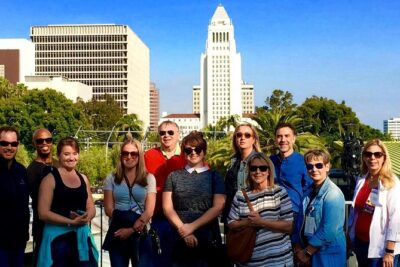 ★ 5.0Culture and Arts Tour of Downtown LA with Angels Flight TicketFrom $39142 reviews
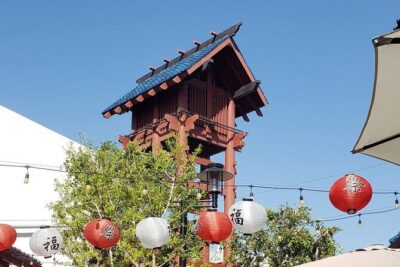 ★ 5.0The History and Architecture of Downtown Los AngelesFrom $3994 reviews
 ★ 5.0Downtown Los Angeles History and Architecture Walking TourFrom $3593 reviews
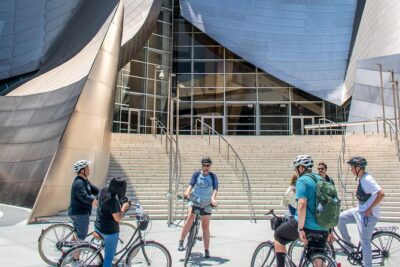 ★ 5.0Downtown Los Angeles Bike TourFrom $8276 reviews
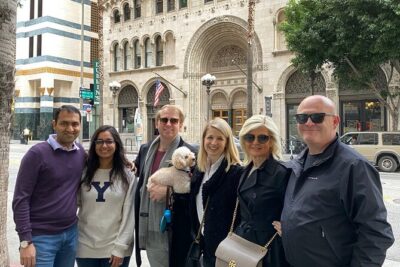 ★ 5.0Downtown Los Angeles Architecture Walking TourFrom $3873 reviews
★ 5.0The History and Architecture of Downtown Los AngelesFrom $3966 reviews
★ 5.0Downtown Los Angeles Architecture Walking TourFrom $3873 reviews
★ 5.0The History and Architecture of Downtown Los AngelesFrom $3966 reviews
Browse the lists this tour appears in