
Review · DOWNTOWN LA TOURS
Downtown Los Angeles: Culture and Arts Walking Tour
Downtown Los Angeles can feel overwhelming, but this tour gives it shape fast. I like how it mixes public transportation history with real stops you can point to on a map, so the story doesn’t float above the street. You’ll hear how car culture wrestled the metro system, including the fate of the original Red Line.
Two things I really enjoy: you get serious design eye-candy and you also get context that makes it understandable. The architecture-heavy route covers Union Station, the Bradbury Building, and major Downtown cultural institutions, plus a look at how today’s downtown gentrification changed what you see block by block.
One consideration: it’s a 2-hour walking tour, so plan on comfortable shoes and keeping a light carry. You also won’t have meals or museum entrance fees included, so budget for a snack if Grand Central Market is on your list.
In This Review
- Key highlights you should know before you go
- Downtown Los Angeles in two hours: why this route makes sense
- Starting at Spring Arcade: get your bearings before you go
- Public transportation in LA: metro history vs car culture
- Angels Flight: turning the transportation story into a ride
- The Last Bookstore, The Bradbury Building, and Grand Central Market
- Grand Street arts and music: Disney Concert Hall to MOCA and The Broad
- Civic Center LA: where government legends live
- Olvera Street and the Spanish Empire: LA’s origin on foot
- Union Station finish: mission revival meets Art Deco swagger
- Price and value: is $39 a fair deal for what you get
- What I’d pack and plan for
- Who this tour suits best (and who might want a different plan)
- What you can learn fast from the guide quality
- Should you book this Downtown LA culture and arts tour?
- FAQ
- How long is the Downtown Los Angeles culture and arts walking tour?
- Where do I meet the guide?
- Where does the tour end?
- What’s included in the price?
- Are meals or museum entrance fees included?
- Is it only for adults, or can teens enjoy it?
Key highlights you should know before you go
- Transit history that explains why LA feels traffic-heavy and how the metro story shaped Downtown
- Angels Flight included as an on-the-ground moment after the transportation talk
- Classic Downtown photo stops like The Bradbury and Union Station
- Grand Central Market as a practical LA food stop (buy what you want)
- Civic Center and Olvera Street for the political legends and Spanish-era origin story
- Short, guided structure that fits well into a day that already has a lot going on
Deeper into Downtown LA
- Old and New Downtown Los Angeles Walking Tour★ 5.0 · 222 reviews
- Culture and Arts Tour of Downtown LA with Angels Flight Ticket★ 5.0 · 142 reviews
- The History and Architecture of Downtown Los Angeles★ 5.0 · 94 reviews
Downtown Los Angeles in two hours: why this route makes sense
Downtown LA is where Los Angeles tries to be itself. That can mean big architecture, big institutions, and big changes in who lives and works nearby. This tour helps you make sense of all that by choosing a tight route where history and design sit close together.
The big win is the pacing. Two hours is long enough to connect dots, but short enough that you still feel mobile after. You’ll walk, pass landmarks, and get a guided storyline that links older LA to the current Downtown vibe.
If you’re the type who likes reading the city while you walk, you’ll get a lot out of it. If you prefer a slow, museum-style afternoon, you may want to pair this with a longer stop elsewhere.
Starting at Spring Arcade: get your bearings before you go
The meeting point is 541 S Spring St, outside the Spring Arcade building. That’s a smart choice because it puts you in the center of Downtown activity right away, without sending you across town first.
From the start, the guide’s tone matters. The experience is built around listening while you move, not around standing still for long stretches. You’ll get a quick orientation to Downtown’s layout and why certain streets and hubs matter historically.
Bring comfortable shoes because the route is walk-forward. Also plan to travel light since luggage or large bags aren’t allowed.
Public transportation in LA: metro history vs car culture
Most people come to LA with one default setting: traffic. This tour doesn’t deny it, but it adds an important layer. You’ll learn that LA has an extensive metro system, and that the city’s transportation choices have always been political, not just practical.
A key storyline is the struggle between mass transit and car culture. You’ll also hear about the demise of the original Red Line. Even if you’ve used the subway before, this kind of explanation changes how you read the system: it becomes a history lesson, not just a way to get from point A to point B.
This part works especially well for first-timers and repeat visitors. First-timers leave with a new mental map of how Downtown connects. Repeat visitors often leave with a better understanding of what changed and why.
Angels Flight: turning the transportation story into a ride
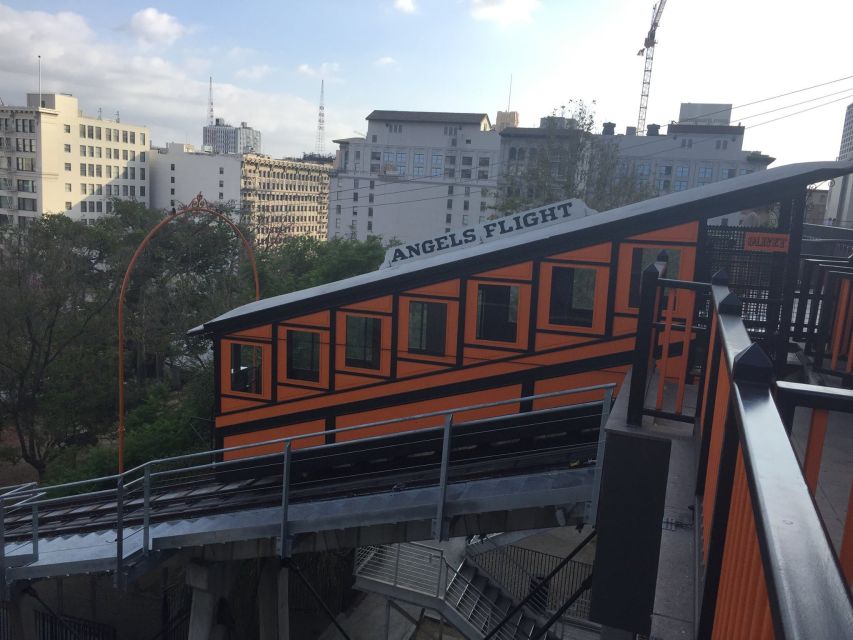
After the transit talk, you’ll experience Angels Flight later in the tour. That’s not a random detour. It’s a short, iconic way to connect the history conversation to something you can feel in motion.
What I like about including it is that it breaks up the walking with a real Downtown moment. Also, funiculars fit LA’s odd-but-interesting transit history. They remind you that the city has always experimented, even when the dominant story was cars.
If you tend to avoid transit rides because you think they’ll be confusing, this is a good confidence-builder. You get context first, then you try the system.
Prefer to walk it? More LA walking tours


The Last Bookstore, The Bradbury Building, and Grand Central Market
This section is where the tour feels distinctly LA. You’ll move from one famous stop to another, but each one does a different job in the bigger story.
The Last Bookstore is the kind of place that makes Downtown feel creative rather than just commercial. Even if you don’t buy anything, it signals that LA has always had its own counterculture energy—within the city center, not off in some separate world.
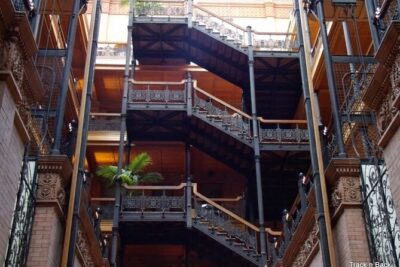
Next is The Bradbury Building, one of those buildings that’s so recognizable you might think you’ve seen it before in photos or film. The point of the stop isn’t just the facade. It’s the architecture and atmosphere: the guide’s job is to explain how Downtown buildings became stages for LA life.
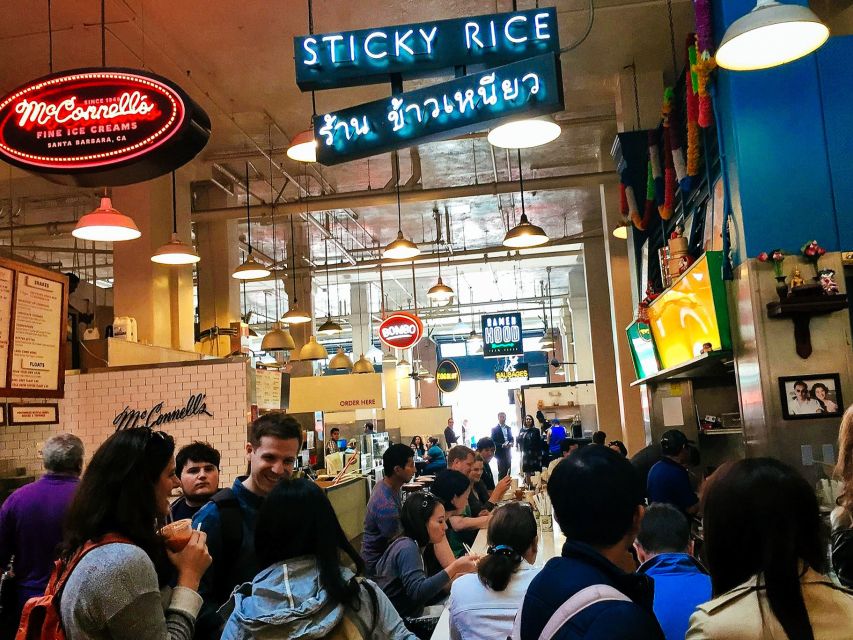
Then you hit Grand Central Market. This is where you can make the tour practical for your day. Since meals aren’t included, you’ll want to plan to buy a snack or quick lunch here if you’re hungry. It’s also a good time to people-watch, because the market sits at the intersection of locals, office workers, and visitors.
Two practical tips: keep an eye on time so you don’t linger too long before the next sights, and treat the market as your food option since the tour doesn’t include meals.
Grand Street arts and music: Disney Concert Hall to MOCA and The Broad
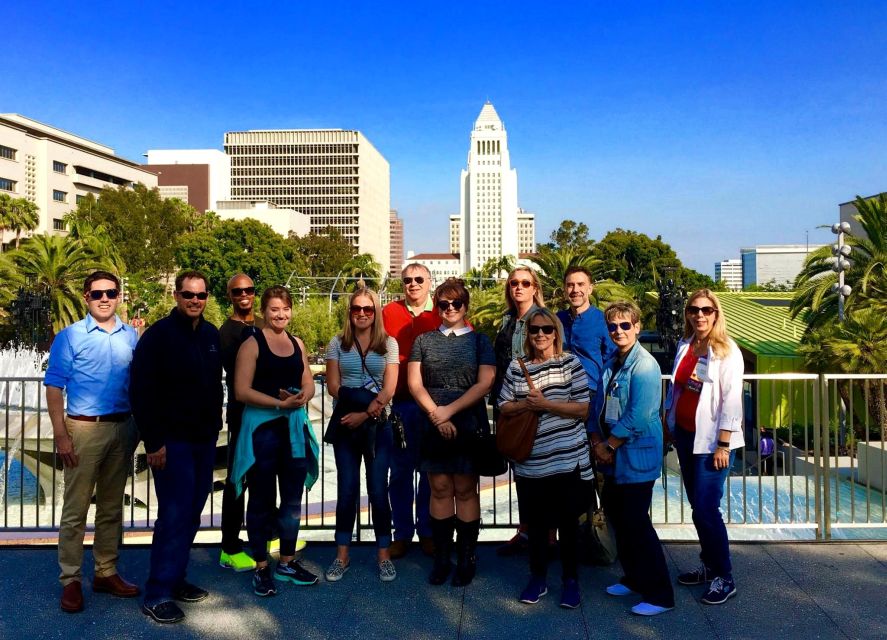
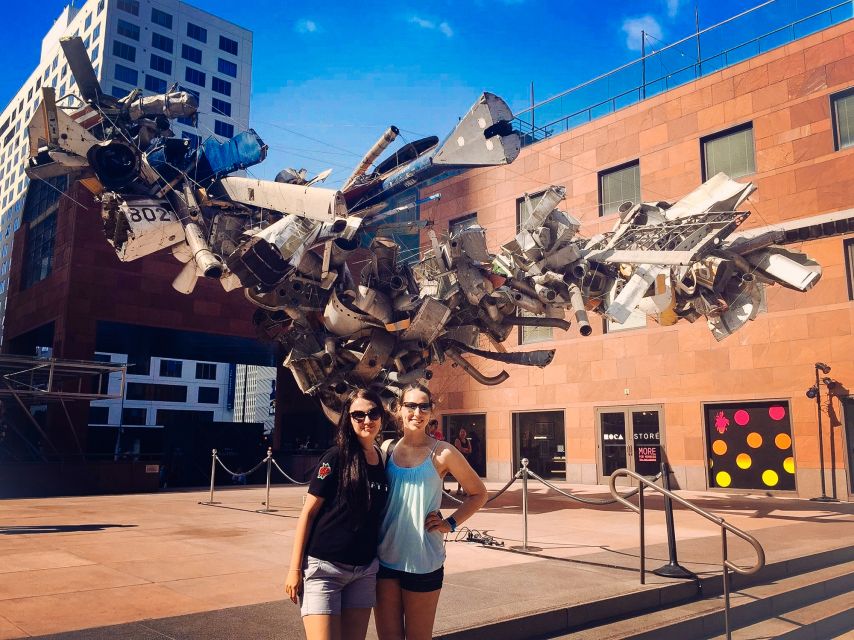
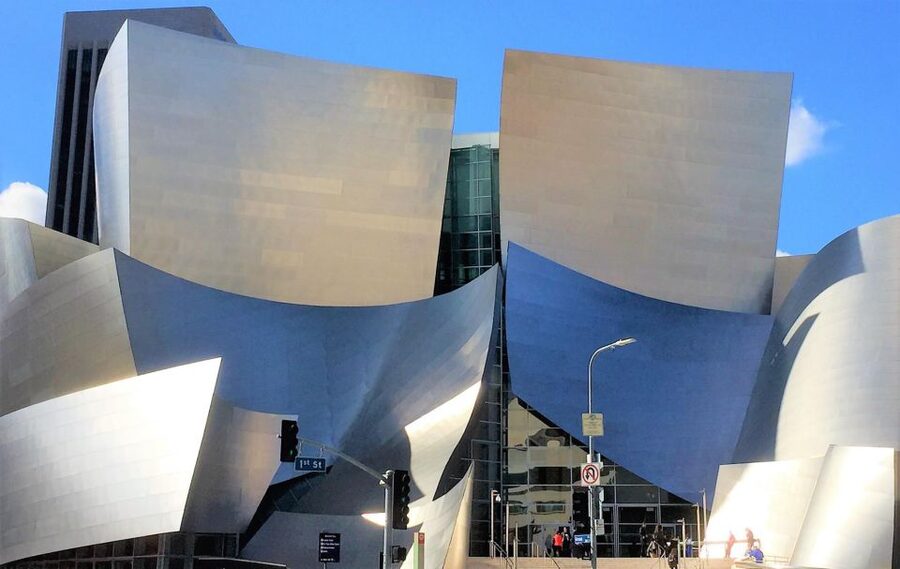
Downtown’s cultural institutions line up in a way that makes this tour feel like an outdoor guide to modern LA art life. You’ll see areas around Walt Disney Concert Hall, the Music Pavilion, and museums on Grand Avenue such as the Museum of Contemporary Art and The Broad.
This is also where the guide’s storytelling quality shows. The best moments here are the ones that connect the buildings to why people care about them: symphonies, public art, and the way Downtown became a destination for culture rather than just business.
A realistic note: the tour doesn’t include museum entrance fees. That means you’ll likely get more from exterior views and guided context than from paid interiors. If you want to go inside a museum, bring extra time and plan for admission on your own.
If you’re an art person, you’ll still enjoy it even without entry. The architecture alone is part of the experience, and the guide’s framing helps you understand what you’re looking at.
Civic Center LA: where government legends live

Then you shift from arts to power. The Civic Center of Los Angeles is the administrative hub, and it’s an important stop if you want the city’s story to feel complete.
You’ll learn about the administrative functions that keep a sprawling city operating, and you’ll hear local legends tied to leadership. The tour includes stories about former Mayor Tom Bradley and retired police chief William Parker.
I like this section because it balances the more glamorous architecture stops. It gives you the Downtown reality check: this area isn’t just for photos. It’s where decisions get made, and that helps explain why neighborhoods and city priorities change over time.
Olvera Street and the Spanish Empire: LA’s origin on foot
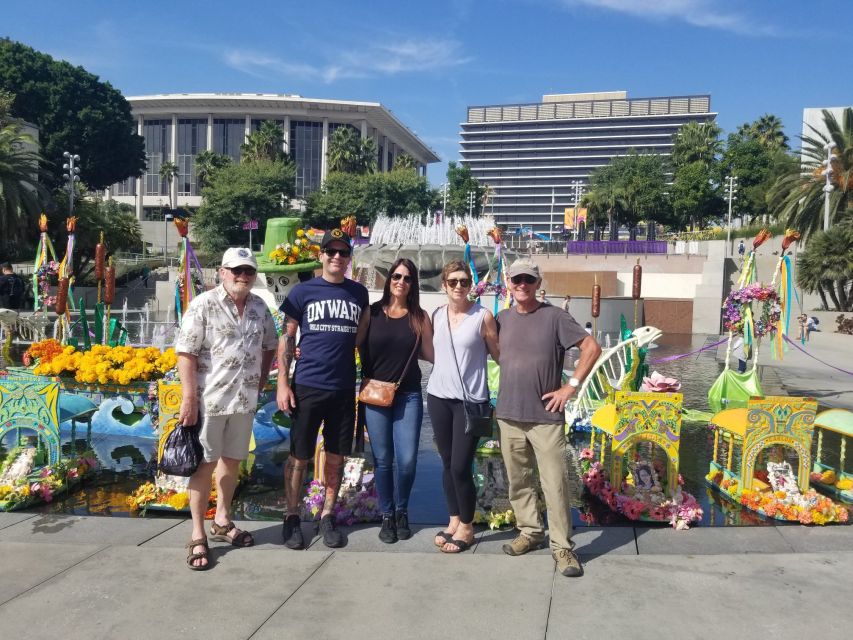
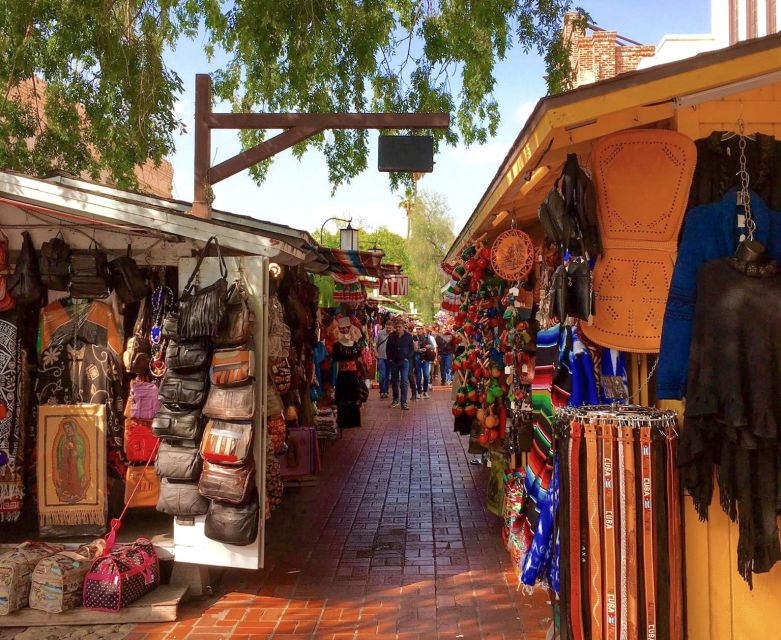
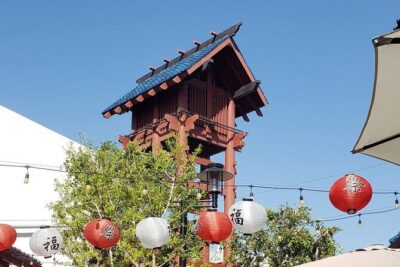
Next comes the cultural hub of Downtown, and it’s one of the most meaningful shifts in the whole experience. Olvera is where the tour starts to feel less like a museum walk and more like a living slice of old LA.
You’ll learn about Olvera Street as the oldest street in Los Angeles, and you’ll hear the origin story behind the city name—connected to the Spanish Empire and the early settlement era. This is the portion that ties the city’s present architecture and institutions back to the people and power structures that shaped it long before today’s skyline.
If you like history that you can actually stand in, this stop will land. You’ll get a feel for what pueblo life was like in LA and how Spanish-era influences shaped early development.
One more thing: the gentrification theme isn’t just mentioned as a buzzword. You’ll understand it as a force that changes what a street feels like and who it serves.
Union Station finish: mission revival meets Art Deco swagger
The tour ends at Union Station, an incredible finish because it’s both beautiful and functional. The tour focuses on Union Station’s mission revival look with Art Deco details, which is a cool mix you don’t see every day.
You’ll also learn why it’s known as the Grand Central of the West. That framing matters because Union Station wasn’t just built to move trains. It was built to signal LA’s ambition, and it still does.
As a final stop, it’s a win for two reasons. First, it’s easy to navigate after the tour. Second, it’s a landmark that matches the tour’s theme: transit as a builder of the city’s identity.
If you’re lingering after, look around the building itself. The architecture is part of the story you’ve been hearing all afternoon.
Price and value: is $39 a fair deal for what you get
At $39 per person for about two hours, the value is strong if you want a concentrated Downtown orientation. You’re not paying for museum admissions or meals. Instead, you’re paying for a guide who connects transit history, architecture, and the city’s shifting social landscape.
That’s a smart trade when you’re visiting LA for the first time or you only have one afternoon that needs to do a lot. It’s also good value if you’re the kind of traveler who takes notes and plans to use what you learn the next day.
Where you might feel the cost more is if you’re mostly interested in one thing—like only art interiors or only major museums. This tour is designed as a walking, viewing, and storytelling experience. Pair it with one paid attraction afterward if you want deeper entry time.
What I’d pack and plan for
Do bring comfortable shoes. Downtown is flat in places, but you’ll still be walking enough that anything less than comfortable becomes annoying.
Also plan for “light and simple.” Luggage or large bags aren’t allowed. If you’re coming from a hotel with lots of baggage, consider storing it before you start.
For timing, think of this tour as a window that starts in the early Downtown core and ends at a major transit hub. It can fit cleanly into a day that includes another activity later.
Who this tour suits best (and who might want a different plan)
This works best for people who want structure. If you like being walked through a theme—transit, architecture, and origins—you’ll appreciate the way the stops link together.
It’s also great for art-and-history combos. You’ll see major cultural landmarks and then get the civic and Spanish-era context that makes those places feel grounded.
If you hate walking or you’re looking for long museum time, you might find the pace too brisk. In that case, consider using the same neighborhood to DIY a slower day, with museums as your main focus.
What you can learn fast from the guide quality
One of the strongest signals from past participants is that the guide makes Downtown click. Guides like Paul, Sam, Matt, Chris, and Phil show up in the recorded feedback, and the common thread is clear communication and a lively Downtown love.
Even if you’re returning to LA, a good guide helps you stop treating Downtown as a set of disconnected landmarks. You start seeing patterns: transit choices, architectural statements, and neighborhood change all feeding into the same story.
Should you book this Downtown LA culture and arts tour?
Book it if you want a two-hour Downtown orientation that goes beyond surface sightseeing. It’s especially worth it if you care about architecture, public institutions, and the way LA’s transit and Spanish-era roots shaped the city you see today.
Skip or rethink it if you want heavy museum time with paid entrances, or if you’re not up for walking. This is a walking storytelling experience, not an all-day sit-down tour.
If you’re trying to make your LA day smarter instead of longer, this one is a good bet—start with the history, see the landmarks, and end with Union Station feeling like the city’s story made physical sense.
FAQ
How long is the Downtown Los Angeles culture and arts walking tour?
The tour lasts 2 hours.
Where do I meet the guide?
You meet at 541 S Spring St, Los Angeles, CA 90013, outside of the Spring Arcade building.
Where does the tour end?
The tour finishes at 800 Alameda St, Los Angeles, CA 90012.
What’s included in the price?
The tour includes a professional English-speaking guide.
Are meals or museum entrance fees included?
No. Meals, drinks, and museum entrance fees are not included.
Is it only for adults, or can teens enjoy it?
It’s designed for a broad range of ages, and at least one booking specifically noted that their teenagers enjoyed the tour and learned a lot.
More Tour Reviews in Los Angeles
- Full-Day Iconic Sights of LA, Hollywood, Beverly Hills, Beaches and More
★ 5.0 · 6,147 reviews - Warner Bros. Studio Tour Hollywood
★ 4.5 · 5,246 reviews - Hollywood, Beverly Hills & Celebrity Homes Tour by Open Air Bus
★ 5.0 · 2,557 reviews - Hollywood Sign 2.5-Hour Tour with Comedians and Their Dogs
★ 5.0 · 2,496 reviews - Full-Day LA Tour: Santa Monica, Hollywood and Beverly Hills
★ 5.0 · 2,431 reviews
Los Angeles, Block by Block
- Los Angeles Original 90-Minute Walking Tour to The Hollywood Sign
★ 5.0 · 693 reviews - Hollywood Stars Tour: Walk of Fame, Celebrity Homes, Sunset Strip
★ 4.0 · 341 reviews - Haunted Hollywood Walking Tour: True Crime and Creepy Tales
★ 5.0 · 299 reviews - Old and New Downtown Los Angeles Walking Tour
★ 5.0 · 222 reviews - LA: Walk of Fame, Hollywood Sign & Beverly Hills Tour
★ 4.9 · 179 reviews
Keep Going in Downtown LA
- Downtown Los Angeles Food Tour
★ 5.0 · 501 reviews - Old and New Downtown Los Angeles Walking Tour
★ 5.0 · 222 reviews - Culture and Arts Tour of Downtown LA with Angels Flight Ticket
★ 5.0 · 142 reviews - The History and Architecture of Downtown Los Angeles
★ 5.0 · 94 reviews - Downtown Los Angeles History and Architecture Walking Tour
★ 5.0 · 93 reviews
Keep exploring Los Angeles: fresh reviews from around town




Downtown LA Tours, compared.
 ★ 5.0Downtown Los Angeles Food TourFrom $89501 reviews
 ★ 5.0Old and New Downtown Los Angeles Walking TourFrom $38222 reviews
 ★ 5.0Culture and Arts Tour of Downtown LA with Angels Flight TicketFrom $39142 reviews
 ★ 5.0The History and Architecture of Downtown Los AngelesFrom $3994 reviews
 ★ 5.0Downtown Los Angeles History and Architecture Walking TourFrom $3593 reviews
 ★ 5.0Downtown Los Angeles Bike TourFrom $8276 reviews
 ★ 5.0Downtown Los Angeles Architecture Walking TourFrom $3873 reviews
★ 5.0The History and Architecture of Downtown Los AngelesFrom $3966 reviews
★ 5.0Downtown Los Angeles Architecture Walking TourFrom $3873 reviews
★ 5.0The History and Architecture of Downtown Los AngelesFrom $3966 reviews
Browse the lists this tour appears in