
Review · AUDIO TOURS
Los Angeles’ Dreamland: A Culver City Audio Tour
Culver City has movie secrets on every block. This low-cost walk uses VoiceMap to take you past studio landmarks and local hangouts, while narrators like Manny tie the places together with film-era stories you can actually picture as you walk. I especially love the offline audio and map support and the way the route threads through side streets you’d normally miss in a drive-by, including areas near Culver City Studios. One possible drawback: the app can be glitchy with directions or audio timing, and parts of the route sit along busier roads where it can be harder to hear.
You’re not signing up for a museum marathon or a guided lecture where you have to keep up. Instead, you get a self-guided loop that’s built around stops you can pause at, glance around, and then press play again when you’re ready.
At just $8.99 and around 1 hour 15 minutes to 1 hour 30 minutes, it’s a good “choose-your-own-speed” activity. Still, you’ll want to plan to bring your own smartphone and headphones, and you should expect some walking on sidewalks that don’t always feel like tourist-bubble perfection.
In This Review
- Key highlights you’ll notice right away
- A Self-Guided VoiceMap Walk Through Culver City Studios
- Meeting at the Culver Hotel and Getting Set Up Fast
- The Harry Culver Story and the Downtown Studio Approach
- Media Park Stops: Actors Gang Theatre and the Street-Level Scene
- Citizen Public Market and Local Hangouts You Can Actually Visit
- The Culver City Clock, Zoetropes, and Visual Nerd Moments
- Kirk Douglas Theater: Secret Previews and Audience Testing
- Hobbit Houses: Lawrence and Martha Joseph Residence and Apartments
- The MGM/Sony Front Gate and the Lion’s Fountain
- How Long It Takes, and What Walking Feels Like
- What This Costs and Why It’s Good Value at $8.99
- Who Should Book This Culver City Audio Tour
- Should you book Dreamland: A Culver City Audio Tour?
- FAQ
- What does the tour cost?
- How long is the Culver City audio tour?
- Where do I start the tour?
- Does the tour end at the same place?
- What language is the tour offered in?
- Do I need an internet connection during the tour?
- Are headphones and a smartphone included?
- Is food included?
- Are museums or attractions included inside the tour?
- Is this a group tour with other people?
Key highlights you’ll notice right away
- Offline audio, maps, and geodata so you’re not stuck hunting for a signal
- A route built for film nerds and casual movie fans, from MGM/Sony’s gate to the Kirk Douglas Theater
- Small-street energy that helps you see more than the big-name façades
- Practical pacing: short stops you can skip, linger at, or revisit by stopping and starting playback
- Talky, story-driven narration with personal-sounding details from a local voice (Manny)
- Worth it even if you’re only passing through, because you finish back at the start
More Los Angeles outings we have rated and written up
- Half Day Best of Los Angeles Guided City Tour★ 5.0 · 1,966 reviews
- City Sightseeing Hop-On Hop-Off Bus Tour with Audio Guide★ 3.0 · 1,083 reviews
- Full-Day City Tour of LA, Hollywood, Beverly Hills & Beaches★ 4.8 · 683 reviews
A Self-Guided VoiceMap Walk Through Culver City Studios
This experience is a private, self-guided audio tour delivered through the VoiceMap app. You’re responsible for your own pace, so you can move faster when you’re in a hurry or slow down when the streets feel photogenic.
What makes it feel practical is the offline setup: the tour includes offline access to audio, maps, and geodata. That matters in Los Angeles, where cell service can be unpredictable block to block. If you download and test everything before you leave, you’re much more likely to enjoy the tour instead of troubleshooting your phone.
The narration is clearly designed for walking. It points out what you’re seeing in front of you, and it also gives you context that helps you connect the dots between studio history and today’s Culver City streets. That’s the best kind of “audio tour value”: you’re not just learning facts. You’re learning how to look.
Meeting at the Culver Hotel and Getting Set Up Fast
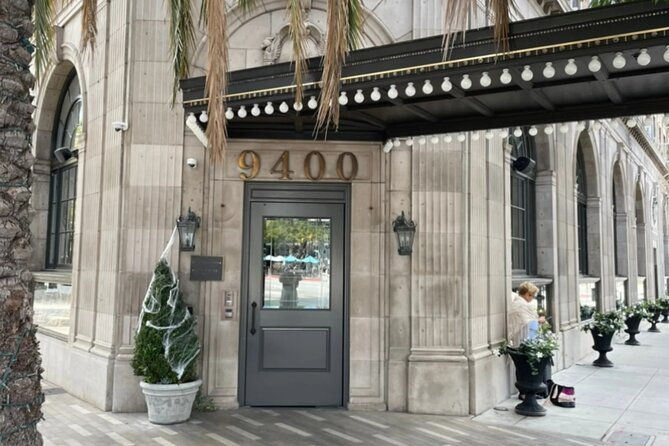
You start at the Culver Hotel, 9400 Culver Blvd, Culver City. The tour ends back at the same meeting point, which is great for planning. No tricky one-way logistics, no “where’s the pickup?” stress.
Even though the tour is available any time of day within the listed window (7 days a week, 12:00 AM to 11:59 PM), you’ll enjoy it more if you start when there’s daylight. The route includes sidewalks along roads with traffic, and good visibility makes it easier to spot things like gates, fountains, and building details that the narration calls out.
Don’t forget the basics that aren’t included:
- Your smartphone
- Headphones
- Any admission fees if you decide to enter a place on your own
If you want one small strategy: stand near the start point, open the app, and confirm you have the correct audio loaded before you walk off. Some people report the verbal map directions can get confusing at a moment or two, so having the audio ready reduces friction.
The Harry Culver Story and the Downtown Studio Approach
Your first moments are right at the heart of the story. The narration begins near the Culver Hotel with the story of Harry Culver, the visionary developer after whom this suburb is named. That opening matters because it sets up why the next parts of the walk feel inevitable. Culver City didn’t just grow randomly; it was shaped.
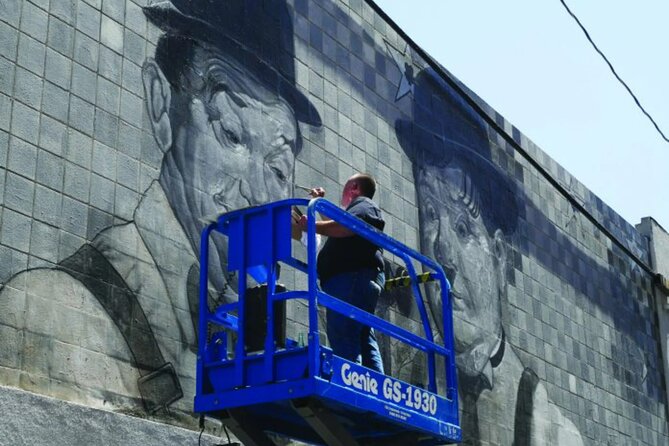
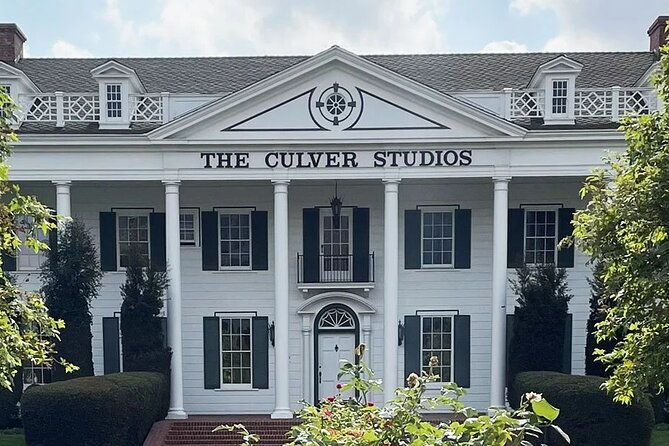
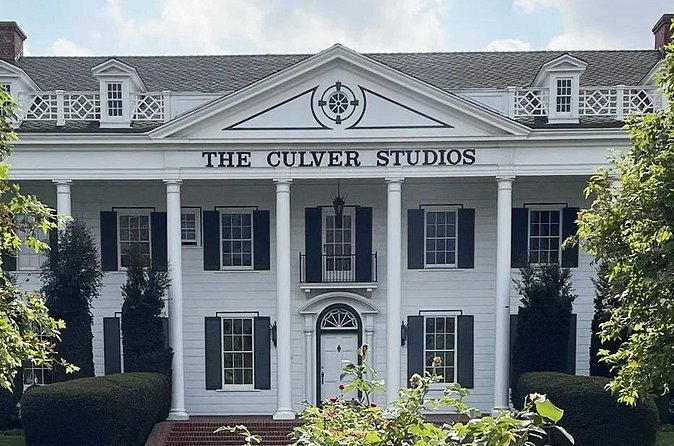
From there, you wind through downtown, heading past key public-facing landmarks. Expect a walk that feels like a working neighborhood, not a “theme park downtown.” You’ll pass by Culver City Studios and the Actors Gang Theatre in Media Park.
Why I like this opening phase: it gives you a “now and then” contrast quickly. You’re seeing modern spaces, but the narration helps you connect them to the kinds of production energy that made Culver City famous.
A small note: the stops here can be close together, so don’t rush. If you skip too much, you’ll miss the way the tour links each place to the next one.
Media Park Stops: Actors Gang Theatre and the Street-Level Scene
As you continue, the route highlights the Actors Gang Theatre in Media Park. This is one of those stops where audio tours do better than guidebooks, because you’re walking at street level and you need help noticing the significance of what you’re looking at.
The value here is the tone: the tour doesn’t treat the area like a frozen set piece. It presents the performance culture as something alive enough to keep shaping the neighborhood.
One practical tip: if you’re sensitive to noise, consider the time of day. Parts of the walk go alongside roads, and audio can be harder to hear when traffic noise is loud. Headphones help a lot, but they won’t work miracles.
More Los Angeles outings we have rated and written up
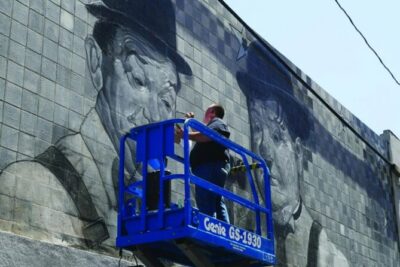
Citizen Public Market and Local Hangouts You Can Actually Visit
The walk includes a stop for Citizen Public Market and other nearby dining spots. Food isn’t included, but this is a smart inclusion because it gives you a natural break point. If you’re the type who likes to pair walking with a snack, you’re in the right pocket of the city.
The tour also calls out watering holes with movie-industry lore, including:
- Seventy 7 Speakeasy
- Backstage Bar
Even if you don’t go inside, the narration makes the outside feel story-rich. These stops add personality to the walk because they’re not just about productions. They’re about the rhythms around productions: the downtime, the small escapes, and the places where people could breathe for a minute.
The drawback to keep in mind: since these places are real businesses, you might run into hours or crowds that change your ability to pop in. Still, you can enjoy the tour view just by passing by and listening.
The Culver City Clock, Zoetropes, and Visual Nerd Moments
Later on, the tour shifts toward objects you can spot without needing a big building entrance. You pass by the Culver City Clock, and the narration stops to explain it as you walk.
Then you get a film-tech stop: the Zoetropes of Culver City. If you’ve ever been fascinated by how early motion effects worked, this is the kind of detail that turns a standard neighborhood stroll into a “wait, look at that” moment.
You’ll also pass by Alandales. The narration notes it as a landmark, and this is where the audio experience shines: you’re being taught what to notice, even when a place doesn’t look dramatic from the curb.
If you want photos, this is where you’ll probably pause the most. These types of stops reward curiosity more than they reward speed.
Kirk Douglas Theater: Secret Previews and Audience Testing
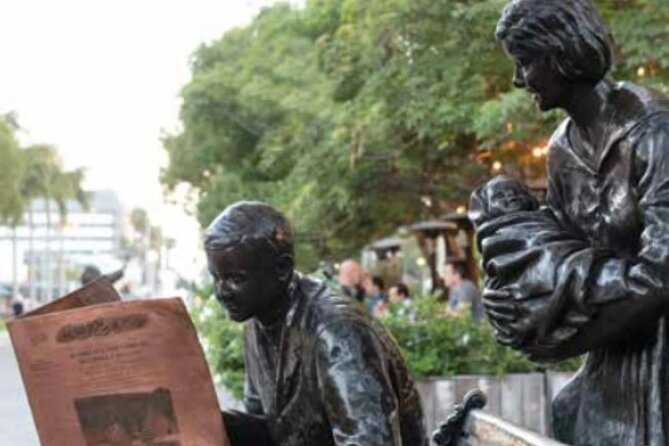
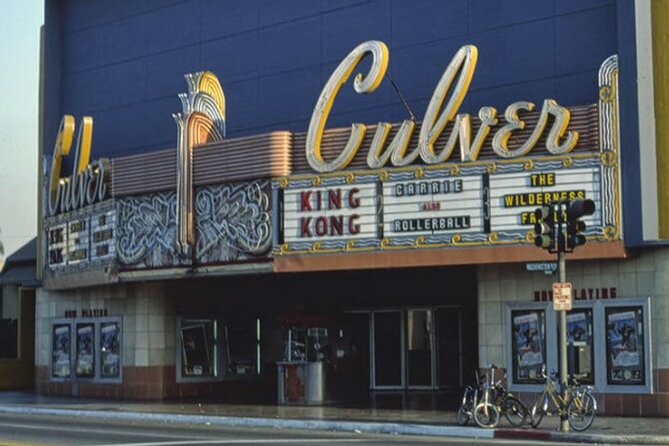
One of the more intriguing stops is the Kirk Douglas Theater. The tour points out how it was once used for secret and unannounced previews to gauge audience reactions.
That’s a great theme for an audio walk because it changes how you experience a theater building. You’re no longer just seeing the facade. You’re hearing the reason the place mattered to decision-making, and that makes the stop feel tied to real film-world process.
Practical note: you’ll be near a theater environment. If there’s event activity, you might see more foot traffic than during a quiet weekday. Either way, you’ll get the story from the audio.
Hobbit Houses: Lawrence and Martha Joseph Residence and Apartments
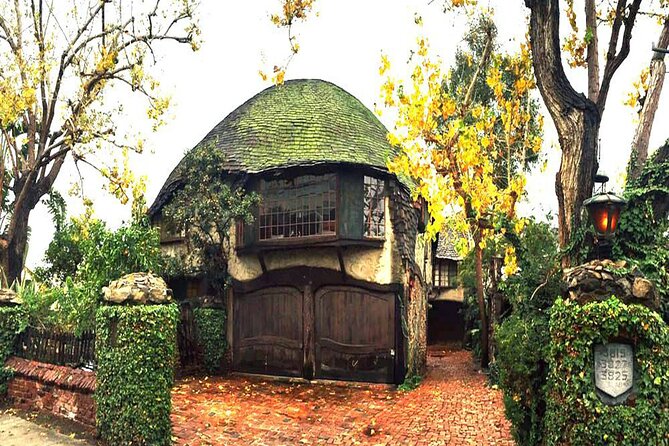
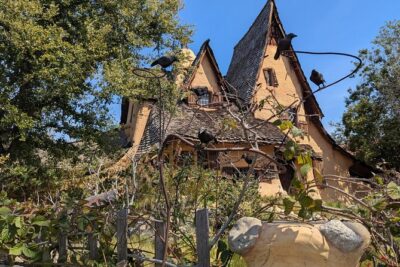
Next up, the tour calls out the Lawrence and Martha Joseph Residence and Apartments, affectionately known as Hobbit Houses. The nickname alone tells you this is the kind of location that sticks in your mind, and the narration helps explain why it earned that reputation.
I like stops like this because they take the tour away from only big-ticket studio names. You see how film history exists in ordinary streets and oddball architecture, not just at celebrity gates.
If you’re into film trivia, this is a stop that turns into a conversation starter. If you’re not, it still works because it’s visually distinctive and easy to spot.
The MGM/Sony Front Gate and the Lion’s Fountain
The route includes the famous MGM/Sony Pictures front gate, a spot tied to movie icons who drove through on their way to work, including Marilyn Monroe, Brad Pitt, and Leonardo DiCaprio. Even if you’ve seen photos of gates like this online, hearing the context as you stand near it changes the feel. It becomes a point on a timeline instead of just a recognizable landmark.
The narration also connects the gate to other stories of film greats, including careers and private lives, plus notes about illegal activities mentioned in the tour framing. This is where the tour leans into Hollywood myth and reality together.
Finally, you’ll pass by the Lion’s Fountain, with the tour pointing out which famous film felines are represented there. It’s a playful stop that breaks up the heavier gate-and-theater energy with something you can enjoy on a lighter level.
For photos, stand back a bit first. Gates and fountains often have sight lines that look better from a couple angles, and stopping to get it right is easier than trying to frame everything while you’re still walking.
How Long It Takes, and What Walking Feels Like
Plan for about 1 hour 15 minutes to 1 hour 30 minutes. That range makes sense because you can pause for longer at the stops you like and move faster through the ones you don’t care about.
Expect a walking tour style that includes short stretches between points. Some segments include traffic noise, which can affect audio clarity. If you’ve got decent headphones, you’ll likely be fine. If you rely on phone speaker only, you might struggle on busier roads.
Directions also deserve a quick heads-up. A few reports describe moments when the map guidance seemed off or the audio cut out in a way that felt frustrating. The good news is that you can usually recover by checking where you are on the map and manually starting the next segment.
My practical advice: when you feel lost, don’t sprint to fix it. Stop, look at your map position, locate the next stop marker, then resume playback. The tour is built for pausing.
What This Costs and Why It’s Good Value at $8.99
At $8.99 per person, you’re paying for a self-guided storyline plus offline tech. That price is low enough that you can justify it even if you’re unsure you’ll love every minute.
Here’s the value logic I’d use before booking:
- If you like walking and want movie context without paying for a separate ticketed attraction, this is a strong match.
- If you’re the kind of person who enjoys stopping for photos, the Zoetropes, clock, fountains, and gate area add visual payoff.
- If you hate app-based navigation or you’re the type who refuses to use headphones, you’ll likely find friction.
Also consider that the tour explicitly doesn’t guide you through museums or other attractions en route. If you decide to go inside somewhere, you’ll pay separately. Still, that freedom can be a plus: you only spend money when you truly want to.
Who Should Book This Culver City Audio Tour
This is a great fit if you want:
- A low-pressure way to see Culver City beyond the obvious studio headlines
- A film/history angle that doesn’t feel like homework
- An activity that you can pace yourself, with short story chapters
It’s also a good “bonus” tour. Pair it with brunch, shopping, or an evening plan in the area, because you end back at the start.
It may not be your best choice if:
- You need a fully guided, in-person experience with a human present the whole time
- You dislike any potential tech glitches (even if the tour offers offline tools)
Should you book Dreamland: A Culver City Audio Tour?
If you like movie history, enjoy walking, and you have headphones and a charged phone, I’d book this. The offline setup makes it easier to trust the experience, and the combination of studio landmarks, neighborhood hangouts, and small visual details like the Zoetropes makes it more interesting than a plain “sights” stroll.
Skip it only if you strongly prefer guided museums, or if app navigation usually annoys you. For everyone else, this is one of those affordable tours that turns time outside into a story you can revisit while you keep exploring Culver City.
FAQ
What does the tour cost?
The tour costs $8.99 per person.
How long is the Culver City audio tour?
It’s about 1 hour 15 minutes to 1 hour 30 minutes.
Where do I start the tour?
You start at the Culver Hotel, 9400 Culver Blvd, Culver City, CA 90232, USA.
Does the tour end at the same place?
Yes, it ends back at the meeting point.
What language is the tour offered in?
The tour is offered in English.
Do I need an internet connection during the tour?
The tour includes offline access to audio, maps, and geodata, which helps if you don’t have strong signal.
Are headphones and a smartphone included?
No. You’ll need your own smartphone and headphones.
Is food included?
No, food and drink are not included.
Are museums or attractions included inside the tour?
The tour does not guide you through museums or other attractions mentioned en route. If you enter any places, you’ll need to pay independently.
Is this a group tour with other people?
It’s a private tour/activity, so only your group participates.
More City Tours in Los Angeles
- Half Day Best of Los Angeles Guided City Tour
★ 5.0 · 1,966 reviews - City Sightseeing Hop-On Hop-Off Bus Tour with Audio Guide
★ 3.0 · 1,083 reviews - Full-Day City Tour of LA, Hollywood, Beverly Hills & Beaches
★ 4.8 · 683 reviews - Grand City Tour of Los Angeles, Hollywood and Beverly Hills
★ 5.0 · 590 reviews - City Tour of Los Angeles, Hollywood and Beverly Hills
★ 5.0 · 444 reviews
More Tours in Los Angeles
- Warner Bros. Studio Tour Hollywood
★ 4.5 · 5,246 reviews - Hollywood, Beverly Hills & Celebrity Homes Tour by Open Air Bus
★ 5.0 · 2,557 reviews - Hollywood Sign 2.5-Hour Tour with Comedians and Their Dogs
★ 5.0 · 2,496 reviews - Full-Day LA Tour: Santa Monica, Hollywood and Beverly Hills
★ 5.0 · 2,431 reviews - Hollywood and Celebrity Homes Bus Tour
★ 4.5 · 2,074 reviews
More Tour Reviews in Los Angeles
- Full-Day Iconic Sights of LA, Hollywood, Beverly Hills, Beaches and More
★ 5.0 · 6,147 reviews - Warner Bros. Studio Tour Hollywood
★ 4.5 · 5,246 reviews - Hollywood, Beverly Hills & Celebrity Homes Tour by Open Air Bus
★ 5.0 · 2,557 reviews - Hollywood Sign 2.5-Hour Tour with Comedians and Their Dogs
★ 5.0 · 2,496 reviews - Full-Day LA Tour: Santa Monica, Hollywood and Beverly Hills
★ 5.0 · 2,431 reviews
Keep exploring Los Angeles: fresh reviews from around town




Audio Tours, compared.
 ★ 3.7Hop-On Hop-Off Bus Tour with Audio GuideFrom $512,030 reviews
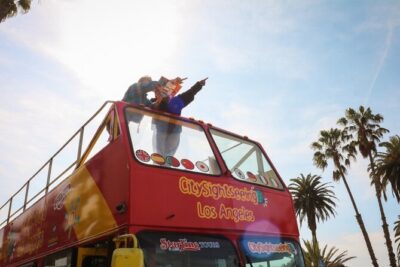 ★ 3.0City Sightseeing Hop-On Hop-Off Bus Tour with Audio GuideFrom $571,083 reviews
 ★ 3.5Hollywood Fame & Celebrity Homes Self-Guided Audio Bundle TourFrom $1640 reviews
 ★ 4.0Pacific Coast Highway: Smartphone Audio Tour, LA to Santa MariaFrom $1113 reviews
 ★ 4.5Downtown Los Angeles: A Self-Guided Audio TourFrom $146 reviews
 ★ 4.0Lost Souls of Hollywood Blvd: a Smartphone Audio Ghost TourFrom $94 reviews
 ★ 5.0APP Self-guided routes West Coast with audio guideFrom $344 reviews
 ★ 3.5Beverly Hills and Rodeo Drive: A Self-Guided Audio TourFrom $143 reviews
Browse the lists this tour appears in