Review · BEVERLY HILLS & RODEO DRIVE TOURS
Beverly Hills and Rodeo Drive: A Self-Guided Audio Tour
Rodeo Drive, explained on your phone. This self-guided GPS audio tour strings together major Beverly Hills shopping stops, architectural oddities, and film-era stories, running from the Beverly Hills Sign area down toward the Church of the Good Shepherd. It’s GPS-triggered and designed around Rodeo Drive-level details you can spot at street level.
I love the offline access to audio and maps, because you can keep walking even if your connection gets cranky. I also appreciate the lifetime access window: once you purchase, you can use the English tour before your trip and again after you’re back home.
The trade-off is it’s truly an audioguide, not a live guide: you’ll need your own smartphone and headphones, and since it’s GPS-triggered, plan on one device per person if you’re traveling as a group so the narration matches your location.
In This Review
- Key highlights at a glance
- Price and timing: is $14.99 worth it?
- How the GPS audio tour really works (and what you must plan for)
- Starting at the Beverly Hills Sign and settling into a 1.9-mile linear park
- Wallis Annenberg Center: when a post office becomes a performing arts landmark
- The Beverly Hills Visitor Center shield: the logo behind the city
- Rodeo Drive’s retail roots: from Richard Carroll to modern brands
- Anderton Court Shops at 332 N Rodeo: Frank Lloyd Wright’s spiral ramp
- The former Beverly Hills Speedway: a surprising 1926 race story
- Church of the Good Shepherd: Mission Revival calm at the end
- 516 North Walden Drive: a film set that became a real home
- What I’d watch for: the one drawback that matters
- Best way to pace it in real life
- Should you book this Beverly Hills and Rodeo Drive audio tour?
- FAQ
- Is this audio tour available in English?
- How long does the Beverly Hills and Rodeo Drive audio tour take?
- Where does the tour start and end?
- Do I need internet access during the tour?
- What do I need to bring with me?
- Can I cancel for free?
Key highlights at a glance
- GPS-triggered audio that guides you as you walk, with offline audio and maps
- Beverly Hills Garden Park’s 1.9-mile linear stroll along Santa Monica Boulevard
- Wallis Annenberg Center explained as a former Italian Renaissance post office (opened in 1934)
- Anderton Court Shops at 332 N Rodeo with Frank Lloyd Wright’s spiral ramp and light well
- A 1926 speedway story tied to a nearby landmark hotel, plus the 70,000-spectator detail
- A calm finish at the Church of the Good Shepherd on North Roxbury Drive
More of Beverly Hills and Rodeo Drive
- Full-Day Iconic Sights of LA, Hollywood, Beverly Hills, Beaches and More★ 5.0 · 6,147 reviews
- Hollywood, Beverly Hills & Celebrity Homes Tour by Open Air Bus★ 5.0 · 2,557 reviews
- Full-Day LA Tour: Santa Monica, Hollywood and Beverly Hills★ 5.0 · 2,431 reviews
Price and timing: is $14.99 worth it?
At $14.99 per person, this is priced like a budget-friendly way to see Beverly Hills without adding a full-day tour to your schedule. The runtime is about 1 hour 15 minutes to 1 hour 30 minutes, which is a sweet spot: long enough to cover multiple major stops, short enough to still leave room for browsing, photos, and a snack on your own.
What makes the price feel more reasonable than it looks is the mix of value items included. You get offline audio, maps, and geodata, plus lifetime access to the English tour (available before your booking date and after). That’s useful if you want to replay it the next time you’re in town, or if your first attempt gets interrupted by real life.
It’s also a private activity for your group, so you’re not sharing the route with strangers. And since this kind of walk is easy to fit into a day, it’s popular enough that it’s commonly booked about a month in advance.
How the GPS audio tour really works (and what you must plan for)
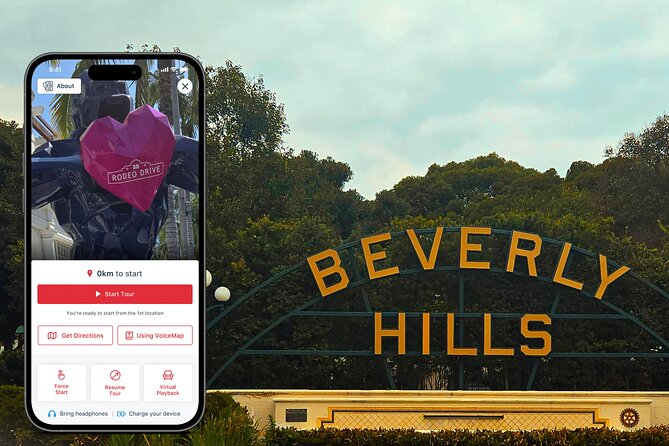
This is a self-guided GPS experience through an app (available on Android and iOS) run by VoiceMap Audio Tours. Before you start, you’ll get directions to the exact starting point so you can get going quickly once you’re standing in the right place.
The key detail: the audio is GPS-triggered. That means your phone needs to be with you, and it needs to be on and listening through headphones. In a group, you can still walk together, but each person should ideally have their own tour running on their own phone. If you try to share one device, timing can get messy fast because each location triggers narration.
So here’s the practical way to think about it:
- Pack your own smartphone + headphones (they’re not included).
- Download for offline use inside the app so you’re not trapped by signal.
- Treat it like a walking script that follows your movement, not like a show where someone talks to everyone at once.
Starting at the Beverly Hills Sign and settling into a 1.9-mile linear park
You begin at the Beverly Hills Sign area on Park Way (1300–1398 Park Way). This is a smart start point. Instead of immediately dropping you into Rodeo Drive traffic and crowds, the tour opens with a walking zone that feels calmer and more “Beverly Hills” in scale.
Right after the welcome, you’re guided along Beverly Hills Garden Park, a 1.9-mile linear park stretching along Santa Monica Boulevard from Wilshire to North Doheny Drive. This is where the audio approach pays off: you can look for architectural cues and landmarks as you move, instead of guessing what you’re seeing. The linear layout also makes it easier to keep your bearings—great when you’re balancing window-shopping with sightseeing.
I like that this section sets a pace. If you want photos, you can slow down. If you want to keep momentum, you can move at a brisk walk and still catch each narration cue.
Wallis Annenberg Center: when a post office becomes a performing arts landmark
One of the best early stops is the Wallis Annenberg Center for the Performing Arts. The audio points it out on your right and frames what you’re looking at with specifics that make the building feel “real,” not just pretty.
Here are the details worth paying attention to:
- It was originally the main Beverly Hills Post Office.
- It was built in an Italian Renaissance style.
- It opened in 1934.
- The influence of honorary mayor and comedian Will Rogers is part of the story.
- The Beverly Hills Historical Society designated it Local Landmark No. 5.
That’s a lot of context for a single facade. And it matters because it changes how you look at the architecture. You’re not just passing a theater-adjacent building; you’re seeing an old civic building repurposed for modern arts.
Practical tip: spend 2–3 minutes standing where you can view the front cleanly before you move on. The audio set-up encourages you to treat the walk like a sequence of “spot-and-learn” moments.
More Los Angeles outings we have rated and written up
The Beverly Hills Visitor Center shield: the logo behind the city
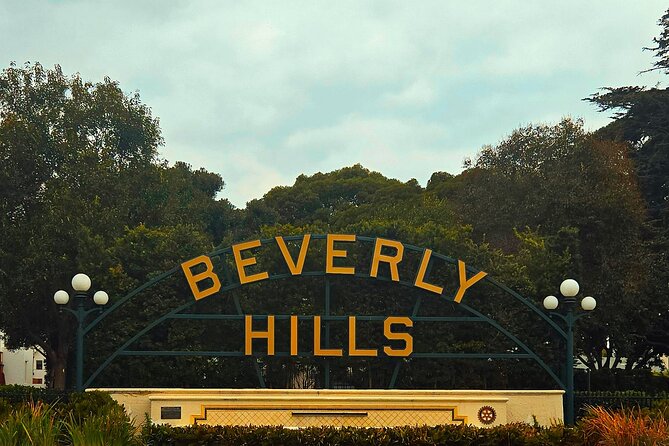
The Beverly Hills Visitor Center shows up next, on your left. This is one of those small-but-meaningful details that helps you understand how Beverly Hills markets itself.
The shield here is a half-height replica of the street signs marking city entrances on major thoroughfares, and it’s recognized worldwide. That’s a fun fact because it explains why the city’s branding looks so consistent in photos and storefronts across different corners of town.
If you’re the kind of traveler who likes to understand the “why” behind what you’re seeing, this stop does that. It’s quick, but it gives you a visual anchor before you hit the shopping strip.
Then the tour shifts toward Rodeo Drive retail history.
Rodeo Drive’s retail roots: from Richard Carroll to modern brands
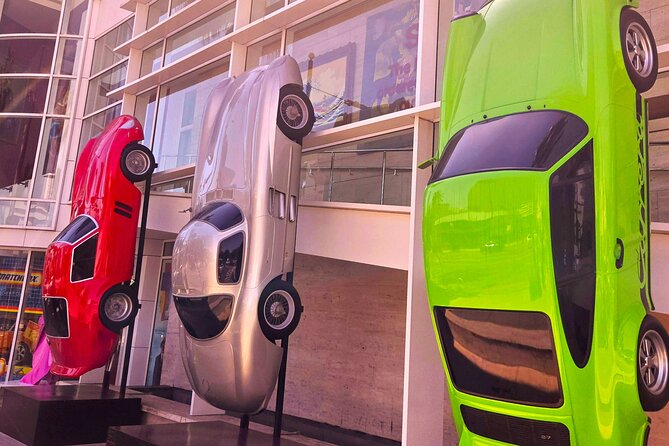
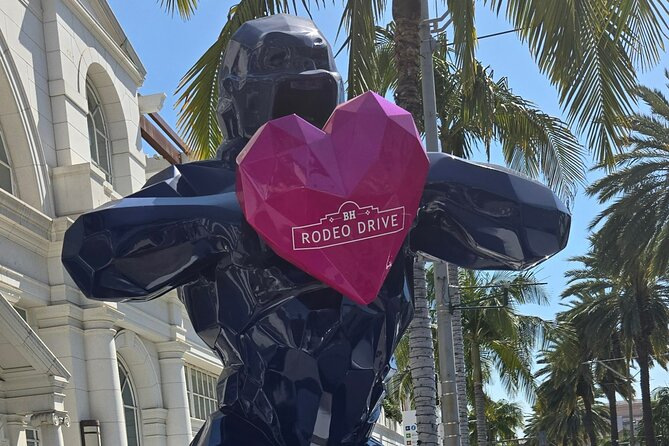
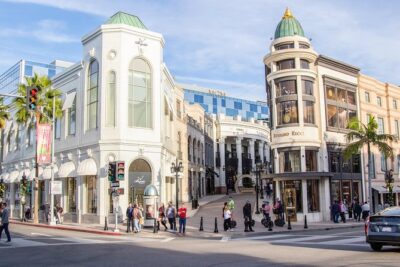
Rodeo Drive is the name everyone knows, but the narration gives you a sharper start point for appreciating it. The tour explains that this is one of the most important retail spots in Los Angeles—and it links the origin to Richard Carroll, who originally established the street as a place to buy men’s clothing.
It also notes that major fashion names have called the area home, including Tommy Hilfiger and Brooks Brothers (and others). Hearing that kind of progression helps you look beyond luxury window displays. You start noticing the street as an institution, not just a shopping corridor.
Practical move: as you walk, keep your eye on address plaques and intersections. The audio later points you toward a specific structure at 332 North Rodeo Drive, so being able to orient yourself quickly makes the experience smoother.
Anderton Court Shops at 332 N Rodeo: Frank Lloyd Wright’s spiral ramp
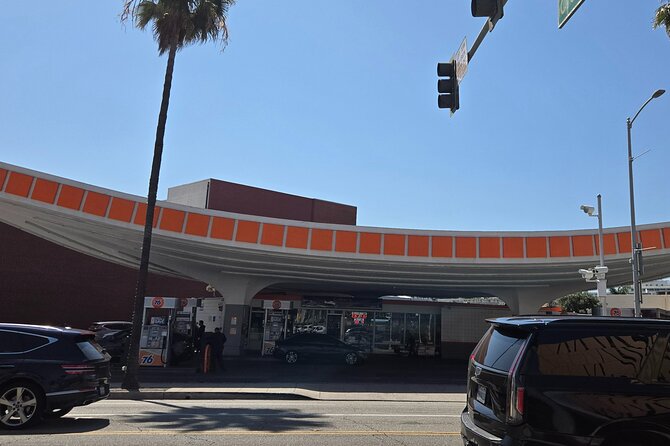
If you care about architecture (even casually), this is the stop that usually earns the most attention.
At 332 North Rodeo Drive, you’ll reach the Anderton Court Shops. The tour frames it as the only retail structure designed by Frank Lloyd Wright. That alone is a reason to slow down.
What to look for, according to the tour:
- Streamline Moderne and Art Deco spires
- A spiral ramp
- A central light well
This is the kind of building where your brain wants to see the whole form at once, but your view depends on where you stand. The audio encourages you to notice the unusual geometry rather than just walk past it.
Practical tip: take a moment to circle your viewing angle (even just a small reposition) so you can catch the ramp and light well cues. The difference between a flat facade and a structure with vertical movement is obvious once you’ve got the right sightline.
Also, if you’re traveling with anyone who hates heights or tight layouts, keep expectations realistic: this is a specialty retail structure, not a wide-open plaza.
The former Beverly Hills Speedway: a surprising 1926 race story
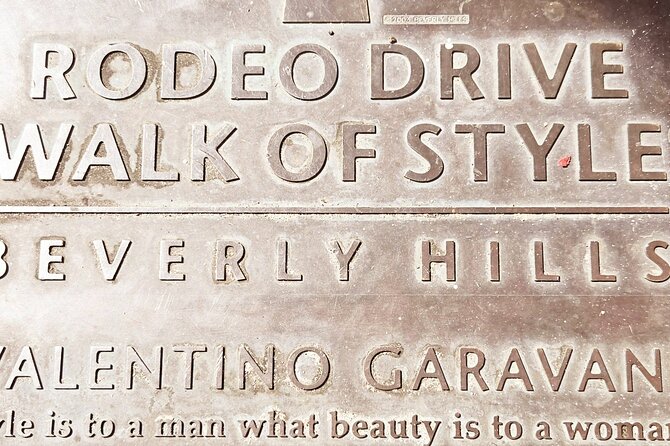
From high fashion and design you jump into sports-history scale—world championship car racing.
The tour describes a landmark hotel sitting on the northeast corner of the former Beverly Hills Speedway site. The story includes a wild detail: in 1926, a world championship car race was held there with 70,000 spectators.
That kind of fact changes your mental map. You realize Rodeo Drive wasn’t always the runway for modern luxury. The area was once built for speed, crowds, and big events.
Practical approach: you’ll be observing from the street. Treat it like a photo moment plus one minute of listening. Don’t count on access to private spaces just because the tour mentions a hotel.
Church of the Good Shepherd: Mission Revival calm at the end
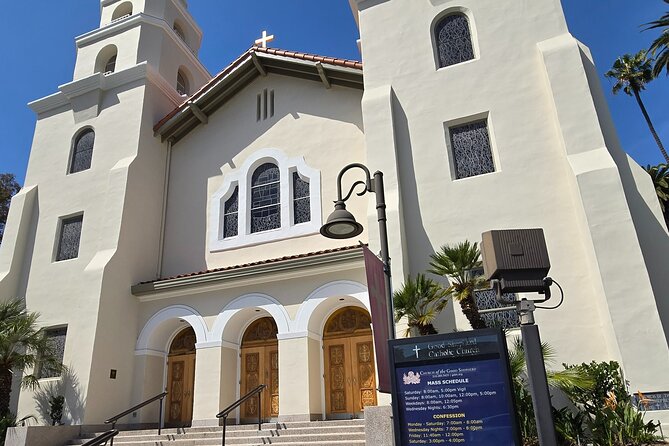
The tour finishes in front of the Church of the Good Shepherd on North Roxbury Drive (504 N Roxbury Dr). Even if you’re not religious, this stop is a good reset. It’s a break from shopping energy.
The audio describes it as a charming Mission Revival-style church founded in 1923. It also adds a Hollywood-style detail: it’s seen more famous faces than the Hollywood Walk of Fame. The point isn’t to fact-check celebrity totals on the spot; it’s to communicate the church’s cultural gravity in the story of the area.
Practical advice: since the tour ends here, plan a few extra minutes for quiet photos and time to sit if there’s a spot to do so. The narration is designed to give you a different mood before you wrap up your walk.
516 North Walden Drive: a film set that became a real home
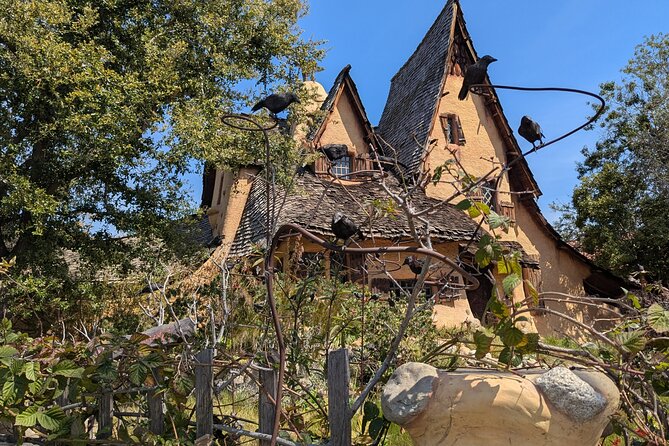
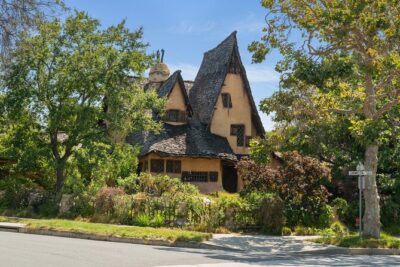
After the main religious stop, the tour also guides you to a whimsical address: 516 North Walden Drive.
This one has a fun behind-the-scenes origin:
- It started in 1921 as a film studio set in Culver City.
- It was designed by Hollywood art director Harry Oliver.
- Originally, it was just offices and dressing rooms.
- In 1926, it was relocated to its current Beverly Hills spot.
The appeal here is simple: you’re seeing the leftover material of Hollywood production life, turned into something permanent. It’s a reminder that Beverly Hills has always been shaped by film, migration, and reinvention.
Practical tip: if you’re taking photos, slow down and avoid standing in locations that block sidewalks or building access. The tour doesn’t ask you to linger for long, but it does give you enough context that spending an extra minute can be worthwhile.
What I’d watch for: the one drawback that matters
The biggest drawback isn’t the route—it’s how the audio experience depends on your setup.
You’ll need:
- Your own smartphone
- Your own headphones
- Enough battery life for at least 90 minutes
And if you’re in a group, don’t assume you can share audio on one phone while everyone walks together. Since the narration is GPS-triggered, it works best when each person has their own copy running on their own device, letting them move at their own pace without losing timing.
If you’re traveling with kids or multiple people who will each want to hear, plan ahead. This is the one area where people can feel disappointed if their expectations are set like a guided tour with a single group audio track.
Best way to pace it in real life
Even though the tour is self-guided, the listed structure makes pacing fairly predictable:
- The Garden Park stretch gives you a long “walking band” to let your feet warm up.
- The Wallis Annenberg stop adds a mid-route landmark moment.
- Rodeo Drive and Anderton Court bring you to the most detailed architecture and retail intersections.
- The race-history and church stops slow the pace and change the mood before you finish.
- The Walden Drive address adds a final layer of film-industry storytelling.
If you want the best experience, don’t treat it like a race to the end. Let the audio be your guide, and treat each cue as a prompt to stop, look, then move on. That’s how you get the value out of a $14.99 audio tour—fewer guesswork moments, more clarity.
Also, the experience is listed as available every day from 12:00 AM to 11:59 PM, so you can slot it into almost any itinerary. If you’re trying to avoid the worst crowds, aim for a time when you’re also comfortable walking and waiting near storefronts.
Should you book this Beverly Hills and Rodeo Drive audio tour?
Book it if you want:
- A budget-friendly way to cover Beverly Hills and Rodeo Drive in about 90 minutes
- Offline-friendly GPS storytelling
- Architecture and place-based facts, especially around Wallis Annenberg and Anderton Court
- A route that ends at a meaningful landmark rather than dropping you mid-shopping chaos
Skip it if:
- You want a live guide answering questions face-to-face
- You’re unwilling to manage phones, headphones, and GPS prompts
- You’re planning a group outing with only one device and no headphones plan
For most people who like to walk, take photos, and learn a few strong facts along the way, this is an easy yes. You’re paying for clarity and structure in a part of LA that can otherwise feel like a blur of names.
FAQ
Is this audio tour available in English?
Yes. The tour is offered in English.
How long does the Beverly Hills and Rodeo Drive audio tour take?
It takes about 1 hour 15 minutes to 1 hour 30 minutes.
Where does the tour start and end?
It starts at the Beverly Hills Sign area on Park Way (1300–1398 Park Way, Beverly Hills) and ends in front of the Church of the Good Shepherd on North Roxbury Drive (504 N Roxbury Dr, Beverly Hills).
Do I need internet access during the tour?
No. The tour includes offline access to audio, maps, and geodata.
What do I need to bring with me?
You need your own smartphone and headphones. Transportation, food, drink, and personal expenses for attractions are not included.
Can I cancel for free?
Yes. You can cancel for a full refund up to 24 hours before the experience’s start time.
More Tours in Los Angeles
- Warner Bros. Studio Tour Hollywood
★ 4.5 · 5,246 reviews - Hollywood, Beverly Hills & Celebrity Homes Tour by Open Air Bus
★ 5.0 · 2,557 reviews - Hollywood Sign 2.5-Hour Tour with Comedians and Their Dogs
★ 5.0 · 2,496 reviews - Full-Day LA Tour: Santa Monica, Hollywood and Beverly Hills
★ 5.0 · 2,431 reviews - Hollywood and Celebrity Homes Bus Tour
★ 4.5 · 2,074 reviews
More Tour Reviews in Los Angeles
- Full-Day Iconic Sights of LA, Hollywood, Beverly Hills, Beaches and More
★ 5.0 · 6,147 reviews - Warner Bros. Studio Tour Hollywood
★ 4.5 · 5,246 reviews - Hollywood, Beverly Hills & Celebrity Homes Tour by Open Air Bus
★ 5.0 · 2,557 reviews - Hollywood Sign 2.5-Hour Tour with Comedians and Their Dogs
★ 5.0 · 2,496 reviews - Full-Day LA Tour: Santa Monica, Hollywood and Beverly Hills
★ 5.0 · 2,431 reviews
More of Beverly Hills
- Full-Day Iconic Sights of LA, Hollywood, Beverly Hills, Beaches and More
★ 5.0 · 6,147 reviews - Hollywood, Beverly Hills & Celebrity Homes Tour by Open Air Bus
★ 5.0 · 2,557 reviews - Full-Day LA Tour: Santa Monica, Hollywood and Beverly Hills
★ 5.0 · 2,431 reviews - Hollywood & Beverly Hills Celebrity Helicopter Tour
★ 4.9 · 835 reviews - Full-Day City Tour of LA, Hollywood, Beverly Hills & Beaches
★ 4.8 · 683 reviews
Keep exploring Los Angeles: fresh reviews from around town

Beverly Hills & Rodeo Drive Tours, compared.
 ★ 5.0Full-Day Iconic Sights of LA, Hollywood, Beverly Hills, Beaches and MoreFrom $996,147 reviews
 ★ 5.0Hollywood, Beverly Hills & Celebrity Homes Tour by Open Air BusFrom $392,557 reviews
 ★ 5.0Full-Day LA Tour: Santa Monica, Hollywood and Beverly HillsFrom $952,431 reviews
 ★ 4.9Hollywood & Beverly Hills Celebrity Helicopter TourFrom $199835 reviews
 ★ 4.8Full-Day City Tour of LA, Hollywood, Beverly Hills & BeachesFrom $81683 reviews
 ★ 4.5Hollywood, Beverly Hills and Celebrity Homes Open Air Van TourFrom $25678 reviews
 ★ 5.0Grand City Tour of Los Angeles, Hollywood and Beverly HillsFrom $89590 reviews
 ★ 4.5Authentic 3-Hour Hollywood to Beverly Hills TourFrom $50483 reviews
Browse the lists this tour appears in