
Review · LOS ANGELES FOOD TOURS
Los Angeles Chinatown and Little Tokyo Walking Tour
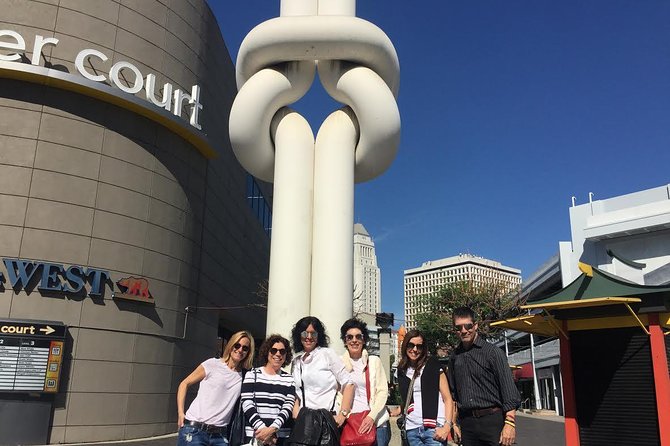
History swings from Chinatown to Little Tokyo. I love how the route puts you in the middle of Chinatown and Little Tokyo, not out on the edges, and I like that the guide connects Chinese and Japanese immigration with how current policies affect residents today.
The local guide also makes the stops feel specific, from well-known landmarks to smaller details you’d miss on your own, like a stop tied to Tyrus Wong artwork and a movie location site.
One catch: you’ll need a short Metro ride between neighborhoods, and the rail fare isn’t included (so budget a little extra), and the tour runs best with good weather.
In This Review
- Key highlights before you go
- Why Chinatown and Little Tokyo belong on the same walk
- Getting oriented: 10:30 a.m. start, end point, and the rail hop
- Chinatown stops: Plaza, gates, dragon, and the storefront world
- A note on the vibe
- Blossom Plaza: the Italian layer you’ll miss if you only look at one era
- The Metro Rail ride: fast transit that changes your perspective
- Practical tip
- Japanese Village Plaza: center-of-Little-Tokyo feeling
- Japanese American Cultural & Community Center: gardens, community, and Nisei festival energy
- Getting back to your start area
- What the guide adds: immigration stories, plus how policies show up
- Price and value check: $38 for 2 hours plus a small Metro add-on
- Who should book this Chinatown and Little Tokyo walk
- Should you book this one?
- FAQ
- What is the duration of the Los Angeles Chinatown and Little Tokyo Walking Tour?
- How much does the tour cost?
- Where does the tour start and end?
- Do I need to pay for Metro Rail separately?
- What stops are included?
- Is this a walking tour?
- What time does the tour begin?
- Is there a limit on group size, and are service animals allowed?
Key highlights before you go
- A local guide who ties history to now: You’ll hear how immigration shaped the neighborhoods and how policies show up in daily life.
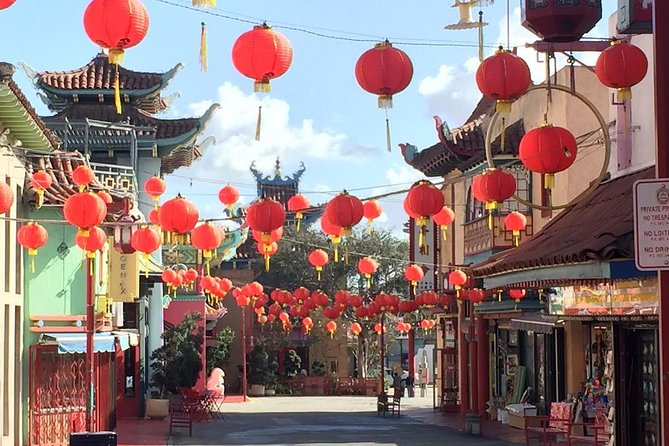
- Chinatown’s recognizably “in-the-moment” landmarks: Chinatown Plaza, the Celestial Dragon area, East and West Gate viewpoints, plus stops near Hop Louie and Wonder Bakery.
- Blossom Plaza’s time-warp feel: A quick stop that reflects LA’s old Little Italy and its Italian layers.
- The Metro hop is part of the story: You don’t just cross streets—you connect two communities by rail.
- Little Tokyo’s core gathering points: Japanese Village Plaza and the Japanese American Cultural & Community Center.
- A calm end stop with gardens: You finish at the Cultural & Community Center, a good place to decompress and reset before heading back.
Prefer to walk it? More LA walking tours
- Los Angeles Original 90-Minute Walking Tour to The Hollywood Sign★ 5.0 · 693 reviews
- Hollywood Stars Tour: Walk of Fame, Celebrity Homes, Sunset Strip★ 4.0 · 341 reviews
- Haunted Hollywood Walking Tour: True Crime and Creepy Tales★ 5.0 · 299 reviews
Why Chinatown and Little Tokyo belong on the same walk
Chinatown and Little Tokyo are only a short ride apart, but they tell two different immigrant stories that shaped Los Angeles in parallel. What makes this tour work is that it treats the neighborhoods like living places, not museum sets. You’re walking among landmarks and public spaces where history is still visible—and where today’s decisions still matter to the people who call the area home.
I also like that the focus isn’t just on what’s there now. You’ll get a clear thread tying Japanese and Chinese immigration to the neighborhoods’ cultural presence, including how the guide connects community changes to current policy. That framing makes the street-level details land harder.
And because the route includes both heavy-hitting areas and smaller stops, you get variety without feeling like you’re sprinting between random points. It’s a smart way to see two neighborhoods with the same “why” running through them.
Getting oriented: 10:30 a.m. start, end point, and the rail hop
The tour runs for about 2 hours. It starts at 943 N Broadway in Chinatown and ends at 244 San Pedro St at the Japanese American Cultural & Community Center. That matters because you’re not “closed loop” returning to the start on foot.
Between Chinatown and Little Tokyo, you’ll take a short Metro Rail ride. The price covers the guided walking; the rail fare is separate. The guide can help you figure out how to get the fare at the time of the tour, which is handy if you’re new to Metro.
Plan for this to feel like a mix of walking plus transit, not a pure walking-only crawl. The walking portions are where you get context and landmarks, while the rail hop acts like a quick bridge—good for your legs, and good for your sense of place.
Chinatown stops: Plaza, gates, dragon, and the storefront world
Chinatown is where the tour leans into “you’re here” energy: plazas, gates, and the kind of street details that only become obvious when a guide points them out. You’ll spend your first stretch exploring around Chinatown Plaza, with stop points linked to the Celestial Dragon, plus the East and West Gate areas.
What I like about this part is that it’s not only big-picture talk. The guide keeps tying the physical features to cultural meaning—how the neighborhood grew, how communities organized, and what it means to see immigration history written into the layout of a place.
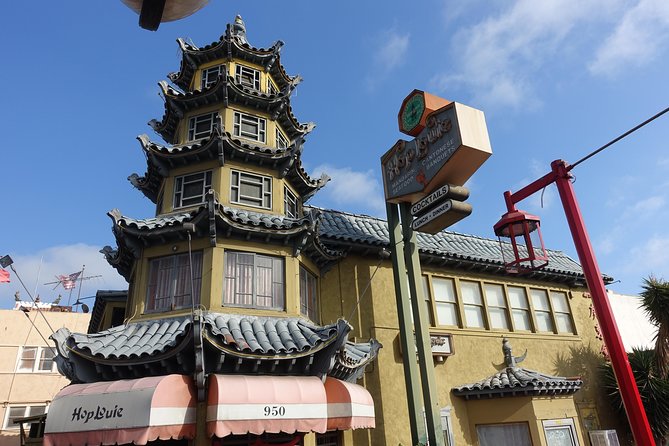
You’ll also pass through stop points that connect you to everyday life and local culture, including areas associated with Hop Louie restaurant and Wonder Bakery. Even if you don’t stop for a snack, these names help you picture Chinatown as a real neighborhood, not just an attraction.
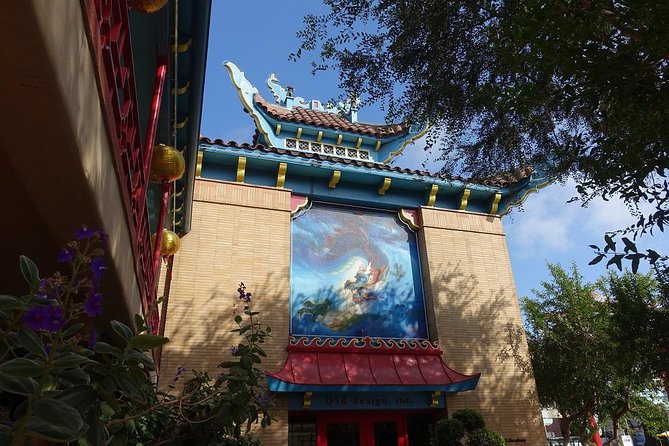
Two other details add texture: you’ll have a moment on a movie location site, and you’ll get a stop tied to artwork by Tyrus Wong. Those kinds of stops can feel random if you’re doing Chinatown on your own. With a guide, they turn into clues about how the area has been portrayed—and how art and media have interacted with the neighborhood’s identity.
A note on the vibe
Chinatown can be lively and tight on foot, so wear shoes you’re comfortable walking in for sustained blocks. This tour is short enough that you won’t burn out, but it’s long enough that comfort matters.
Still hungry? More LA food crawls
Blossom Plaza: the Italian layer you’ll miss if you only look at one era
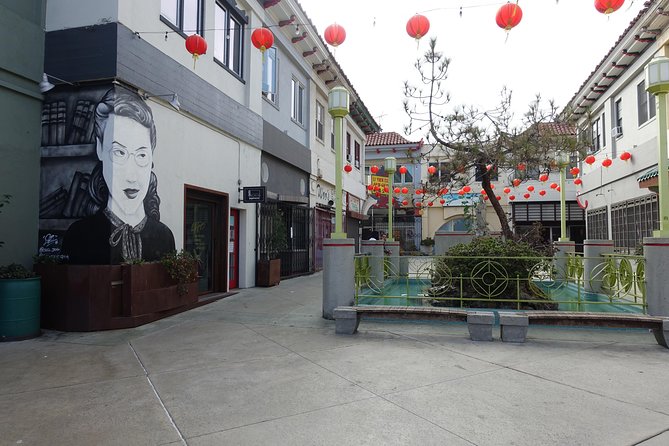
After Chinatown, you’ll make a quick stop at Blossom Plaza, described as home to LA’s old Little Italy and the area’s Italian history. This is brief—just a few minutes—but it’s a useful reminder that Los Angeles keeps layering communities over time.
The value here is the contrast. If Chinatown is framed through Chinese immigration and community presence, Blossom Plaza adds another immigrant wave to the conversation. It helps you notice how neighborhoods shift and reuse space, instead of freezing everything into “one neighborhood, one story.”
If you like city history that’s visible in public spaces, this stop is a nice pause. You’ll probably walk away thinking about how many times LA’s social makeup has changed just within a small radius.
The Metro Rail ride: fast transit that changes your perspective
Then comes the practical part: the short Metro Rail ride between Chinatown and Little Tokyo. Rail fare isn’t included in the tour price, but the guide will help you acquire it during the tour.
I like this break for two reasons. First, it keeps you from turning the experience into a long slog of walking. Second, it helps you understand how the neighborhoods connect today. This isn’t just “two areas next to each other.” It’s a real transit relationship, and that shapes how people move through the city.
When you step back onto the platform and look around, you’ll likely feel the tour’s theme more clearly: these communities aren’t isolated cultural displays. They’re part of the same city system.
Practical tip
Expect the ride to be short—around 10 minutes of transit time as part of the schedule—so don’t plan on using it to rest for a long while. Think of it as a quick reset.
Japanese Village Plaza: center-of-Little-Tokyo feeling
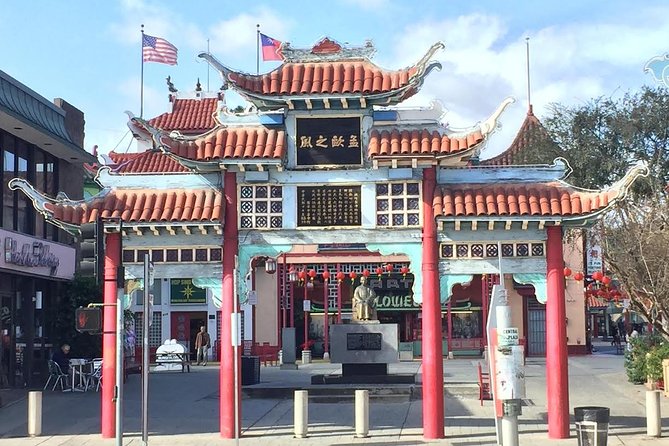
Once you arrive in Little Tokyo, you’ll head to Japanese Village Plaza, which is described as the center of Little Tokyo in Los Angeles. This is a strong “arrival” stop. It gives you a sense of place right away, like the tour is bringing you into the neighborhood’s shared public space.
You’ll spend about 15 minutes here, which is enough time to get your bearings, notice what’s around you, and absorb the guide’s context. The tour also includes time on themes tied to Japanese American history, religions of Japanese people, and what community life has meant across generations.
If you like seeing how belief systems and community traditions show up in public spaces, this is where that topic starts to become real. The guide’s job is to translate the abstract into something you can point at while standing on the sidewalk.
Japanese American Cultural & Community Center: gardens, community, and Nisei festival energy
The final stop is Japanese American Cultural & Community Center at 244 San Pedro St, and it’s a great place to end a walking tour. You’ll have about 15 minutes here, with free access to key areas during your visit.
This stop is specifically tied to two things:
- the Japanese gardens
- the Nisei festival connection
Even if you’re not there during a festival, the center’s role in community events gives the gardens an added layer of meaning. It’s not just landscaping—it’s a physical expression of cultural continuity and community gathering.
It’s also a smart ending from a travel-planning perspective. You don’t have to scramble to find the next thing. You finish at a meaningful destination, then you’re set up to travel back.
Getting back to your start area
The tour ends at the Cultural & Community Center, and it’s described as a two-stop Metro Rail ride back to the starting point near 943 N Broadway. Rail fare isn’t included, but the route is straightforward.
What the guide adds: immigration stories, plus how policies show up
The best part of a tour like this isn’t any single landmark. It’s the way the guide turns a walk through Chinatown and Little Tokyo into a story you can carry with you.
You’ll learn about:
- the historical and cultural significance of these neighborhoods
- the history of Japanese and Chinese immigrants in Los Angeles
- how current policies affect the residents of these neighborhoods today
- additional cultural context, including religions of Japanese people and the story of Japanese Americans
That mix matters. Without it, you’d see gates, plazas, and public art. With it, you start noticing what those things are doing—how they reflect community identity and how people experience the neighborhood as home.
The guide tone also makes a difference. Names like Chris and Robert come up when people talk about the tour’s explanations and patience. The practical takeaway for you: look for a guide who slows down at each stop and explains what you’re looking at. This tour is built for that.
Price and value check: $38 for 2 hours plus a small Metro add-on
At $38 per person for about 2 hours, this is priced like a focused guided experience, not a half-day excursion. You’re paying for a local guide and for time that includes both walking and structured stop moments—especially where the tour connects history to what you can see in real neighborhoods.
The one cost you should plan for is the Metro Rail fare between Chinatown and Little Tokyo. It isn’t included. The good news is the guide will help you with acquisition when you’re ready to ride, so you’re not left guessing in the middle of the experience.
Also, this is capped at 20 people, which tends to keep the guide experience more personal and easier to follow. With a group that size, you’re less likely to feel lost or pushed along.
If you want a guided tour that’s short enough to fit into a packed LA day—but meaningful enough to give you context you can’t pick up from a map—this is a solid value.
Who should book this Chinatown and Little Tokyo walk
This tour fits best if you:
- want a guided walk through two major neighborhoods in a single outing
- like history that’s tied to place, not just dates
- want cultural context with real-world relevance, including today’s policy impacts
- prefer a manageable group size and a structured route
It might be less ideal if you:
- hate any kind of public transit within tours (because you’ll take Metro Rail between neighborhoods)
- are sensitive to weather changes, since the tour requires good weather and can be rescheduled if conditions are poor
- want long free time for shopping or sitting in cafés (there are short stops, not hours of independent wandering)
Should you book this one?
I think this is worth booking if you want LA neighborhoods with context, and you’re okay with the simple logistics of a short Metro ride. The route hits the “big landmarks” in both Chinatown and Little Tokyo, and it also includes cultural details that you wouldn’t reliably catch on your own—like artwork by Tyrus Wong and a stop tied to Japanese American community life at the Cultural & Community Center.
Book this tour if your goal is to understand the neighborhoods as communities, not just photo stops. And pack your patience for sidewalks and city movement—you’ll get a smoother experience.
If your schedule is tight and you still want depth, this $38, two-hour guided walk offers a good balance of walking, transit, and meaningful stops—without pretending the city’s story fits into one street.
FAQ
What is the duration of the Los Angeles Chinatown and Little Tokyo Walking Tour?
The tour is about 2 hours.
How much does the tour cost?
It costs $38.00 per person.
Where does the tour start and end?
It starts at 943 N Broadway, Los Angeles, CA 90012, and ends at 244 San Pedro St, Los Angeles, CA 90012.
Do I need to pay for Metro Rail separately?
Yes. A short Metro Rail ride is required between Chinatown and Little Tokyo, and the rail fare is not included. The guide can assist with getting the fare during the tour.
What stops are included?
The tour includes Chinatown, Blossom Plaza, a Metro Rail ride, Japanese Village Plaza, and the Japanese American Cultural & Community Center.
Is this a walking tour?
It includes walking plus a short Metro Rail journey between neighborhoods.
What time does the tour begin?
The start time is 10:30 a.m.
Is there a limit on group size, and are service animals allowed?
The tour has a maximum group size of 20 people, and service animals are allowed.
More Tour Reviews in Los Angeles
- Full-Day Iconic Sights of LA, Hollywood, Beverly Hills, Beaches and More
★ 5.0 · 6,147 reviews - Warner Bros. Studio Tour Hollywood
★ 4.5 · 5,246 reviews - Hollywood, Beverly Hills & Celebrity Homes Tour by Open Air Bus
★ 5.0 · 2,557 reviews - Hollywood Sign 2.5-Hour Tour with Comedians and Their Dogs
★ 5.0 · 2,496 reviews - Full-Day LA Tour: Santa Monica, Hollywood and Beverly Hills
★ 5.0 · 2,431 reviews
More Bites Around Los Angeles
- Downtown Los Angeles Food Tour
★ 5.0 · 501 reviews - LA Venice Beach Hidden Gems Food Tour With 6 Food Tastings
★ 5.0 · 337 reviews - Beverly Hills Food Tour with Gourmet Tastings and Drinks
★ 5.0 · 82 reviews - LA Food Tour: Exploring America’s Culinary Frontier
★ 5.0 · 73 reviews - West Hollywood Food Tour
★ 4.5 · 54 reviews
Los Angeles, Block by Block
- Los Angeles Original 90-Minute Walking Tour to The Hollywood Sign
★ 5.0 · 693 reviews - Hollywood Stars Tour: Walk of Fame, Celebrity Homes, Sunset Strip
★ 4.0 · 341 reviews - Haunted Hollywood Walking Tour: True Crime and Creepy Tales
★ 5.0 · 299 reviews - Old and New Downtown Los Angeles Walking Tour
★ 5.0 · 222 reviews - LA: Walk of Fame, Hollywood Sign & Beverly Hills Tour
★ 4.9 · 179 reviews
Keep exploring Los Angeles: fresh reviews from around town




Los Angeles Food Tours, compared.
 ★ 5.0Downtown Los Angeles Food TourFrom $89501 reviews
 ★ 5.0LA Venice Beach Hidden Gems Food Tour With 6 Food TastingsFrom $98337 reviews
 ★ 5.0Beverly Hills Food Tour with Gourmet Tastings and DrinksFrom $18982 reviews
 ★ 5.0LA Food Tour: Exploring America’s Culinary FrontierFrom $17573 reviews
 ★ 4.5West Hollywood Food TourFrom $9954 reviews
 ★ 5.0Los Angeles Walking Food Tour with Six TasteFrom $11049 reviews
The Original Taco Tour Santa MonicaFrom $14944 reviews
 ★ 4.6Downtown Food TourFrom $8943 reviews
Browse the lists this tour appears in