
Review · LOS ANGELES FOOD TOURS
LA Little Tokyo to Olvera St Smartphone (App/GPS) Walking Tour
A self-guided story walk across LA’s layers. I like the pause-ready pacing and turn-by-turn directions, plus the route’s built around real places (not just generic facts), and it ends at Cielito Lindo’s taquito stand, but GPS prompts can interrupt the narration if you’re not standing on the exact spot.
You’ll start at the Chiune Sugihara statue at 192 S Central Ave and finish on Olvera St at Cielito Lindo. Expect about 1 hour to 1 hour 15 minutes, English-only narration, and a low price point at $7.50 per person—good value if you’re okay with a phone-based walk and bringing your own water.
If you want history with good photo timing, this kind of app tour can fit. You get a private experience (just your group), service animals are allowed, and it’s near public transportation—handy when you’re stitching this into a longer LA day.
In This Review
- Key things that make this walk worth $7.50
- Starting at the Chiune Sugihara statue on Central Ave
- How the app tour keeps you moving (and where it can snag)
- Little Tokyo stops: learning Japanese LA while you watch the streets
- Japanese Village Plaza: fire tower views and the Edo garden moment
- Fugetsu-Do Bakery Shop: a break that feels like part of the story
- Los Angeles City Hall: construction stories and an observation-deck view
- El Pueblo de Los Ángeles: where the city story began
- Outside the Chinese American Museum: history you shouldn’t rush past
- Calle Olvera: Wine Street’s rename and the marketplace that grew
- Ending at Cielito Lindo on Olvera Street: taquitos and the origin story
- Price and value: why $7.50 can work better than you expect
- Practical timing: how long this really takes
- Who should book this LA Little Tokyo to Olvera St smartphone walk
- Should you book it? My straight answer
- FAQ
- How long is the LA Little Tokyo to Olvera St smartphone walking tour?
- How much does the tour cost?
- Where does the tour start and end?
- What language is the narration in?
- Is this a live guided tour or an app-based experience?
- Does the tour include food or water?
- Are there any included admissions or tickets?
- Is it private for my group?
- Is cancellation free if my plans change?
- Is the tour accessible for service animals?
Key things that make this walk worth $7.50
- Location-aware smartphone app: prompts you at specific stops instead of wandering blindly
- Stop-by-stop storytelling from Little Tokyo to Olvera Street and the City Hall area
- Photo-friendly breaks because you can pause and take your time
- Food stops you can choose (including Cielito Lindo and Fugetsu-Do) since nothing is included
- City Hall + El Pueblo payoff with viewpoints and LA’s early-site context
Prefer to walk it? More LA walking tours
- Los Angeles Original 90-Minute Walking Tour to The Hollywood Sign★ 5.0 · 693 reviews
- Hollywood Stars Tour: Walk of Fame, Celebrity Homes, Sunset Strip★ 4.0 · 341 reviews
- Haunted Hollywood Walking Tour: True Crime and Creepy Tales★ 5.0 · 299 reviews
Starting at the Chiune Sugihara statue on Central Ave
Your walk begins at the statue of Chiune Sugihara at 192 S Central Ave (Los Angeles, CA 90012). That matters because it sets the tone: this route moves through neighborhoods where immigration stories are part of the street scene, not just museum captions.
Then you’ll follow the app’s location-aware guidance through the downtown-to-Old-LA corridor. Since there’s no live guide, the phone becomes your guidebook and your map. So, before you start, give yourself one small task: make sure your battery is healthy and your volume is turned up enough to hear narration outdoors.
How the app tour keeps you moving (and where it can snag)
This isn’t a guided bus tour with a person herding you along. It’s a smartphone APP walking tour with a mobile ticket, and the narration triggers around set points.
The big plus is that you can pause to explore a location at your own speed. That’s great when you spot a sign you want to read, want a better photo angle, or need a quick break on a warm day.
The main snag is GPS sensitivity. If you’re a step or two off from the trigger spot, the app can feel like it’s waiting for you, and that can interrupt the flow of the story. The fix is simple: stop, stand where the app wants you, then hit play again before you wander.
Little Tokyo stops: learning Japanese LA while you watch the streets
One of the core parts of this route is Little Tokyo, where you’ll see multiple local sites and hear the history of the Japanese in LA. This is the kind of stop that’s easy to skim if you rush—so don’t. Look at storefronts, signs, and the way the streets are laid out. The narration helps you connect what you see to what the community built over time.
You also get a natural “slow down” moment at nearby public spaces where you can linger for photos without feeling guilty about holding up a group. And since the app is in English, you can keep moving without stopping to translate anything.
Japanese Village Plaza: fire tower views and the Edo garden moment
At Japanese Village Plaza, you’ll be guided to the plaza and its features, including the fire tower. This is a smart stop because it gives you a visual anchor. When you can point at a real landmark, the stories land better.
You also get time to look at the Edo-style garden area, plus the chance to notice mochi during the food-focused part of the walk. I like that the tour doesn’t treat food as an afterthought. It’s part of how you experience the neighborhood—smell, texture, and what people come in for.
If you’re the type who likes both history and practical sights, this stop hits that mix.
Still hungry? More LA food crawls
Fugetsu-Do Bakery Shop: a break that feels like part of the story
The route includes a stop at Fugetsu-Do Bakery Shop. You’ll hear their story and get a moment that’s explicitly framed as a great place to eat.
Because the tour doesn’t include food, you’re in control here. If you want a sweet bite, pick something that fits your schedule. If you’re saving room for later, you can still use this stop for a snack and a quick sit-down break.
One practical tip: this area can tempt you into longer lines or lingering for pictures. If you want to keep the whole tour on track, grab your bite, then move back to where the app wants you next.
Los Angeles City Hall: construction stories and an observation-deck view
Next comes the Los Angeles City Hall stop. You’ll learn the story behind its construction, and you’ll have a chance to get a view from the observation deck.
Even if you only do the outside portion, City Hall is one of those landmarks where the scale changes how you walk. You start looking upward, and the narration gives you the why behind the walls and the design. If you do make it to the observation point, it’s a payoff that helps justify the effort of the downtown walking stretch.
The only caution: observation decks can involve crowds or timing rules, and the tour info here doesn’t guarantee access details beyond that you get a chance. Still, it’s a good moment to plan for a short pause.
El Pueblo de Los Ángeles: where the city story began
At El Pueblo de Los Ángeles Historical Monument, you’ll see the site where LA began. You’ll also hear the story behind the naming and get to view the historic park.
This stop works best when you slow down and actually read the street-level context. LA’s early story can feel abstract in other settings, but here it’s tied to the physical space. It’s also a strong transition from the Japanese and Chinese American stories earlier in the walk toward the Spanish-colonial and Mexican marketplace atmosphere near Olvera Street.
Outside the Chinese American Museum: history you shouldn’t rush past
The tour includes a stop outside the Chinese American Museum, where you’ll learn about the Chinese riot, the murders, and the broader history of Chinese life in LA.
This part of the walk is heavier than the rest. You’re not going there for light entertainment—you’re there to understand a painful slice of local history. I’d treat it like a sit-down moment, even if you’re standing outside. Let the narration finish. Then take a breath before you move on.
Also, if you already know you’re uncomfortable walking around Chinatown-style streets on your own, plan your day so you’re not doing long solo wandering before or after the tour. This route guides you through, but your comfort level still matters.
Calle Olvera: Wine Street’s rename and the marketplace that grew
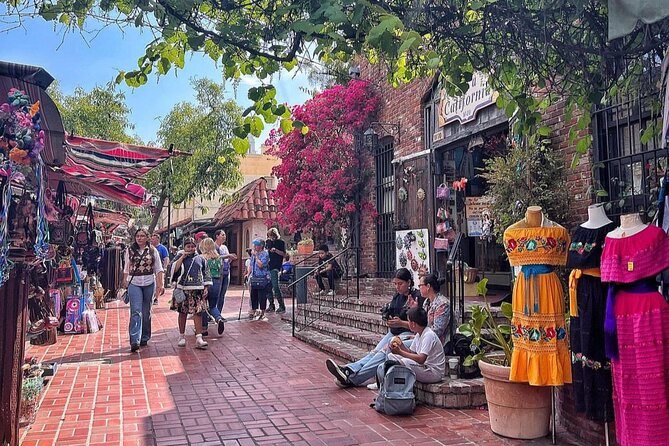
You’ll also spend time at Calle Olvera, the famous Mexican marketplace on Olvera Street. The narration explains that it was originally known as Wine Street, then in 1877 it was extended and renamed for Judge Augustín Olvera, the first elected county judge in Los Angeles.
By 1930, local merchants shaped it into the colorful marketplace you recognize today. I like that this stop gives you a sense of continuity: it’s not just a pretty shopping lane. It’s a street that changed names as the city changed, while still staying a gathering place.
Ending at Cielito Lindo on Olvera Street: taquitos and the origin story
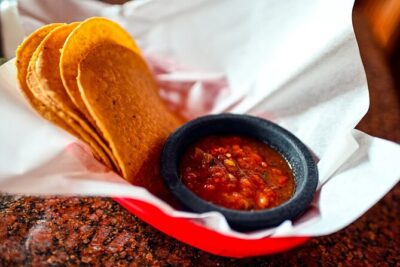
The walk ends at Cielito Lindo on Olvera St (Cielito Lindo E 23 Olvera St). You’ll hear the story of how this taquito stand started and how the food is made, then you’ll finish inside the lively Olvera Street atmosphere.
This ending is one of the best ideas in the whole format. You get history earlier, then you get a practical reward at the end. Since the tour itself doesn’t include food, ending at a famous taquito spot lets you decide what kind of finish you want—quick bite, longer snack, or just a moment to enjoy the street vibe with your own plan.
If your phone battery is low, save energy here. Enjoy the end stop first, then deal with photos and directions after.
Price and value: why $7.50 can work better than you expect
At $7.50 per person, this tour is priced like a budget-friendly way to cover multiple neighborhoods in one outing. The value comes from the mix: Japanese LA, downtown landmarks, early-LA context, and Olvera Street’s marketplace story, all tied together by location-aware prompts.
You also get a private experience for just your group. That matters because app tours avoid the usual trade-off between paying for a guide and getting stuck in a large group pace.
Where the value can drop is if you expect the tour to do everything for you. It doesn’t include food, water, entrance fees, or any guided human interaction. You’ll want comfy shoes, some water, and a plan to buy what you want to eat (taquitos at the end, bakery treats along the way).
Practical timing: how long this really takes
The tour is listed at about 1 hour to 1 hour 15 minutes, which is realistic if you don’t overstay every stop. The app style is built for movement with short “story windows,” but because you can pause, your finish time can drift if you stop for extra photos or snacks.
A simple strategy: treat narration as the main event, then allow one extra pause for food. If you use more than that, you’ll still enjoy it, but you’ll stretch the schedule.
Who should book this LA Little Tokyo to Olvera St smartphone walk
This works well if:
- you like self-paced travel and don’t want to wait on a group
- you want history tied to real street corners, not just facts in a book
- you’re comfortable using your phone as your main guide
- you’re mixing this into a day where downtown and Olvera Street are already on your list
It might be less ideal if:
- you dislike GPS prompts or find app-based navigation stressful
- you want a guaranteed, continuous audio experience without interruptions
- you need a lot of hands-on help (since it’s not a live guide)
Should you book it? My straight answer
Book it if you want a low-cost, story-driven walk that connects Little Tokyo to Olvera Street, with strong landmark stops along the way. The pacing is built for breaks, and the ending at Cielito Lindo is a nice reward after the history beats.
Skip it if you hate phone navigation, don’t want to buy any food, or need a human guide to keep you oriented. In that case, you’ll likely feel the GPS friction more than you’ll feel the storytelling.
FAQ
How long is the LA Little Tokyo to Olvera St smartphone walking tour?
It takes about 1 hour to 1 hour 15 minutes.
How much does the tour cost?
The price is $7.50 per person.
Where does the tour start and end?
It starts at the statue of Chiune Sugihara, 192 S Central Ave, Los Angeles, CA 90012, and it ends at Cielito Lindo, E 23 Olvera St, Los Angeles, CA 90012.
What language is the narration in?
The tour is offered in English.
Is this a live guided tour or an app-based experience?
It’s a smartphone APP walking tour, and it does not include a human guide.
Does the tour include food or water?
No. The tour does not include food, water, entrance, or people.
Are there any included admissions or tickets?
The information shows admission ticket free for the listed stops, and the tour includes the ability to see historic areas through the app.
Is it private for my group?
Yes. It’s listed as private, so only your group participates.
Is cancellation free if my plans change?
Yes. You can cancel up to 24 hours in advance for a full refund.
Is the tour accessible for service animals?
Service animals are allowed.
More Tour Reviews in Los Angeles
- Full-Day Iconic Sights of LA, Hollywood, Beverly Hills, Beaches and More
★ 5.0 · 6,147 reviews - Warner Bros. Studio Tour Hollywood
★ 4.5 · 5,246 reviews - Hollywood, Beverly Hills & Celebrity Homes Tour by Open Air Bus
★ 5.0 · 2,557 reviews - Hollywood Sign 2.5-Hour Tour with Comedians and Their Dogs
★ 5.0 · 2,496 reviews - Full-Day LA Tour: Santa Monica, Hollywood and Beverly Hills
★ 5.0 · 2,431 reviews
More Bites Around Los Angeles
- Downtown Los Angeles Food Tour
★ 5.0 · 501 reviews - LA Venice Beach Hidden Gems Food Tour With 6 Food Tastings
★ 5.0 · 337 reviews - Beverly Hills Food Tour with Gourmet Tastings and Drinks
★ 5.0 · 82 reviews - LA Food Tour: Exploring America’s Culinary Frontier
★ 5.0 · 73 reviews - West Hollywood Food Tour
★ 4.5 · 54 reviews
Los Angeles, Block by Block
- Los Angeles Original 90-Minute Walking Tour to The Hollywood Sign
★ 5.0 · 693 reviews - Hollywood Stars Tour: Walk of Fame, Celebrity Homes, Sunset Strip
★ 4.0 · 341 reviews - Haunted Hollywood Walking Tour: True Crime and Creepy Tales
★ 5.0 · 299 reviews - Old and New Downtown Los Angeles Walking Tour
★ 5.0 · 222 reviews - LA: Walk of Fame, Hollywood Sign & Beverly Hills Tour
★ 4.9 · 179 reviews
Keep exploring Los Angeles: fresh reviews from around town




Los Angeles Food Tours, compared.
 ★ 5.0Downtown Los Angeles Food TourFrom $89501 reviews
 ★ 5.0LA Venice Beach Hidden Gems Food Tour With 6 Food TastingsFrom $98337 reviews
 ★ 5.0Beverly Hills Food Tour with Gourmet Tastings and DrinksFrom $18982 reviews
 ★ 5.0LA Food Tour: Exploring America’s Culinary FrontierFrom $17573 reviews
 ★ 4.5West Hollywood Food TourFrom $9954 reviews
 ★ 5.0Los Angeles Walking Food Tour with Six TasteFrom $11049 reviews
The Original Taco Tour Santa MonicaFrom $14944 reviews
 ★ 4.6Downtown Food TourFrom $8943 reviews
Browse the lists this tour appears in