
Review · GETTY & MUSEUM TOURS
La Brea Tar Pits and Museum Admission Ticket with Excavator Tour
Tar bubbles in the middle of L.A.
This ticket turns that weird sight into a clear La Brea Tar Pits experience—watch active digging, then connect it to the museum’s fossils and labs, including the free Excavator Tour.
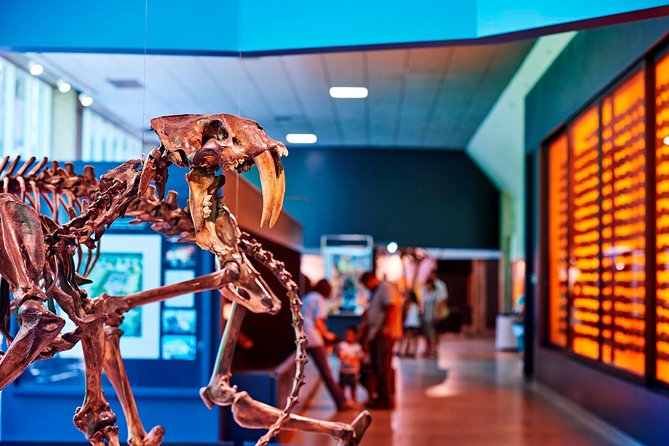
I especially like two things: the bubbling Lake Pit outside, where you see how asphalt seep turns into science, and the museum displays that walk you through Ice Age animals without making it feel like a textbook. I also like that the museum layout is easy to follow, so you can do this in about two hours without rushing.
One thing to consider: part of the excitement depends on timing. If the on-site excavation moments or a specific pit is paused on your date, you may get less of the “right now” energy than you expected.
In This Review
- Key highlights to look for
- Entering a Living Fossil Site in the Heart of Los Angeles
- What the $18 Ticket Actually Gets You
- Lake Pit and the Outside Dig Zones: Tar You Can See Working
- Pleistocene Gardens: Prehistoric Plants That Make the Fossils Make Sense
- Inside the Museum: Bones, Labels, and a Clear-Glass Fossil Lab
- Excavator Tour Included: Pit 91, Observation Pit, and Project 23
- Timing Matters: Avoid Missing the Excavation Moments
- How Long It Takes and How to Plan Your Day
- Price Check: Why $18 Can Feel Like a Steal in L.A.
- Who Should Book This (and Who Might Want a Different Fit)
- Should You Book the La Brea Tar Pits Admission With Excavator Tour?
- FAQ
- Is the Excavator Tour included with this admission ticket?
- How long should I plan for the visit?
- What areas are included with the ticket?
- Are there any optional add-ons at the museum?
- What are the opening hours?
- Is this ticket good for families and children?
- Do I need to bring the ticket, or is it mobile?
- What if I need to cancel?
Key highlights to look for
- Lake Pit activity: see tar ooze and bubbles in a live paleontology setting
- Clear-glass Fossil Lab visibility: watch the work behind the scenes
- Excavator Tour included: you get guided context for major pits like Observation Pit and Project 23
- Pit 91 + Pleistocene Gardens access: outdoor walking that feels like a living exhibit
- Family-friendly pacing: enough science to satisfy adults, simple enough for kids
- Well-labeled Ice Age fossil displays: mammoths, saber-toothed cats, dire wolves, ground sloths
For the art lovers: more Getty and museum visits
- Los Angeles: Petersen Automotive Museum Entry & Vault Access★ 4.8 · 264 reviews
- La Brea Tar Pits and Museum Admission Ticket with Excavator Tour★ 4.5 · 193 reviews
- Private Getty Center to Griffith Observatory Guided Tour★ 5.0 · 185 reviews
Entering a Living Fossil Site in the Heart of Los Angeles
La Brea Tar Pits has a rare trick: it mixes museum comfort with fieldwork you can actually see. One minute you’re in Los Angeles traffic-world; the next, you’re looking at a place where Ice Age animals got trapped and preserved in asphalt seep for thousands of years, and scientists are still working there.
The payoff of this admission ticket is that you’re not just looking at bones behind glass. You’re also watching the process—tar, excavation areas, lab work, and interpretation—so it feels like science is happening in real time, not just explained after the fact.
Expect a moderate amount of walking. Comfortable shoes help, because you’ll move between indoor exhibits, courtyards, and pit viewing areas.
What the $18 Ticket Actually Gets You
This is priced at $18 per person, and the value comes from how much is included for that one entry ticket.
With your admission, you get:
- the Excavator Tour (free with admission)
- Pit 91 access
- Pleistocene Gardens
- Atrium access
That combination matters because it connects three layers of the site:
1) what’s happening outside in the pits,
2) what it means inside the museum, and
3) how scientists explain what they find and why it matters.
On top of that, you can choose optional add-ons on-site, like souvenir photos and the Ice Age Encounters show and 3D film (tickets available when you arrive). If you’re trying to keep things simple, you can skip these and still get a strong two-hour visit.
Lake Pit and the Outside Dig Zones: Tar You Can See Working
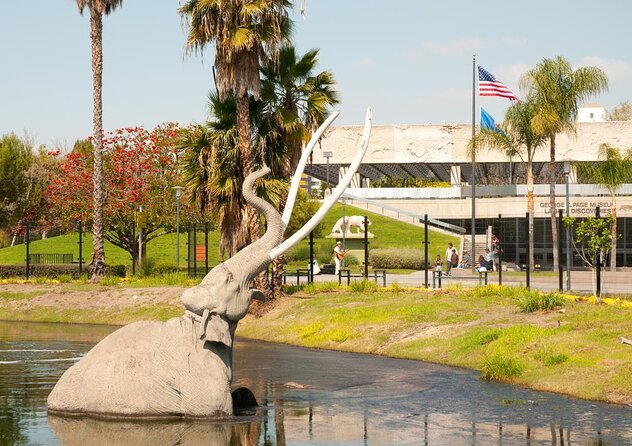
The star moment for many people is the Lake Pit area, where tar bubbles and ooze rises to the surface. It looks like something out of a science-fiction movie, but it’s plain physics: asphalt seep traps and preserves organic material over long periods.
When you’re outside, pay attention to how the site is staged. You’re not wandering randomly. You’re moving through designed viewing zones that help you understand what you’re seeing—tar movement, excavation context, and why the preservation is so unusual.
This outdoor time also sets your mental baseline. Once you’ve watched the tar process, the fossil displays inside feel more grounded, less abstract.
Tip: if your day is tight, prioritize the outside pits early. It’s the most visually “alive” part of the visit.
Pleistocene Gardens: Prehistoric Plants That Make the Fossils Make Sense

The Pleistocene Gardens are a small but smart piece of the experience. Ice Age fossils are dramatic, but what many people forget is that animals lived in habitats, not in isolation.
In the gardens, you get a taste of the vegetation and environmental setting that would’ve supported these creatures. It’s not just a scenic walk—it’s a way to think about food sources, shelter, and climate, which helps the animal stories click faster once you’re in the museum galleries.
This is also where the pace feels family-friendly. It gives your feet a break between indoor and the more “watch the work” parts of the site.
More Los Angeles outings we have rated and written up



Inside the Museum: Bones, Labels, and a Clear-Glass Fossil Lab
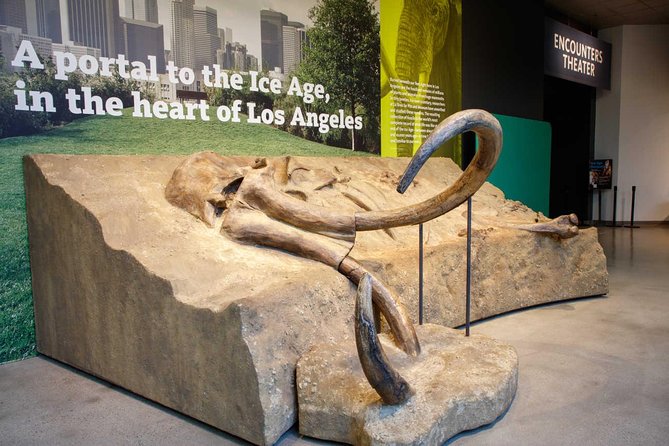
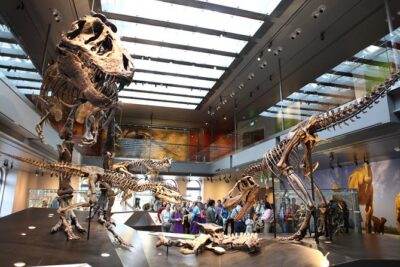
The museum is compact, and that’s a plus. You don’t lose an hour to wandering. Instead, you move through fossil displays that are well organized and labeled, with the focus staying on Ice Age animals and what scientists have learned from them.
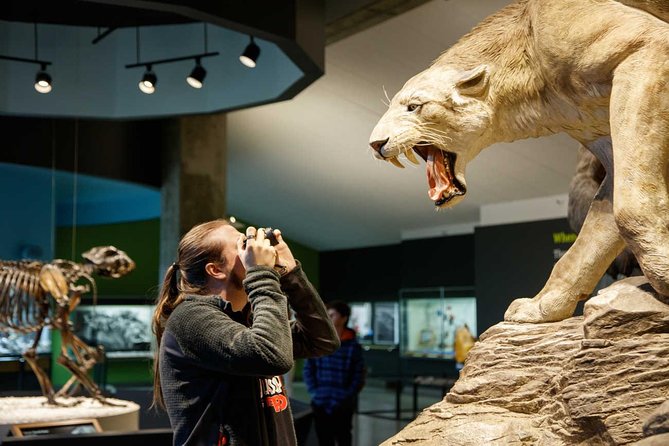
Expect to see major Ice Age species highlighted in the collection, including mammoths, saber-toothed cats, dire wolves, and ground sloths. The displays don’t just show the bones. They help you connect anatomy to behavior—how an animal might hunt, what its size implies, and why its remains ended up there in the first place.
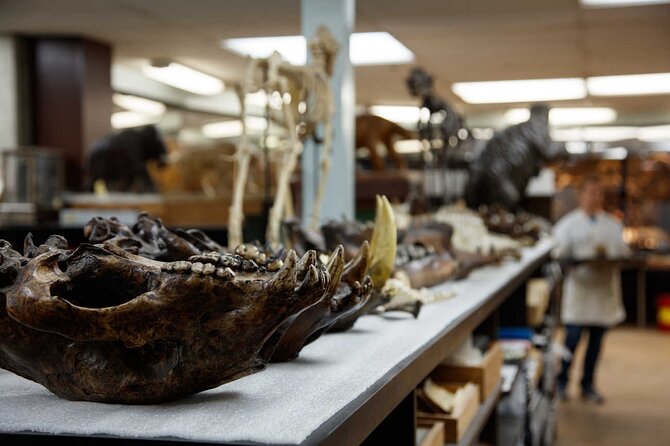
The most hands-on feeling is the clear-glass paleontology room / Fossil Lab visibility. It gives you the sense of being in the middle of ongoing work, where specimens are recovered and prepared. You’re seeing the labor side of paleontology, not only the “final reveal” stage.
If you want the science without the heavy jargon, the museum does a good job keeping it readable. And if you’re with kids, the lab visibility is a natural attention magnet.
Excavator Tour Included: Pit 91, Observation Pit, and Project 23
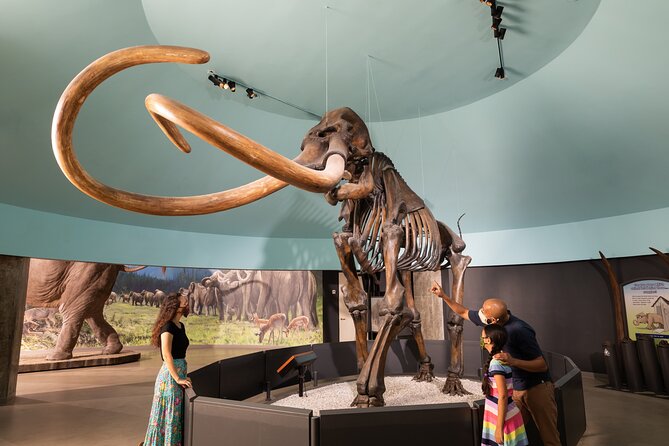
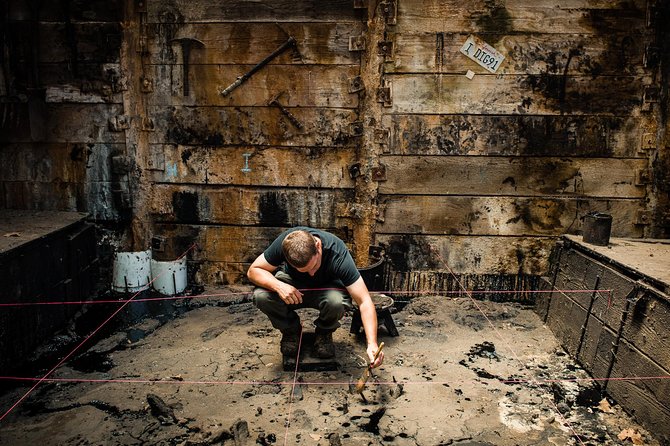
The included Excavator Tour is where the site history and the active digging areas become easier to understand. You get a guided explanation of how tar pits formed, why so many massive animals ended up stuck, and how modern excavation continues the story.
You’ll also visit key parts of the working site, including:
- Fossil Lab
- Observation Pit
- Project 23
- plus Pit 91 access as part of what your ticket covers
This tour isn’t just “follow the guide.” It gives you interpretive context. For example, it helps you understand the site as an ongoing record—layers of time and repeated trapping events—rather than a single lucky incident.
Guide tip: if you’re on a tour led by people like Emily or Becca (names you may see in tour schedules), you can get extra clear, kid-friendly explanations alongside the science facts. That human layer makes the whole thing feel less like a walkthrough and more like a story you can retell on the car ride back.
Timing Matters: Avoid Missing the Excavation Moments
Here’s the practical truth: some of the excitement depends on what’s happening at the pits and when. Even with admission, the “active” feel can change based on day-of operations.
So I strongly recommend you:
- check the on-site schedule for the Excavator Tour time and any demonstrations when you arrive, and
- plan to arrive with enough buffer so you don’t rush through the pits just to make it to the tour.
A few visitors have noted situations like a tour not being offered on a holiday or certain pit areas being closed. I wouldn’t expect that every day, but it’s enough of a risk that you should treat the day’s operating status as part of your planning—not a surprise after you’ve arrived.
If you’re trying to build around a specific time window, that’s where you can protect your experience.
How Long It Takes and How to Plan Your Day
Plan for about two hours. That’s enough time to see the outdoor pits, move through the museum exhibits, and sit through (or fully experience) the Excavator Tour.
If you want a calmer pace—especially with kids—start with the outdoor sights first. Then go indoors for the Fossil Lab and exhibits. Finally, use the tour to connect what you saw to why it matters.
If you also want the 3D film or Ice Age Encounters show, you’ll need to add time, because those are separate ticket options available on-site.
Price Check: Why $18 Can Feel Like a Steal in L.A.
Los Angeles can be expensive. This ticket is not.
At $18, you’re paying for:
- museum admission,
- access to multiple pit-related areas, and
- a guided component (Excavator Tour) that ties everything together.
What makes the cost feel justified is the working-site element. You’re not only viewing fossils; you’re seeing evidence of the process—tar seep context, excavation zones, and lab prep work—so the ticket feels like a behind-the-scenes pass, not just a photo stop.
If you’re choosing between doing a bigger-ticket attraction that’s mostly static and this that’s partly live, this is the one that’s harder to “replace” with another museum on your trip.
Who Should Book This (and Who Might Want a Different Fit)
This works especially well for:
- families with kids who like animals and hands-on explanations
- science-curious travelers who want real-world paleontology, not only exhibits
- anyone who loves the idea of Los Angeles having an Ice Age story you can walk through
If you’re the type who wants a huge museum campus with lots of galleries and extended roaming time, this might feel short. The museum is intentionally focused. Most people get through it in about an hour, then spend extra time outside and on the tours.
Also, if your schedule is super rigid and you can’t adjust if operations pause, you should be ready for timing to shape your experience.
Should You Book the La Brea Tar Pits Admission With Excavator Tour?
Yes—if you want a science-forward, family-friendly stop that feels different from standard museum days. I’d book it when:
- you can give yourself about two hours,
- you want to see active excavation context, and
- you like learning through observation—tar, pits, and lab prep—rather than only reading panels.
I’d think twice if:
- you’re extremely time-constrained and can’t adjust to day-of schedules, or
- you’re expecting a sprawling, all-day museum complex.
If you do book, aim to be there ready to watch. The magic here is that the site is still alive—literally and scientifically.
FAQ
Is the Excavator Tour included with this admission ticket?
Yes. The Excavator Tour is included with admission.
How long should I plan for the visit?
Plan for about 2 hours (approx.).
What areas are included with the ticket?
Included areas are Pit 91 Access, Pleistocene Gardens, and Atrium Access, plus the Excavator Tour.
Are there any optional add-ons at the museum?
Yes. Souvenir photos are available for purchase on-site, and the Ice Age Encounters show and 3D film have tickets available on-site when you arrive.
What are the opening hours?
The museum is open 9:30 AM to 5:00 PM, Monday through Sunday.
Is this ticket good for families and children?
Yes. It’s described as a great option for families and children, with educational elements for younger visitors.
Do I need to bring the ticket, or is it mobile?
It’s a mobile ticket.
What if I need to cancel?
You can cancel for a full refund up to 24 hours before the experience starts. If you cancel within 24 hours, the refund isn’t available.
More Tours in Los Angeles
- Warner Bros. Studio Tour Hollywood
★ 4.5 · 5,246 reviews - Hollywood, Beverly Hills & Celebrity Homes Tour by Open Air Bus
★ 5.0 · 2,557 reviews - Hollywood Sign 2.5-Hour Tour with Comedians and Their Dogs
★ 5.0 · 2,496 reviews - Full-Day LA Tour: Santa Monica, Hollywood and Beverly Hills
★ 5.0 · 2,431 reviews - Hollywood and Celebrity Homes Bus Tour
★ 4.5 · 2,074 reviews
More Tour Reviews in Los Angeles
- Full-Day Iconic Sights of LA, Hollywood, Beverly Hills, Beaches and More
★ 5.0 · 6,147 reviews - Warner Bros. Studio Tour Hollywood
★ 4.5 · 5,246 reviews - Hollywood, Beverly Hills & Celebrity Homes Tour by Open Air Bus
★ 5.0 · 2,557 reviews - Hollywood Sign 2.5-Hour Tour with Comedians and Their Dogs
★ 5.0 · 2,496 reviews - Full-Day LA Tour: Santa Monica, Hollywood and Beverly Hills
★ 5.0 · 2,431 reviews
More Museums and Galleries in Los Angeles
- Los Angeles: Petersen Automotive Museum Entry & Vault Access
★ 4.8 · 264 reviews - Los Angeles: Battleship Iowa Museum Ticket
★ 4.6 · 249 reviews - Private Getty Center to Griffith Observatory Guided Tour
★ 5.0 · 185 reviews - Los Angeles: La Brea Tar Pits Museum Ticket
★ 4.5 · 137 reviews - Hollywood Medieval Torture Museum Ticket with Ghost Hunting
★ 5.0 · 133 reviews
Keep exploring Los Angeles: fresh reviews from around town






Getty & Museum Tours, compared.
 ★ 4.8Petersen Automotive Museum Entry & Vault AccessFrom $51264 reviews
 ★ 4.6Battleship Iowa Museum TicketFrom $29249 reviews
 ★ 5.0Private Getty Center to Griffith Observatory Guided TourFrom $172185 reviews
 ★ 4.5La Brea Tar Pits Museum TicketFrom $18137 reviews
 ★ 5.0Hollywood Medieval Torture Museum Ticket with Ghost HuntingFrom $31133 reviews
 ★ 5.0Admission to Richard Nixon Presidential Library and Museum TicketFrom $29123 reviews
 ★ 4.5Natural History Museum of Los Angeles County AdmissionFrom $18111 reviews
 ★ 4.3Grammy Museum Entry TicketFrom $22105 reviews
Browse the lists this tour appears in