
Review · GETTY & MUSEUM TOURS
Los Angeles: Grammy Museum Entry Ticket
Music history you can touch.
The GRAMMY Museum in Downtown Los Angeles turns big-name awards and artists into something you can do, not just read. Sonic Playground is a hands-on music-making zone (17 interactive stations in a 3,000-square-foot second-floor gallery), and I also love the simple payoff of a photo stop at the Ray Charles Terrace with views of the Hollywood Sign.
It’s not a huge museum, so the main tradeoff is expectation management: you’re likely to learn more about music itself and famous moments than about the inner workings of how the Grammys are run. Also, sections can occasionally close for private events, so have a flexible mindset once you’re there.
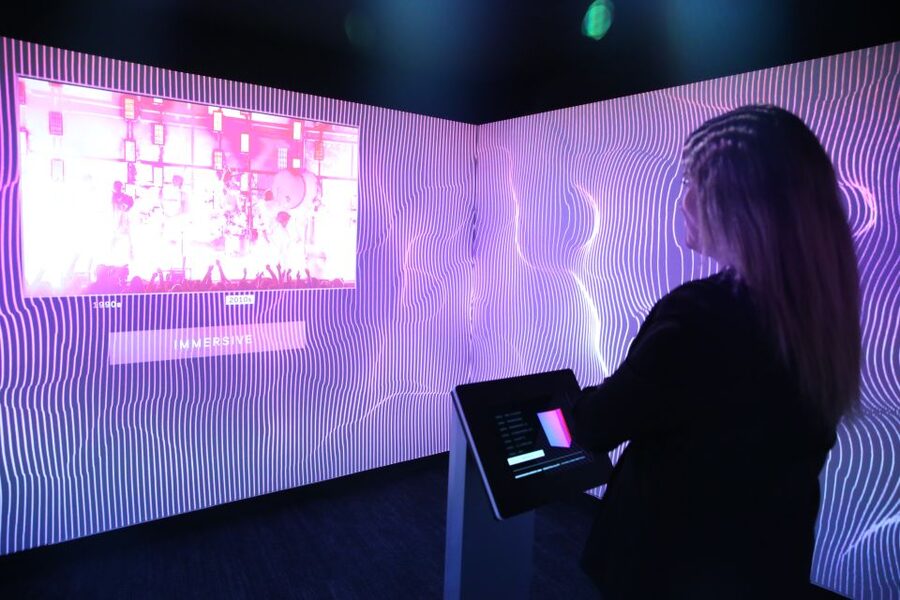
On the flip side, the ticket gives you access to four floors of memorabilia across lots of genres, plus a standout sound experience called Mono to Immersive that tracks the evolution of audio and GRAMMY moments. And if your timing matches, the current special exhibit spotlights Luther Vandross: Artistry and Elegance, which is exactly the kind of “one artist, big impact” focus that makes a visit feel purposeful.
In This Review
- Key highlights that make this ticket worth it
- Entering the GRAMMY Museum: Downtown LA, four floors, self-guided
- The Ray Charles Terrace viewpoint: Hollywood Sign photos without the hassle
- Sonic Playground: the interactive music-making zone that actually teaches
- Mono to Immersive: hearing sound change from past to present
- Four floors of music memorabilia: big-name artists, genre range, and some empty walls
- Rotating special exhibits: how to use them to plan a visit
- Luther Vandross: Artistry and Elegance, plus the artist-led storytelling style
- RetroBlakesberg: 30 years of music history through photography
- Planning your route for a one-day entry ticket
- Price and value: is $22 a smart buy?
- Who should book this entry ticket (and who might want a different plan)
- Should you book the GRAMMY Museum entry ticket?
- FAQ
- What’s included with the GRAMMY Museum entry ticket?
- How long is the ticket valid?
- Can I cancel the ticket for a full refund?
- Can I reserve now and pay later?
- Is the museum wheelchair accessible?
- What should I bring for the museum visit?
Key highlights that make this ticket worth it
- Ray Charles Terrace Hollywood Sign photos that feel like a bonus, not a detour
- Sonic Playground hands-on stations built for testing your own rhythm and sound
- Mono to Immersive audio journey from older sound formats to today’s surround style
- Four floors of memorabilia spanning many genres and eras
- Rotating special exhibits that can add a current pop-culture angle to your day
For the art lovers: more Getty and museum visits
- Los Angeles: Petersen Automotive Museum Entry & Vault Access★ 4.8 · 264 reviews
- La Brea Tar Pits and Museum Admission Ticket with Excavator Tour★ 4.5 · 193 reviews
- Private Getty Center to Griffith Observatory Guided Tour★ 5.0 · 185 reviews
Entering the GRAMMY Museum: Downtown LA, four floors, self-guided

This is a straightforward entry-ticket experience. You’re not getting a guided tour included, so the value is in what the museum has already built for you: interactive exhibits, photo-worthy moments, and a layout that moves you from music history to hands-on creation.
The museum is organized across four floors, which matters because you’ll want to pace yourself. Some parts invite you to linger (especially the sound and “make it yourself” stations), while other rooms are better for a faster sweep—stop, read what catches your eye, then move on before your attention wanders.
One smart mindset: treat the visit like a playlist. Pick a few “must hits” first, then fill the rest with whatever pulls you in. That way, a smaller museum footprint doesn’t feel like you rushed anything important.
The Ray Charles Terrace viewpoint: Hollywood Sign photos without the hassle
If you like the idea of mixing a city view into your museum day, this is a real win. The museum includes the Ray Charles Terrace, where you can capture pictures with the Hollywood Sign in view.
This works especially well if you’re doing Downtown LA sightseeing anyway. You get a clean, museum-tied photo moment, and it breaks up indoor time with a little fresh air energy. Bring your camera, and don’t just snap from one angle—walk a few steps along the terrace and you’ll often find a better framing.
Sonic Playground: the interactive music-making zone that actually teaches

The museum’s most “jump in and try it” area is Sonic Playground, located on the second floor. It’s not just a room of buttons. The point is to make music-making feel concrete—like you can understand it by doing it.
Here’s what makes it so satisfying:
- It’s built around hands-on interactives (17 unique stations).
- It focuses on creativity and music education through technology.
- You can get up close with music-making tools rather than just watching a video about them.
In particular, you may find studio-style setups where you can use microphones and experiment with making music, including learning how beat machines work. That’s the type of learning that sticks, because your brain gets both the instruction and the immediate feedback.
If you’re traveling with kids, teens, or anyone who learns best by tinkering, this is the section that can turn a museum visit into an active afternoon. Even if you’re more of a listener than a creator, it’s still a fun way to connect how a track is built to what you hear on streaming services.
Practical note: comfortable shoes are a must here. You’ll move around, and you’ll want to stay flexible so you can go back to any station that keeps calling you back.
Mono to Immersive: hearing sound change from past to present

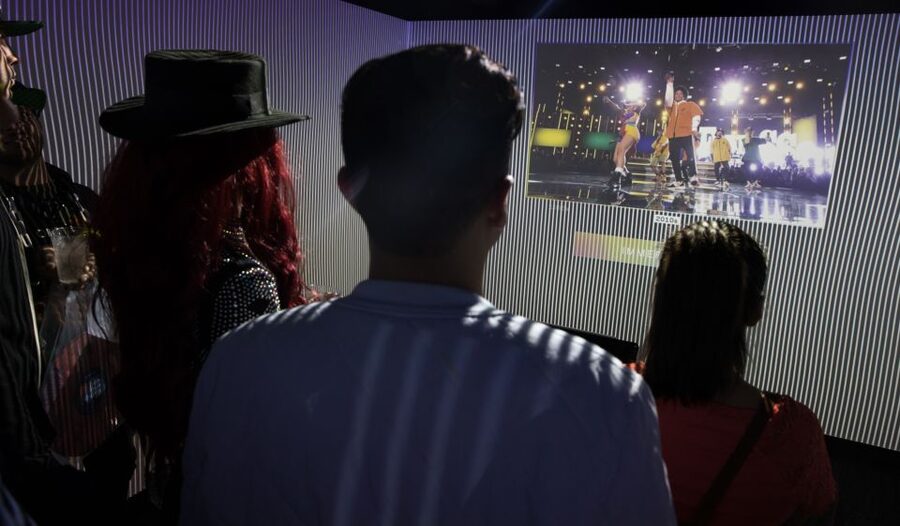
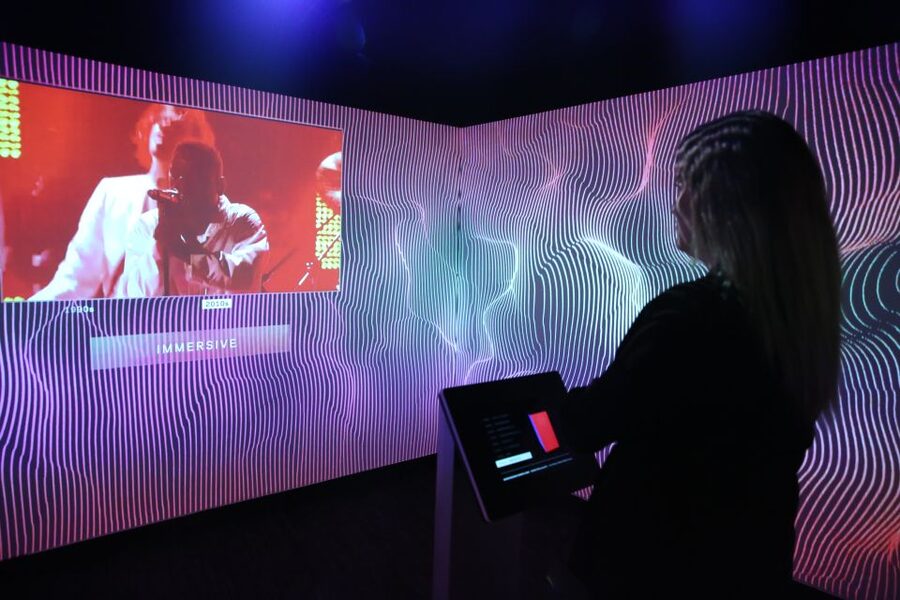
The museum’s signature sound experience is Mono to Immersive. The big idea is simple and effective: it takes you on a journey of sound from earlier eras up to modern surround-style audio.
It also connects that audio evolution to the GRAMMY story. You follow the award’s evolution from 1959 to today, while reliving GRAMMY moments along the way. This is one of those exhibits where the structure helps you, because it gives sound a timeline instead of treating it like random audio trivia.
What you’ll like most is that listening becomes part of the museum “puzzle.” Different rooms highlight how recordings can sound different depending on era, tech, and production choices. One of the best ways to enjoy this section is to slow down just slightly—don’t sprint from one station to the next. If a listening room has a clear, on-screen prompt, give it your attention and then compare what you hear.
This is also a good stop if you’re the kind of music fan who notices production details—vocals, mixing, clarity, space in the sound. The exhibit is built for that kind of curiosity.
More Los Angeles outings we have rated and written up



Four floors of music memorabilia: big-name artists, genre range, and some empty walls
The GRAMMY Museum’s four-floor setup is designed to keep the day moving: memorabilia and themes change as you climb. The collection spans many genres, so even if you’re not a die-hard awards fan, you’ll likely find something that clicks.
You’ll also see artifacts tied to artists like Michael Jackson, Taylor Swift, Stevie Wonder, and more. That matters because it turns famous names into physical objects you can look at closely—costumes, items connected to performances, and exhibition pieces that give weight to the stories.
A balanced tip: the museum can feel a bit compact, and parts of the galleries may seem less packed with artifacts than you’d expect. There can be open space on some walls, which means your enjoyment will depend on what kind of visitor you are. If you want every inch to be tightly packed, you may feel the pacing is lighter in places. If you like breathing room and short, focused stops, that same openness can make the museum feel easier to navigate.
Also keep in mind that private events may temporarily close certain sections. If you notice a room or level gated off, don’t panic—shift to the next “anchor” exhibit and return to anything open when you can.
Rotating special exhibits: how to use them to plan a visit
A huge part of the GRAMMY Museum experience is that special exhibits rotate. That means your best strategy is to decide what kind of art/artist focus you want before you go, then let the current lineup shape your route.
Depending on the dates of your visit, you might see:
- Luther Vandross: Artistry and Elegance (the current special exhibit listed here), which focuses on his life and legacy
- Artist-focused rooms that can include pop-culture-heavy highlights in addition to broader music history themes (for example, one visit noted a floor connected to BTS and other K-pop-related exhibits)
Because rotation is real, your day gets better if you treat the museum like a living program rather than a fixed checklist. If you’re going for one specific artist, check what’s running right before you arrive so you can anchor your schedule around that room first.
Luther Vandross: Artistry and Elegance, plus the artist-led storytelling style
When the special exhibit is about a single major artist, the museum tends to show you a story arc—why this person mattered, how their craft evolved, and what made their sound recognizable.
Luther Vandross: Artistry and Elegance is listed as a focus on an eight-time GRAMMY® winner, plus his work as a songwriter, arranger, producer, performer, and one of music’s most gifted vocalists. If you care about vocal artistry and production precision, this is the type of exhibit that can give you context you won’t get from a casual streaming session.
Even if you don’t know his work in deep detail, the “legacy” framing helps. You can come in for the recognition and leave with a better idea of how his career influenced the sound of popular music.
RetroBlakesberg: 30 years of music history through photography

Another smart, different-feeling stop is RetroBlakesberg, which looks at 30 years of music history through the lens of photographer Jay Blakesberg.
This exhibit is notable because it covers more than one lane of music evolution. It’s not stuck in one genre; it moves across blues, folk, and rock ’n’ roll, then into hip-hop and alternative music. Using photography as the guide gives the timeline a human face. It also helps break the museum into “chapters” you can visually connect.
If you’re the kind of traveler who loves how culture looks in real moments—crowds, venues, the vibe around a scene—this section can be the part that makes the history feel tangible.
Planning your route for a one-day entry ticket
Your ticket is valid for 1 day from first activation, which gives you flexibility to linger where you care. Since there’s no guided tour included, your job is to build a mini itinerary.
Here’s a practical approach that fits how the museum is set up:
- Start with your top anchor: either Sonic Playground or Mono to Immersive
- Spend time where “trying” matters most. If you want to experiment with microphones/beat machines, give that area room to breathe
- Then move into the four-floor memorabilia section at a pace that matches your energy
- Finally, catch the special exhibit last—or first if you’re specifically there for Luther Vandross (or another rotating focus)
Also, save time for the Hollywood Sign photo stop at the Ray Charles Terrace. It’s quick, but it’s the kind of moment that makes the museum feel more like a full outing than a quick indoor stop.
If a section is closed due to a private event, don’t waste time hunting. Pivot right away to what’s open. This is one museum where your enjoyment comes from adapting quickly.
Price and value: is $22 a smart buy?
At $22 per person, this is priced like an entry ticket to a major city attraction—so the value question is really about what you like.
You’ll probably feel the price is worth it if you want:
- Interactive learning through hands-on stations in Sonic Playground
- A listening-focused exhibit like Mono to Immersive where audio tech becomes part of the story
- A multi-floor collection across genres, plus a special exhibit that gives a deeper artist angle
You might feel less satisfied at this price point if you’re mostly looking for a detailed explanation of the Grammys as an institution—its selection process, how the awards show works behind the scenes, and how the organization functions. In that case, you may find the exhibits tilt more toward music, performers, sound, and artifacts than toward the operational mechanics of the awards.
Still, if your goal is a fun, well-designed music museum day with real participation, $22 can feel like a bargain compared to how much you can do inside.
Who should book this entry ticket (and who might want a different plan)
This ticket fits best if you’re:
- A music fan who wants more than posters and glass cases
- Someone who likes sound technology, audio quality, and how recordings change over time
- Traveling with family or a group where one person wants fun and another wants learning
It may be less ideal if you’re:
- Mainly seeking a deep, procedural look at how awards are decided
- Expecting a huge museum with wall-to-wall, era-by-era artifacts in every corner
- Visiting specifically for a single smaller exhibit that might be gated off or rotated away on your date (sections can close for private events)
The good news: the museum is designed so that even if you miss one room, you can still build a strong day around the other anchor exhibits.
Should you book the GRAMMY Museum entry ticket?
If you want a Downtown LA plan that mixes learning with play, I’d book it. Sonic Playground is the kind of interactive that makes you feel smarter without turning the visit into homework. Mono to Immersive is where music lovers get rewarded for paying attention.
Book it especially if you’re excited by rotating special exhibits and artist-focused storytelling, including Luther Vandross: Artistry and Elegance during your dates. If you’re more interested in the Grammys behind the scenes, go in with realistic expectations: you’ll likely find more about music and sound than about how the institution runs.
In short: for an enjoyable, hands-on music museum day with serious photo and sound moments, this is an easy yes.
FAQ
What’s included with the GRAMMY Museum entry ticket?
Your ticket includes entry to the GRAMMY Museum. It does not include a guided tour, and souvenirs or food and drinks are not included.
How long is the ticket valid?
The ticket is valid for 1 day, starting from the first activation.
Can I cancel the ticket for a full refund?
Yes. You can cancel up to 24 hours in advance for a full refund.
Can I reserve now and pay later?
Yes. The option is available to reserve now & pay later, so you can book without paying immediately.
Is the museum wheelchair accessible?
The experience is listed as wheelchair accessible.
What should I bring for the museum visit?
Wear comfortable shoes. You’ll be on your feet across multiple floors and interactive areas.
More Tickets in Los Angeles
- Universal Studios Hollywood General Admission Ticket, California
★ 4.0 · 1,489 reviews - Skip the Line: Express Ticket at Universal Studios Hollywood
★ 4.5 · 1,144 reviews - Disneyland Resort Anaheim Tickets in California
★ 3.0 · 662 reviews - Skip the Ticketing Line: Aquarium of the Pacific General Admission Ticket
★ 4.5 · 485 reviews - Los Angeles: Battleship Iowa Museum Ticket
★ 4.6 · 249 reviews
More Tour Reviews in Los Angeles
- Full-Day Iconic Sights of LA, Hollywood, Beverly Hills, Beaches and More
★ 5.0 · 6,147 reviews - Warner Bros. Studio Tour Hollywood
★ 4.5 · 5,246 reviews - Hollywood, Beverly Hills & Celebrity Homes Tour by Open Air Bus
★ 5.0 · 2,557 reviews - Hollywood Sign 2.5-Hour Tour with Comedians and Their Dogs
★ 5.0 · 2,496 reviews - Full-Day LA Tour: Santa Monica, Hollywood and Beverly Hills
★ 5.0 · 2,431 reviews
More Museums and Galleries in Los Angeles
- Los Angeles: Petersen Automotive Museum Entry & Vault Access
★ 4.8 · 264 reviews - Los Angeles: Battleship Iowa Museum Ticket
★ 4.6 · 249 reviews - La Brea Tar Pits and Museum Admission Ticket with Excavator Tour
★ 4.5 · 193 reviews - Private Getty Center to Griffith Observatory Guided Tour
★ 5.0 · 185 reviews - Los Angeles: La Brea Tar Pits Museum Ticket
★ 4.5 · 137 reviews
Keep exploring Los Angeles: fresh reviews from around town






Getty & Museum Tours, compared.
 ★ 4.8Petersen Automotive Museum Entry & Vault AccessFrom $51264 reviews
 ★ 4.6Battleship Iowa Museum TicketFrom $29249 reviews
 ★ 4.5La Brea Tar Pits and Museum Admission Ticket with Excavator TourFrom $18193 reviews
 ★ 5.0Private Getty Center to Griffith Observatory Guided TourFrom $172185 reviews
 ★ 4.5La Brea Tar Pits Museum TicketFrom $18137 reviews
 ★ 5.0Hollywood Medieval Torture Museum Ticket with Ghost HuntingFrom $31133 reviews
 ★ 5.0Admission to Richard Nixon Presidential Library and Museum TicketFrom $29123 reviews
 ★ 4.5Natural History Museum of Los Angeles County AdmissionFrom $18111 reviews
Browse the lists this tour appears in