Review · HOLLYWOOD GHOST & CRIME TOURS
O.J. Simpson & Menendez Brothers True Crime Driving Tour of L.A.
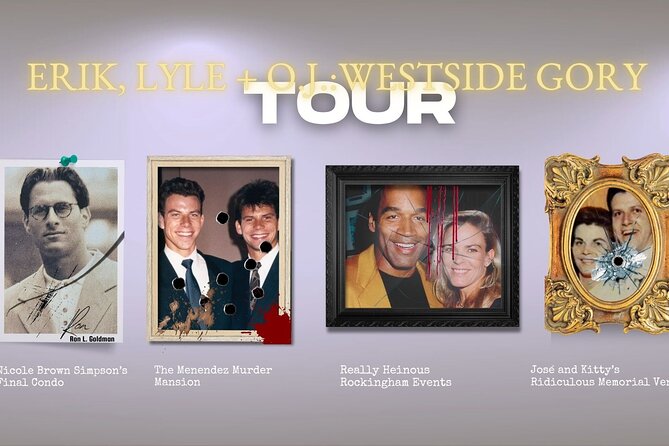
This is the kind of L.A. tour that feels too real. You’ll ride through Westside streets tied to the O.J. Simpson and Menendez Brothers cases, moving from entertainment-industry moments to neighborhood corners that later became part of the timeline. It’s built for true crime fans who want more than headlines, with smartphone visual materials and a smooth 3-hour route.
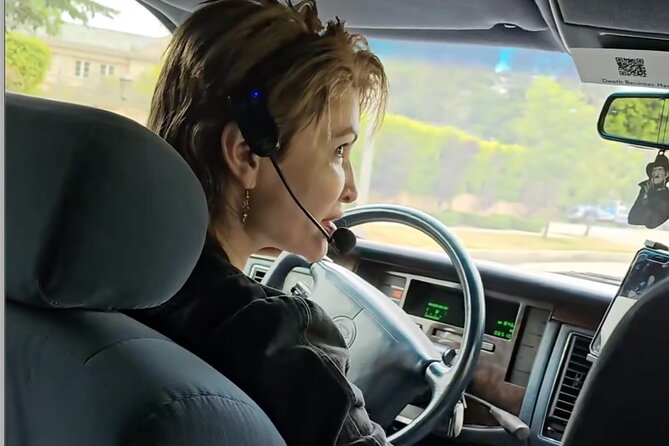
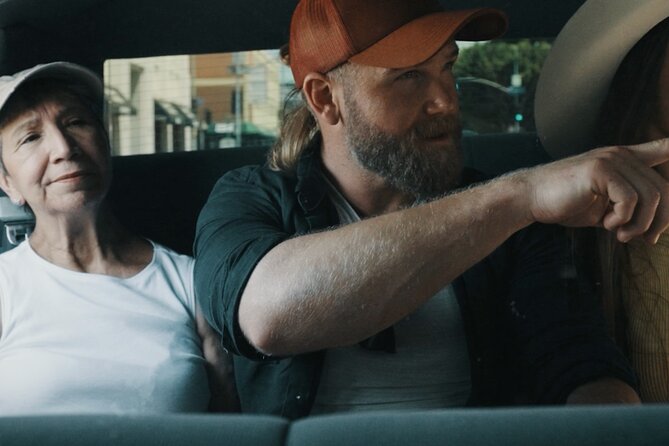
I like the format. You’re mostly in the limo, so you’re not stuck on the sidewalk for long stretches, and there’s a short break halfway for coffee and light snacks. I also love that the guide, Blaze, ties the two cases together in a way that stays focused on details without turning the victims into props.
One consideration: the subject matter is intense. This is not recommended if you’re sensitive to extreme content or likely to get emotionally upset. If you’re good with dark topics and want a tightly guided outing, you’ll probably do fine.
In This Review
- Key moments you’ll notice on this Westside Gory ride
- From Ovation Hollywood into the case (and why the limo matters)
- Hollywood to Beverly Hills: entertainment power, luxury signs, and linked worlds
- West Hollywood: activism, AIDS-era grief, and chosen-family space
- The therapy office, the confession park, and the case turning points
- Brentwood: funeral solemnity, ordinary corners, and the timeline you can walk
- The Bronco chase on the 405: when live TV turned into modern memory
- Price and value: what $93.08 buys you (and what it doesn’t)
- Who should book this Westside Gory tour
- Should you book it?
- FAQ
- How long is the O.J. Simpson & Menendez Brothers True Crime Driving Tour of L.A.?
- What does the tour cost?
- Where does the tour start and where does it end?
- What language is the tour offered in?
- What’s included with the ticket?
- Is there a break for coffee or snacks?
- How long is the Starbucks stop?
- How many people are in the group?
- Is the tour recommended for everyone?
- Can I cancel for a refund?
Key moments you’ll notice on this Westside Gory ride
- A limo-first route that keeps the day comfortable while still hitting lots of key addresses
- Blaze’s multi-tasking storytelling, including driving plus clips/media when relevant
- Two cases, one timeline vibe, with links that go beyond just geography
- West Hollywood’s contrast, where activism and AIDS-era grief sit close to mainstream celebrity culture
- Small, ordinary stops (coffee lines, storefront corners, intersections) that become scene-setting anchors
For the brave: more Hollywood ghost and true-crime walks
- Haunted Hollywood Walking Tour: True Crime and Creepy Tales★ 5.0 · 299 reviews
- Hollywood Ghost Hunting Experience with Real Paranormal Tools★ 5.0 · 267 reviews
- Hollywood Medieval Torture Museum Ticket with Ghost Hunting★ 5.0 · 133 reviews
From Ovation Hollywood into the case (and why the limo matters)
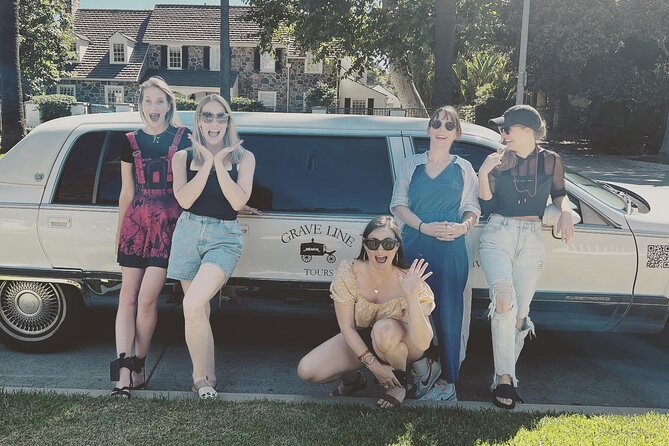
You start at Ovation Hollywood, right on Hollywood Boulevard. It’s an easy spot to find, and that matters in L.A., where “nearby” can still mean a long hunt for the right entrance. The tour runs in English, and you’ll get a mobile ticket tied to your booking.
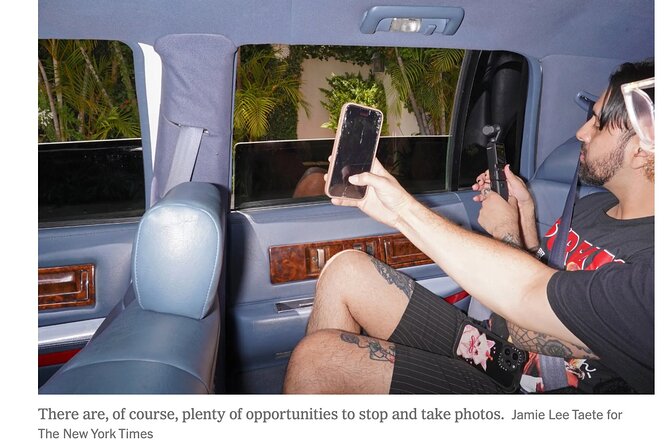
Once you’re onboard, the limo format does a lot of work for you. You can sit back, watch the streets move past, and follow the story in a steady flow for about 3 hours. That’s a big deal if you’re visiting with limited time or you just don’t want to keep hopping in and out of the car all day. It also makes the experience feel like an intentional ride, not a hopscotch of quick photo stops.
You’ll also have the option of visual background materials if you’re traveling with a smartphone. That means you can sync your attention to what the guide is explaining, instead of losing context while you’re craning around to read addresses or spot intersections.
Hollywood to Beverly Hills: entertainment power, luxury signs, and linked worlds
The tour kicks off with a stop at the Directors Guild of America theater on Sunset Boulevard. This is where the memorial for José and Kitty Menendez drew Hollywood elites, family, and friends soon after the 1989 murders. Even if you’re familiar with the case already, this kind of location helps you feel the unusual Los Angeles overlap: a crime story woven into the entertainment industry’s orbit, and mourned in a venue built for premieres.
Next comes an unexpected bridge point tied to sports and media. At an unassuming Hertz Rent a Car location, the story shifts to how José Menendez helped shape sports marketing by signing O.J. Simpson to a major national spokesperson and TV commercial deal. For true crime fans, this matters because it shows how branding and publicity weren’t side plots. They were part of how these larger-than-life public images were constructed.
From there, you move into Beverly Hills and its “watch this happen” energy. The Beverly Center—an early hotspot for luxury shopping in the 1980s and 1990s—anchors the moment where the Menendez brothers were later spotted on lavish sprees. Then the tour connects that consumer-glamour atmosphere to the way excess became part of how the case was argued in court.
You’ll also pass the former Tryst nightclub on La Cienega Boulevard (401 N. La Cienega). In the early 1990s it was an upscale nightlife spot that fit the Hollywood insider scene. In the tour’s framing, it’s where O.J. Simpson’s confrontation with Nicole Brown Simpson and her date Keith Zlomsowitz turned a night out into something darker—an early preview of the stalking/control theme that would follow her story through the public record.
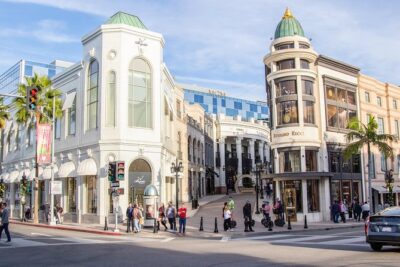
Then comes a cluster of luxury-coded addresses that help explain how wealth functioned as both backdrop and pressure. Rodeo Drive is the obvious one: the elite luxury strip where designers and status symbols defined what “success” looked like. In the late 1980s and early 1990s, Nicole and O.J. and members of the Menendez family were frequently seen strolling these blocks. Even on a driving tour, this helps you understand how visible privilege can become part of the narrative.
A specific pulse point follows at the corner of Rodeo Drive and Brighton Way in Beverly Hills. Nicole Brown Simpson once spotted O.J. riding with two women, sparking an explosive reaction right in the middle of designer boutiques and palm-lined sidewalks. The setting is important: the tour places this moment where the world expects poise, but jealousy and control still take over.
Another stop carries you to the former Daisy nightclub at 326 North Rodeo Drive. This was a chic members-only disco where Hollywood elites and pro athletes came to be seen. The key detail here is that Nicole worked there as an 18-year-old waitress in 1977, and that’s where she met O.J. after one of his visits—turning a vanished nightlife address into a long-running connection point.
West Hollywood: activism, AIDS-era grief, and chosen-family space
Then the tour pivots to West Hollywood, and the tone shifts in a way that’s hard to forget. West Hollywood became a major haven for the LGBTQIA+ community during the 1980s AIDS crisis. In your ride, it’s framed as a place of grief and a base for activism, healthcare advocacy, and AIDS awareness.
You don’t just hear that in abstract terms. The tour includes stops connected to longtime queer nightlife space that served as both sanctuary and battleground for LGBTQIA+ Angelenos dealing with homophobia. Inside a dark, neon-lit club setting you can picture chosen families building support systems while mainstream Los Angeles—especially the heteronormative world of celebrity privilege—was dealing with fear, denial, and silence around the disease.
This section works well if you like your true crime with context. It doesn’t replace the Simpson/Menendez story. It reframes what kind of Los Angeles was happening at the same time, and why the city’s social fault lines mattered.
The therapy office, the confession park, and the case turning points
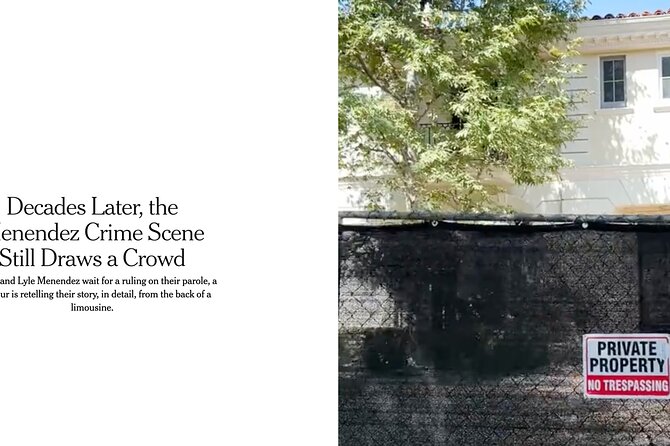
A big reason this tour feels tightly connected is that it keeps returning to moments of control and mental strain. At Dr. Jerome Oziel’s sleek Beverly Hills office (435 North Bedford Drive), the tour points to the discreet setting where Oziel held therapy sessions with Erik and Lyle Menendez and recorded conversations that later became central to the prosecution’s witness role.
Then you get another intense location: a small park off Santa Monica Boulevard in Beverly Hills, where Erik Menendez met Dr. Oziel after leaving Oziel’s Bedford Drive office. The story here is the walk-and-talk moment that ends with Erik admitting, We did it. We killed our parents. The value of this stop is how it turns a normal green patch into a named turning point—one you wouldn’t guess would matter until you connect it to everything that came before.
Before the tour leaves the Beverly Hills area, it also marks a day-to-day pressure point from Erik’s life: his UCLA acceptance. In the tour’s framing, it symbolizes his chance for independence and a more normal college experience. Instead, José forced him to commute from home and forbade him from living in dorms—another reminder of control and isolation being baked into the family setup.
If you’re wondering why a driving tour includes therapy and school commutes, this is the answer: it’s not random. These stops are used to show how the case wasn’t just one night of violence. It was years of tension, manipulation, and increasingly trapped decisions.
Brentwood: funeral solemnity, ordinary corners, and the timeline you can walk
After the Beverly Hills portion, the tour moves into Brentwood, where the emotional weight turns into a street-level map. The day starts getting heavier with a stop at St. Martin of Tours Catholic Church on Sunset Boulevard for Nicole Brown Simpson’s funeral. About 200 friends, family members, and celebrities gathered under media scrutiny. O.J. Simpson attended with their children. It’s a strange kind of pause in a crime story: a public goodbye that still feels like it belongs to the later trial world.
Then the tour marks O.J. Simpson’s former Rockingham estate at 360 North Rockingham Avenue. The original house was demolished and replaced, but the address remains a magnet for true crime fans because it’s tied to the living, the hiding, and the surrender phase—pool, tennis court, and gated grounds included in the mental picture the guide paints.
You’ll also see the rented Brentwood home on Gretna Green Way, described as Nicole’s refuge during separation—and the backdrop for her 911 call where she begged for help as O.J. raged outside. After that, the tour threads through San Vicente Boulevard, described as O.J. and Nicole’s everyday corridor: his office, their go-to gyms, and Mezzaluna, where Nicole shared her last dinner with family.
Now comes the section I think most people remember: small stops that feel almost too normal until the story snaps into place.
- At a Brentwood Starbucks, you get a coffee break and stretch your legs. This stop is timed at about 20 minutes, and it’s described as where Nicole Brown Simpson and Ron Goldman first met in line over casual conversation.
- You’ll pass by Ron Goldman’s modest 13-unit apartment building at 11663 Gorham Avenue, close to O.J.’s office, where he changed/showered before running the next detour tied to the case.
- You’ll also mark the former site of Mezzaluna Trattoria on San Vicente Boulevard, where Nicole shared her final dinner before returning home.
- A former Ben & Jerry’s shop in Brentwood marks the spot where Sidney and Justin Simpson enjoyed ice cream with family on the evening their mother and Ron Goldman were murdered—another moment that turns an everyday family outing into a tragedy marker.
- Then comes Nicole Brown Simpson’s condominium at 875 South Bundy Drive, described as the quiet, tree-lined courtyard complex where she and Ron Goldman were murdered. The tour frames the scene as bodies found just inside the front gate and along the front walkway.
Finally, there’s a location tied to alleged escape-route timing: a key West Los Angeles intersection where witnesses reported seeing O.J. driving his white Ford Bronco recklessly shortly after the murders. Passing by this kind of intersection helps you feel how a timeline becomes a set of ordinary crossroads, full of normal traffic noise—yet turned into “evidence points” by what happened next.
The Bronco chase on the 405: when live TV turned into modern memory
The tour’s closing sequence centers on the low-speed chase on Los Angeles freeways, with the white Ford Bronco leading police cars and news helicopters down the 405. The story is framed as one of the most unforgettable parts of modern pop culture, because millions watched live on TV.
You end with the Bronco returning to Simpson’s Brentwood estate, followed by surrender in the driveway. In practical terms, this final stretch acts like a conclusion to the ride: you’re not just collecting addresses anymore. You’re following a motion path—from crime timeline to mass audience spectacle to the final arrest moment.
Then it’s back to where you started, with the tour ending at the meeting point.
Price and value: what $93.08 buys you (and what it doesn’t)
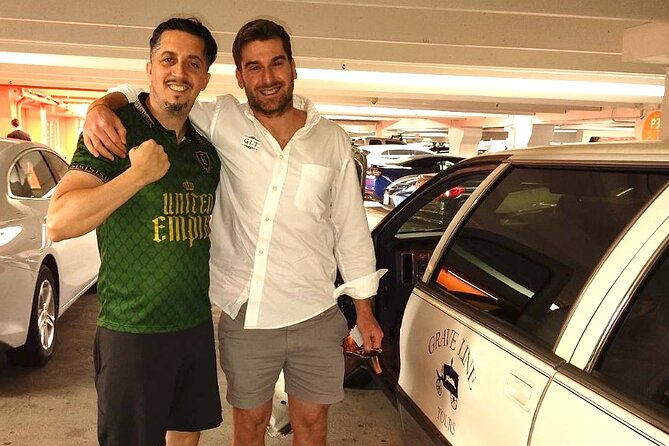
At $93.08 per person for about 3 hours, you’re paying for a guided, story-driven route that includes access to visual background materials and a tour of the Simpson and Menendez West LA connections. The value is in the combination:
- Time efficiency: you cover a lot of addresses without navigating traffic yourself.
- Narration quality: Blaze is described as staying respectful while building the story link by link.
- Comfort: the limo-first structure keeps you moving through neighborhoods without constant sidewalk time.
- Group size: the max of 8 travelers keeps it from turning into a giant lecture.
What’s not included: snacks. The tour does include an opportunity to buy coffee and light snacks halfway through, plus the Starbucks stop along the way. So if you want a full lunch or big meal, plan that outside the tour. You can treat this like a dark, guided city walk… just delivered by seatbelt and engine.
Who should book this Westside Gory tour
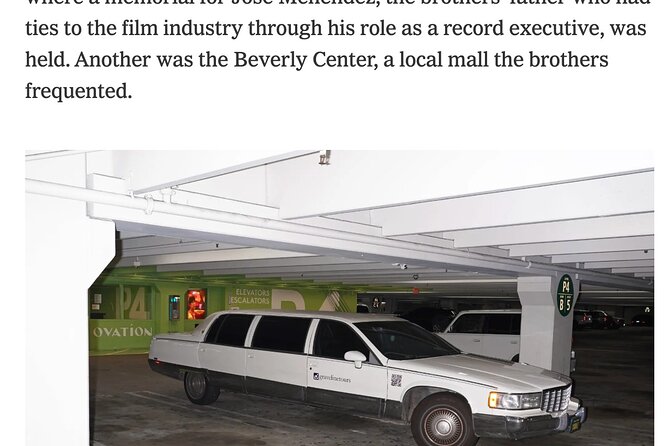
You’ll enjoy it most if you:
- want a true crime outing focused on L.A. streets rather than just a documentary recap
- like when the guide connects details across both cases, not just one
- appreciate context that includes entertainment-industry power and West Hollywood’s AIDS-era reality
Skip it if:
- you’re sensitive to extreme subject matter or getting emotionally upset by disturbing content
- you want a light, casual sightseeing day with minimal heavy themes
Also, if you like your tours in a small group, this one fits. With a max of 8, it’s easier for the guide to keep the flow tight.
Should you book it?
If you’re a true crime fan who wants an organized Westside route, this is a strong match. The biggest selling point is the way Blaze keeps the stories connected while maintaining respect for victims, all from a comfortable limo setting. The coffee break plus the smartphone visuals make it feel modern, not just old-school morbid sightseeing.
But don’t book this to relax. Book it because you want the hard facts in a place-based format—and you’re ready for a heavy day.
FAQ
How long is the O.J. Simpson & Menendez Brothers True Crime Driving Tour of L.A.?
The tour is about 3 hours.
What does the tour cost?
It costs $93.08 per person.
Where does the tour start and where does it end?
It starts at Ovation Hollywood, 6801 Hollywood Blvd, Hollywood, CA 90028, and it ends back at the meeting point.
What language is the tour offered in?
The tour is offered in English.
What’s included with the ticket?
Included are access to visual background materials for passengers with smartphones, and a tour of the Simpson and Menendez West Los Angeles locations.
Is there a break for coffee or snacks?
Yes. There will be an opportunity to purchase coffee and light snacks halfway through the tour, and there is also a Starbucks stop for coffee and a leg stretch.
How long is the Starbucks stop?
The Starbucks Coffee Company stop is listed as 20 minutes.
How many people are in the group?
The tour has a maximum of 8 travelers.
Is the tour recommended for everyone?
No. It’s not recommended for travelers sensitive to extreme subject matter or emotionally upset by disturbing content.
Can I cancel for a refund?
Yes. Free cancellation is available up to 24 hours in advance for a full refund.
More Tours in Los Angeles
- Warner Bros. Studio Tour Hollywood
★ 4.5 · 5,246 reviews - Hollywood, Beverly Hills & Celebrity Homes Tour by Open Air Bus
★ 5.0 · 2,557 reviews - Hollywood Sign 2.5-Hour Tour with Comedians and Their Dogs
★ 5.0 · 2,496 reviews - Full-Day LA Tour: Santa Monica, Hollywood and Beverly Hills
★ 5.0 · 2,431 reviews - Hollywood and Celebrity Homes Bus Tour
★ 4.5 · 2,074 reviews
More Tour Reviews in Los Angeles
- Full-Day Iconic Sights of LA, Hollywood, Beverly Hills, Beaches and More
★ 5.0 · 6,147 reviews - Warner Bros. Studio Tour Hollywood
★ 4.5 · 5,246 reviews - Hollywood, Beverly Hills & Celebrity Homes Tour by Open Air Bus
★ 5.0 · 2,557 reviews - Hollywood Sign 2.5-Hour Tour with Comedians and Their Dogs
★ 5.0 · 2,496 reviews - Full-Day LA Tour: Santa Monica, Hollywood and Beverly Hills
★ 5.0 · 2,431 reviews
More of Hollywood After Dark
- Haunted Hollywood Walking Tour: True Crime and Creepy Tales
★ 5.0 · 299 reviews - Hollywood Ghost Hunting Experience with Real Paranormal Tools
★ 5.0 · 267 reviews - Los Angeles Ghost Tours: Terrors of Tinseltown
★ 4.5 · 170 reviews - Hollywood Medieval Torture Museum Ticket with Ghost Hunting
★ 5.0 · 133 reviews - Sunset Boulevard True Crime and Ghost Stories Tour
★ 5.0 · 83 reviews
Keep exploring Los Angeles: fresh reviews from around town
Hollywood Ghost & Crime Tours, compared.
 ★ 5.0Haunted Hollywood Walking Tour: True Crime and Creepy TalesFrom $39299 reviews
 ★ 5.0Hollywood Ghost Hunting Experience with Real Paranormal ToolsFrom $55267 reviews
 ★ 4.5Los Angeles Ghost Tours: Terrors of TinseltownFrom $32170 reviews
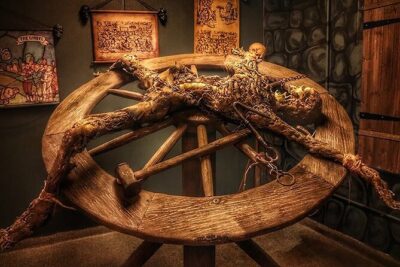 ★ 5.0Hollywood Medieval Torture Museum Ticket with Ghost HuntingFrom $31133 reviews
 ★ 5.0Sunset Boulevard True Crime and Ghost Stories TourFrom $3583 reviews
 ★ 4.6Hollywood: Haunted Walking Tour, True Crime, Creepy TalesFrom $3970 reviews
 ★ 4.5DTLA Murder Mystery Ghost TourFrom $6064 reviews
★ 4.3Hollywood: Medieval Torture Museum Ticket with Ghost HuntingFrom $3135 reviews
Browse the lists this tour appears in